
Tire Maintenance From the Ground Up

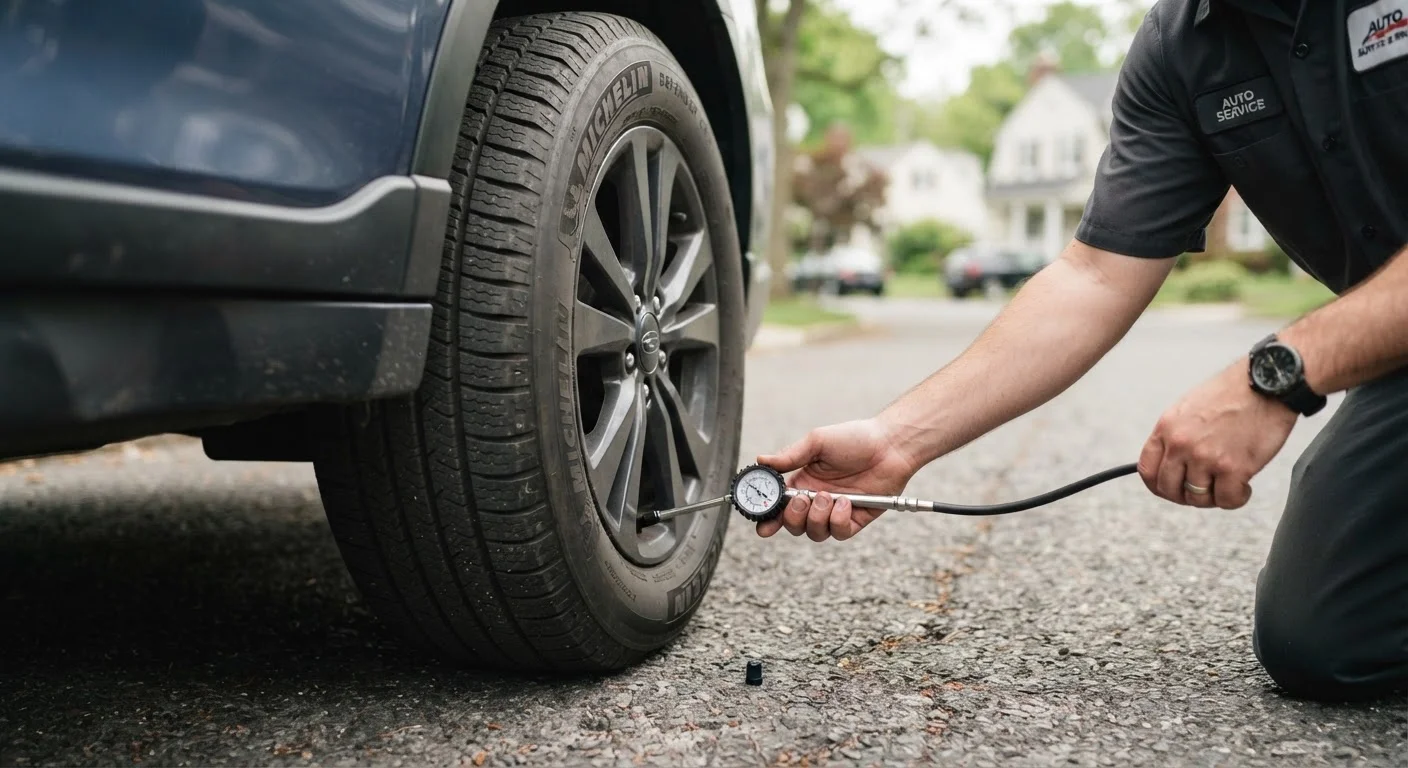
Photo: AdvisorBooth.net editorial
Key Takeaways
- Correct tire pressure improves fuel economy, handling, and tire lifespan.
- Tread depth below 2/32 of an inch is a legal and safety threshold for replacement.
- Rotating tires every 5,000-7,500 miles promotes even wear across all four wheels.
- Age, not just wear, can make a tire unsafe - even one that looks fine.
- Visual inspections take only minutes and can catch dangerous conditions early.
Why Tire Maintenance Matters
Tires are the only part of your vehicle that actually contacts the road. Every braking maneuver, every turn, and every mile of highway driving depends entirely on four roughly hand-sized patches of rubber gripping the pavement. Yet tire maintenance is among the most commonly skipped routine tasks American drivers ignore - often until something goes wrong.
Neglecting tires carries real consequences: reduced braking ability, increased blowout risk, poor fuel economy, and handling that degrades without obvious warning signs. The good news is that the core tasks - checking pressure, monitoring tread, rotating, and knowing when to replace - are straightforward, low-cost, and well within reach of any driver. See our guide to commonly overlooked maintenance items for context on how tires fit into the broader picture of deferred car care.
Understanding Tire Pressure
Tire pressure is measured in pounds per square inch (PSI). Driving on underinflated tires causes excessive flexing of the sidewall, which generates heat - a leading contributor to tire failure. Overinflated tires reduce the contact patch with the road, creating a harsher ride and uneven wear down the center of the tread.
The correct PSI for your vehicle is found on a sticker inside the driver's door jamb or in your owner's manual - not on the tire sidewall, which lists the tire's maximum pressure, not the recommended operating pressure. These are two different numbers and confusing them is a common mistake.
Check Pressure Monthly as a Habit
Temperature affects pressure: tires lose roughly 1 PSI for every 10°F drop in outside temperature. Checking pressure during seasonal transitions - particularly when fall turns cold - is especially important. For a step-by-step approach, see our practical walkthrough for checking your own tire pressure.
11%
Tire-related crashes among all vehicle crashes
According to NHTSA data, tire problems are a contributing factor in tens of thousands of crashes annually in the United States.
1 PSI
Pressure lost per 10°F temperature drop
The U.S. Department of Energy notes that proper tire inflation can improve fuel economy by up to 3% over significantly underinflated tires.
4/32"
Tread depth at which wet stopping risk rises sharply
Safety testing has shown measurable increases in wet-road stopping distances when tread depth falls to 4/32" - double the legal minimum.
Checking and Reading Tread Depth
Tread depth is measured in 32nds of an inch. New tires typically start at 10/32" to 11/32". The legal minimum in most U.S. states is 2/32", at which point tires must be replaced. However, safety research - including data from the National Highway Traffic Safety Administration (NHTSA) - indicates that wet-road stopping distances increase significantly when tread falls below 4/32", well before the legal limit is reached.
The simplest check uses a U.S. penny: insert it into a tread groove with Lincoln's head facing down. If you can see all of Lincoln's head, the tread is at or below 2/32" and replacement is overdue. A quarter coin (Washington's head) gives you the 4/32" warning threshold. Many tires also feature built-in wear indicator bars - small raised sections molded into the grooves that become flush with the tread surface at 2/32".
Always check tire pressure when tires are "cold" - meaning the vehicle has been parked for at least three hours or driven fewer than a mile. Driving heats the air inside, temporarily inflating the reading.
When inspecting tread wear, check multiple grooves across the width of each tire - not just the center groove. Uneven side-to-side wear is easy to miss but reveals alignment or inflation problems that shorten tire life.
Uneven wear patterns across the tire surface often reveal an underlying problem. Wear concentrated on the edges typically points to chronic underinflation; wear down the center suggests overinflation; wear on one edge can indicate an alignment issue. Addressing these conditions early prevents accelerated tire deterioration.
Tire Rotation: What It Is and Why It Matters
Rotation means moving tires to different positions on the vehicle - for example, moving front tires to the rear and vice versa - to promote even tread wear. Front tires on front-wheel-drive vehicles wear faster because they handle both steering and power delivery. Without rotation, they can wear out significantly sooner than the rear pair.
Most vehicle manufacturers recommend rotating tires every 5,000 to 7,500 miles, though your owner's manual will specify the interval for your car. Rotation patterns (straight, cross, or X-pattern) vary based on whether your vehicle uses directional or non-directional tires and whether tire sizes differ front-to-rear. When in doubt, a qualified tire technician can advise on the correct pattern. Folding rotation into your oil change schedule is a practical way to stay consistent - see our explanation of vehicle maintenance schedules for how these intervals align.
When to Replace Your Tires
Tread depth is the most visible measure, but age matters independently of wear. Rubber compounds degrade over time even when a tire looks fine on the surface. Most tire manufacturers and safety organizations recommend replacement after six years regardless of appearance, and consider ten years an absolute maximum from the date of manufacture. The manufacture date is encoded in the last four digits of the DOT code on the tire sidewall - for example, "2319" means the 23rd week of 2019.
Replace tires immediately if you notice: visible cords or fabric showing through the rubber, sidewall bulges or bubbles, deep cuts or punctures near the sidewall (which are typically not repairable), or persistent slow leaks that cannot be resolved with a patch. A blowout at highway speed is a serious safety event; don't postpone replacement when these warning signs are present.
Sidewall Damage Is Never Minor
Drivers of high-mileage vehicles should pay particular attention to tire age. Our guide to keeping a high-mileage vehicle reliable covers how aging components - including tires - require adjusted maintenance thinking.
Tire Maintenance as Part of Your Bigger Maintenance Picture
Tire care doesn't exist in isolation. Wheel alignment affects how evenly tires wear; brake condition affects how effectively tires translate stopping force to the road; and suspension wear can cause unusual tire contact patterns. Our overview of brake maintenance facts covers how brakes and tires work together as a safety system.
For first-time car owners building foundational knowledge, the Car Maintenance for First-Time Owners guide places tire care within the full set of routine tasks every driver should understand. Road safety more broadly - including how tire condition affects vehicle control in adverse weather - is covered through our Driving & Safety hub.
Consistent attention to tire pressure, tread depth, rotation, and timely replacement is one of the highest-return maintenance habits a driver can build. The investment in time is minimal; the payoff in safety and reduced long-term costs is significant.
The content on this site is for informational purposes only and is not a substitute for professional advice. Always consult a qualified professional for guidance specific to your situation.