
Deck Ledger Attachment: The Connection Point Where Most Deck Failures Begin

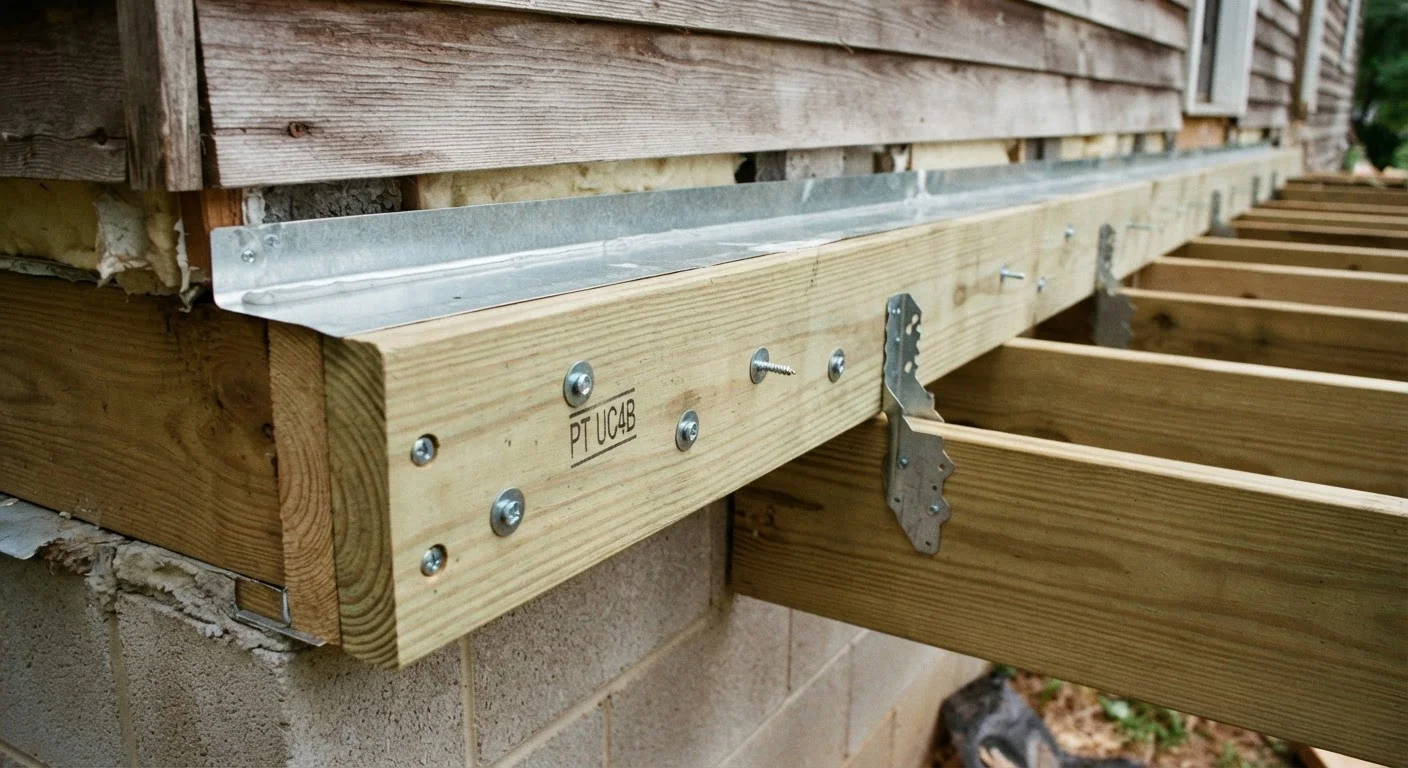
Photo: AdvisorBooth.net editorial
Key Takeaways
- The ledger board connection is the most common cause of catastrophic deck collapses.
- Improper flashing at the ledger is the leading cause of hidden rot and structural failure.
- Only specific fasteners - typically lag screws or through-bolts - meet code requirements for ledger attachment.
- Permits and inspections are typically required for deck construction and protect homeowners legally.
- A qualified contractor or structural engineer should evaluate any existing ledger connection you are uncertain about.
Why the Ledger Connection Matters More Than Any Other Part of Your Deck
When a deck collapses, investigators almost always find the same culprit: the ledger board - the piece of lumber that anchors the deck to the house - pulled away from the structure. Every joist on an attached deck transfers its load through this single connection point. Get it right and the deck performs safely for decades. Get it wrong and the failure can be sudden, complete, and catastrophic.
What makes the ledger uniquely vulnerable is its location. It sits against the house, trapped behind decking boards and often buried under cladding, which means deterioration is invisible until something gives way. Water infiltration, incompatible fasteners, and inadequate bolting are hard to spot from above - and that is exactly what makes this connection the place where most deck failures quietly begin.
Deck Collapses Are a Real Safety Hazard
Understanding common ledger mistakes does not make you your own structural engineer, but it does make you a better-informed homeowner. You'll know what questions to ask a contractor, what to look for during a permit inspection, and when something doesn't look right on an existing deck.
The Most Common Ledger Attachment Mistakes - and How to Avoid Them
Nailing the ledger to the house instead of using approved bolts or lag screws.
Skipping or incorrectly installing flashing at the ledger-to-house junction.
Attaching the ledger to exterior siding, sheathing, or stucco rather than the structural rim joist.
Using the wrong fastener material, leading to rapid corrosion.
Spacing fasteners incorrectly or using too few, reducing the connection's load capacity.
What Proper Ledger Attachment Actually Looks Like
A correctly installed ledger connection shares several consistent characteristics regardless of deck size or style. The ledger is pressure-treated lumber of appropriate dimension, fastened directly to the house's rim joist - not to siding or sheathing. Continuous flashing is integrated with the house wrap or building paper and runs behind the ledger, lapping over its top edge and directing any water outward.
~90%
Of deck failures attributed to ledger connections
Research cited by the North American Deck and Railing Association (NADRA) has consistently identified the ledger connection as the source of the vast majority of deck structural failures.
40M+
Residential decks in the United States
Industry estimates suggest tens of millions of American homes have attached decks, a significant portion of which were built before modern ledger attachment codes were widely enforced.
Fasteners follow a code-compliant pattern: typically alternating high and low to avoid splitting the rim joist, with the correct diameter and embedment depth specified by engineering tables. All hardware is rated for use with pressure-treated lumber. Where the deck is built in a region with seismic or high-wind risk, additional hold-down hardware may be required.
Perhaps most importantly, a proper ledger installation has been reviewed by a local building official. A permit and inspection create a paper trail, confirm code compliance, and protect you legally if you ever sell the home. Skipping that step to save time is a risk that falls entirely on the homeowner.
If your deck was built without a permit or you have no documentation of the ledger installation, consider having a licensed contractor or structural engineer assess the connection. A professional evaluation gives you clear, specific information about whether the deck is safe to use - and what, if anything, needs to be corrected.
This article provides general educational information about deck construction and is not a substitute for advice from a licensed contractor, structural engineer, or your local building department. Always verify requirements with the authority having jurisdiction in your area before beginning any construction work.
The content on this site is for informational purposes only and is not a substitute for professional advice. Always consult a qualified professional for guidance specific to your situation.