
Basement Waterproofing Approaches: Interior, Exterior, and Everything Between

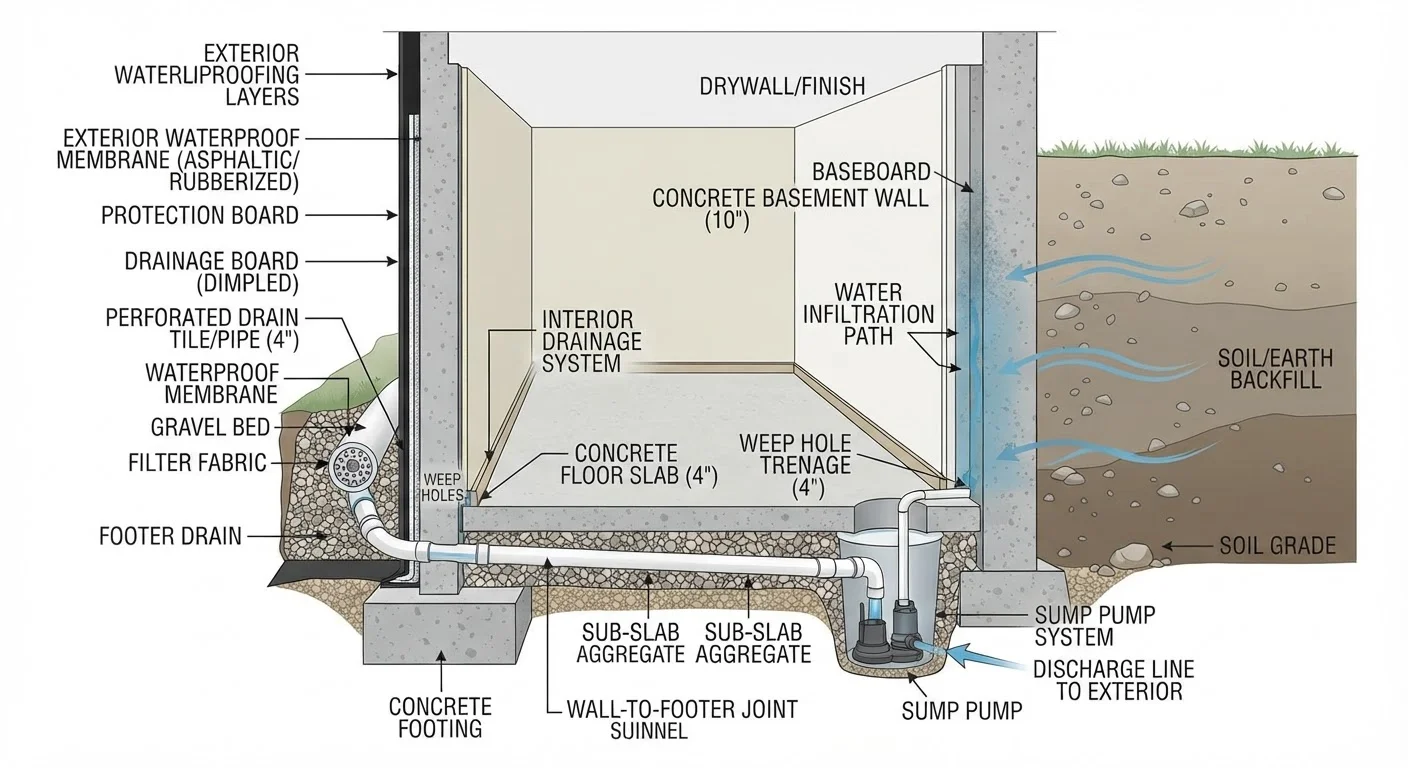
Photo: AdvisorBooth.net editorial
Key Takeaways
- Basement moisture problems fall into two categories: water intrusion from outside and condensation from inside.
- Exterior waterproofing stops water at the source but requires significant excavation and cost.
- Interior drainage systems manage water after it enters, often at lower cost and disruption.
- Drainage grading, downspout extensions, and window well covers can prevent many moisture problems before they start.
- Serious structural cracks or persistent flooding typically require a licensed waterproofing contractor.
Why Basements Get Wet - and Why the Cause Matters
Water in a basement can arrive several different ways, and misidentifying the source is one of the most common reasons a waterproofing fix falls short. Before choosing a method, it helps to diagnose whether you're dealing with intrusion (water pushing in from outside) or condensation (humid air meeting cool basement walls and floors).
A simple test: tape a square of plastic sheeting to a damp wall and seal all four edges. Leave it for 24-48 hours. If moisture forms on the room side of the plastic, condensation is the culprit. If moisture forms behind the plastic against the wall, water is coming through from outside.
Intrusion itself has two sub-types: hydrostatic pressure, where groundwater saturates the soil and pushes through cracks or porous concrete, and surface water, which runs toward the foundation when grading, gutters, or downspouts direct rainwater the wrong way. Knowing which you face shapes every decision that follows.
Exterior Waterproofing: Stopping Water at the Source
Exterior waterproofing is widely regarded as the most thorough approach because it intercepts water before it ever reaches the foundation wall. The process typically involves excavating the soil around the entire perimeter of the house down to the footing, then applying a waterproof membrane or coating to the exterior wall surface, installing a drainage board to direct water downward, and laying a perforated drain pipe (often called a French drain or footer drain) that routes water away from the foundation.
The main drawbacks are cost and disruption. Full perimeter excavation on an average home is a major project that usually requires heavy equipment, landscaping restoration, and several days of work. It is almost always a job for a licensed contractor, not a DIY undertaking.
That said, exterior waterproofing is often the right call for homes with persistent hydrostatic pressure, significant foundation cracks, or basements that flood repeatedly despite other interventions. It also protects the structural integrity of the foundation wall itself - something interior systems cannot do.
Don't Skip Permits for Major Foundation Work
Interior Waterproofing: Managing Water That Gets In
Interior systems don't stop water from entering - they collect and redirect it before it can cause damage. The most common approach pairs an interior perimeter drain channel (a narrow trench cut along the inside edge of the basement floor) with a sump pump that ejects collected water away from the house.
Interior waterproofing is generally less expensive than exterior excavation and can often be completed in one to two days. It works well for homes where water seeps through the floor-wall joint or through porous block walls, and it remains effective even when exterior waterproofing isn't practical - such as in homes with finished landscaping or attached structures that make excavation difficult.
Wall panels or dimple mats are sometimes added to channel wall seepage down to the floor drain before it reaches the living space. Crack injection using polyurethane or epoxy can seal individual cracks in poured concrete walls, though this is a supplemental fix rather than a comprehensive solution.
Test Your Sump Pump Before Wet Season
Surface and Grading Solutions: The Often-Overlooked First Step
Before investing in major waterproofing work, it's worth addressing surface drainage - a category of fixes that costs far less and resolves many moisture problems entirely.
- Grading: The soil around your foundation should slope away from the house at roughly six inches over the first ten feet. Flat or inward-sloping ground directs runoff toward the foundation.
- Gutter and downspout extensions: Downspouts that discharge directly against the foundation are a leading cause of basement water. Extensions that carry water at least four to six feet away are inexpensive and often highly effective.
- Window well covers: Basement egress or utility windows that sit below grade can admit water during heavy rain. Fitted covers and properly draining window wells address this directly.
These measures also complement any interior or exterior waterproofing you add later. Reducing the volume of water reaching your foundation makes every other system more effective. For a broader look at protecting your home's envelope, see our guide to home weatherization.
Comparing the Approaches: Key Factors to Weigh
The right strategy depends on your specific moisture source, budget, and how you plan to use the space. The table below summarizes the core trade-offs.
| Exterior Waterproofing | Interior Drainage System | Surface & Grading Fixes | |
|---|---|---|---|
| How it works | Blocks water outside the foundation | Collects and redirects water inside | Diverts water away before it reaches foundation |
| Typical disruption level | High - excavation required | Moderate - floor cutting inside | Low - landscaping and gutter work |
| Relative cost | Highest | Moderate | Lowest |
| Best suited for | Persistent hydrostatic pressure | Chronic seepage, high water tables | Surface runoff, grading problems |
| DIY-friendly? | No - contractor required | Partial - sump pump replacement only | Yes - most tasks manageable |
| Protects foundation wall structurally | Yes | No | Indirectly |
For most homeowners, the decision comes down to severity and root cause. Occasional dampness from condensation or minor surface water rarely justifies excavation. Chronic seepage through foundation walls, especially in finished or soon-to-be-finished basements, usually warrants a more comprehensive approach.
If your project involves structural decisions - such as opening walls or assessing whether cracks indicate a larger foundation issue - understanding the structural realities of renovation is important. Our article on structural realities in home renovations covers that terrain well.
When in doubt, a licensed waterproofing or foundation contractor can assess your specific situation. Many offer free or low-cost evaluations, and getting two or three independent opinions is a reasonable step before committing to any significant investment.
The content on this site is for informational purposes only and is not a substitute for professional advice. Always consult a qualified professional for guidance specific to your situation.