
Neglected Maintenance Items That Mechanics See Most Often

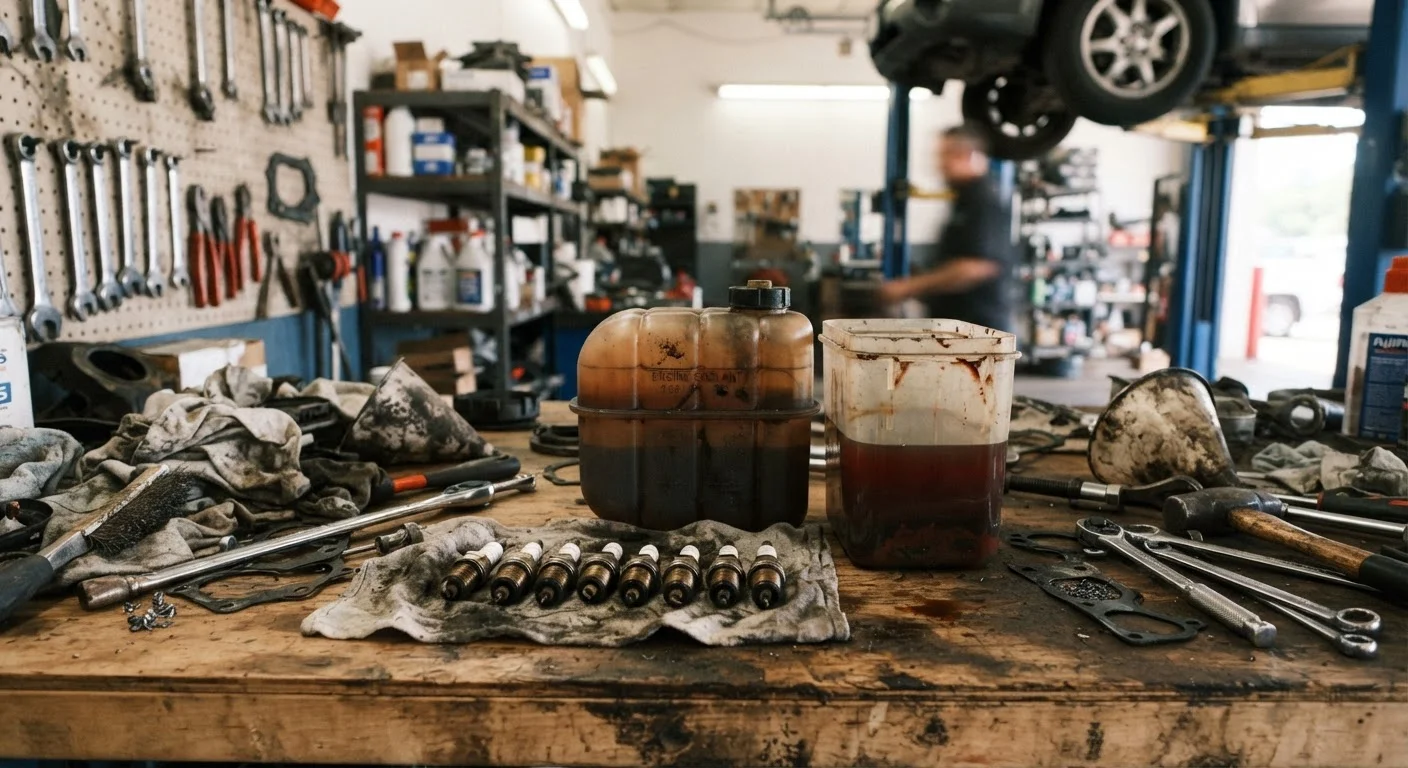
Photo: AdvisorBooth.net editorial
Key Takeaways
- Spark plugs, coolant, and transmission fluid are among the most frequently neglected maintenance items.
- Skipping these services rarely causes immediate problems, which is why they're easy to forget - until something fails.
- Most neglected items have clear service intervals listed in your owner's manual that are worth following.
- Catching these items early almost always costs less than repairing the damage that builds up from ignoring them.
Why These Items Keep Getting Skipped
Oil changes get the attention. Tire pressure gets checked. But a handful of maintenance items are skipped so consistently that mechanics see them flagged on vehicle after vehicle - not because drivers are careless, but because these items show no obvious warning signs until they cause a real problem.
Unlike a flat tire or a dead battery, a worn spark plug or degraded coolant rarely announces itself. The car still starts, still drives, and still seems fine. That slow, invisible decline is exactly why these tasks fall through the cracks - and why catching them before failure almost always costs far less than the repair that follows when they're ignored. If you're new to vehicle ownership, our car maintenance guide for first-time owners is a good place to build a foundation.
Owner's Manual Is Your Best Reference
The Most Commonly Neglected Maintenance Items
Spark Plugs
Spark plugs ignite the air-fuel mixture in your engine's cylinders. Over time, the electrode tip wears down, causing misfires, rough idling, reduced fuel efficiency, and sluggish acceleration. Many drivers don't notice these symptoms gradually worsening - they just assume their car has always felt that way.
Conventional copper spark plugs typically need replacement around every 30,000 miles. Long-life iridium or platinum plugs can go 60,000 to 100,000 miles, depending on the manufacturer's guidance. Check your owner's manual for the interval specific to your vehicle.
Worn spark plugs degrade performance so gradually that many drivers don't notice until the damage is done.
Coolant (Antifreeze)
Engine coolant does more than prevent freezing - it also prevents overheating and contains corrosion inhibitors that protect metal components inside your cooling system. As coolant ages, those inhibitors break down, and the fluid can become acidic enough to corrode the radiator, water pump, and hoses from the inside.
Many manufacturers recommend a coolant flush every 30,000 to 50,000 miles, though some modern extended-life formulas are rated longer. Simply topping off a low reservoir doesn't refresh the inhibitors. For a deeper look at your vehicle's fluids, see our guide to car fluids every driver should know about.
Old coolant can turn corrosive, quietly damaging the radiator and water pump from the inside out.
Transmission Fluid
Transmission fluid lubricates the complex internal components of your transmission and, in automatics, also serves as a hydraulic fluid. It degrades with heat and use, and contaminated fluid accelerates internal wear. Transmission repairs are among the most expensive a driver can face - often thousands of dollars.
Despite this, transmission fluid changes are routinely skipped. Service intervals vary widely by vehicle and driving conditions; some manufacturers list 30,000-mile intervals for severe use, while others extend to 60,000-100,000 miles for normal driving. Always consult your owner's manual rather than guessing.
Transmission repairs rank among the costliest failures - and many stem directly from neglected fluid changes.
Cabin Air Filter
The cabin air filter cleans the air flowing through your vehicle's heating, ventilation, and air conditioning (HVAC) system. A clogged filter reduces airflow noticeably, forces the HVAC blower motor to work harder, and allows dust, pollen, and debris to accumulate inside the system. It's one of the simplest and least expensive maintenance items on any vehicle.
Most manufacturers recommend replacement every 15,000 to 25,000 miles, though dusty or high-pollen environments may shorten that interval. Because a dirty filter rarely triggers a warning light, it's easy to overlook - but the performance difference after a fresh filter is immediately noticeable.
A clogged cabin air filter strains your HVAC system and is one of the simplest fixes drivers overlook.
Brake Fluid
Brake fluid is hygroscopic, meaning it absorbs moisture from the surrounding air over time. As water content rises, the fluid's boiling point drops - a serious concern during hard braking when heat builds rapidly in the system. Degraded brake fluid can contribute to a spongy pedal feel and, in extreme cases, brake fade.
Many drivers have their brake pads inspected regularly but never think about the fluid itself. Most manufacturers recommend a brake fluid flush every two to three years, regardless of mileage. For more context on brake service, see common brake maintenance myths that could put you at risk.
Brake fluid absorbs moisture over time, lowering its boiling point and quietly compromising stopping performance.
PCV Valve
The positive crankcase ventilation (PCV) valve regulates pressure inside the engine crankcase and routes harmful blow-by gases back into the intake manifold to be burned, rather than vented to the atmosphere. A stuck or clogged PCV valve can cause oil leaks, sludge buildup, and increased oil consumption - all of which shorten engine life.
PCV valves are inexpensive and require replacement roughly every 20,000 to 50,000 miles, depending on the vehicle. Because the component is so small and rarely discussed outside of a full tune-up, it's one of the most overlooked items on a maintenance checklist - yet its impact on long-term engine health is significant.
A failed PCV valve can cause oil sludge and leaks, yet it costs very little to inspect and replace.
Track Maintenance With a Simple Log
Staying Ahead of the Curve
None of these items require advanced mechanical knowledge to monitor. Most have clear intervals in your owner's manual, and many can be checked during a routine oil change appointment simply by asking your technician to review them. Understanding what your car's maintenance schedule actually means can help you prioritize what needs attention at each mileage milestone.
For drivers with older, higher-mileage vehicles, these neglected items carry even more weight. Components already under stress from age and wear have less tolerance for degraded fluids or failing parts. Keeping a high-mileage vehicle reliable often comes down to precisely these less glamorous maintenance tasks that most people overlook.
A well-maintained car isn't just about avoiding breakdowns - it's about preserving the investment you've already made and keeping yourself and others safe on the road. The items on this list are a good place to start.
The content on this site is for informational purposes only and is not a substitute for professional advice. Always consult a qualified professional for guidance specific to your situation.