
Brake Maintenance Myths That Could Put You at Risk

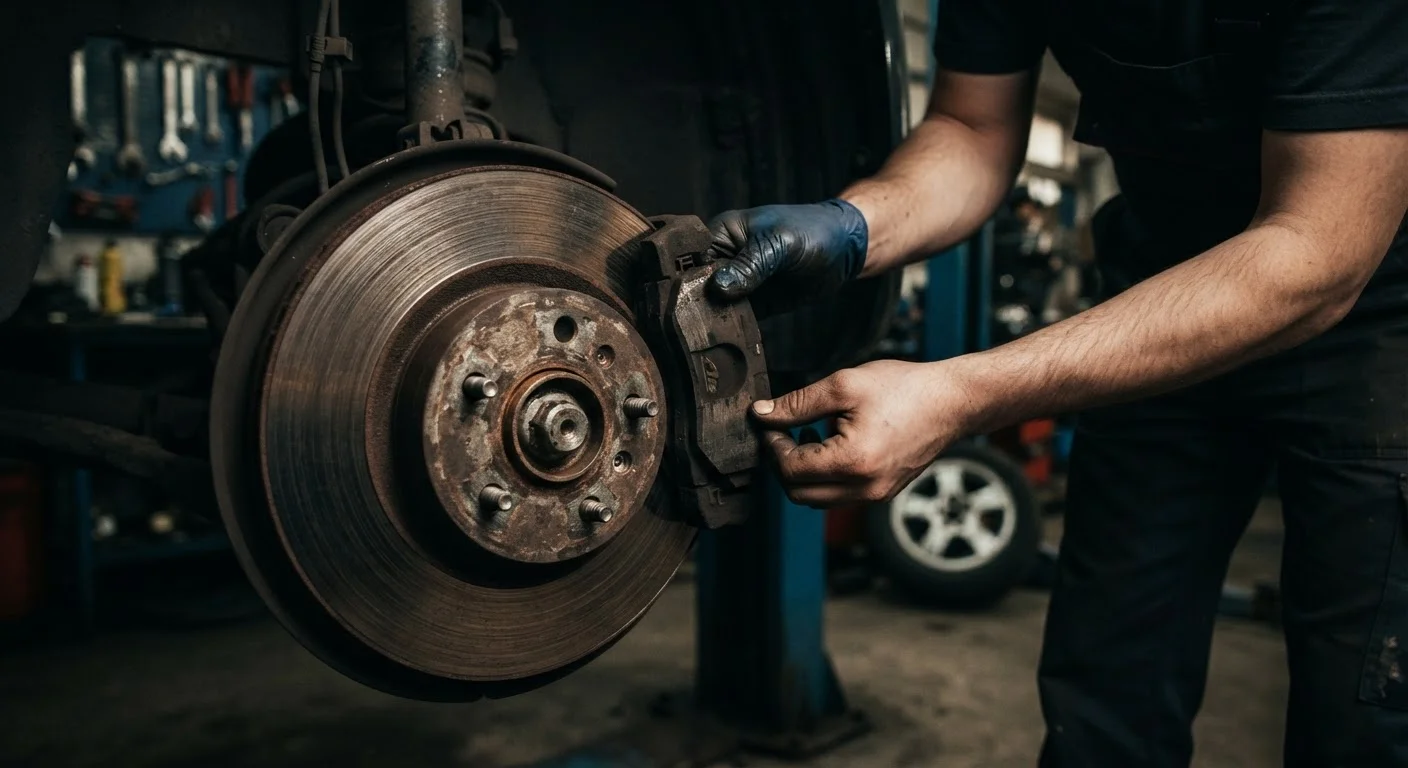
Photo: AdvisorBooth.net editorial
Key Takeaways
- Squealing brakes don't always mean immediate failure, but they should never be ignored.
- Brake fluid absorbs moisture over time and typically needs replacement every two to three years.
- Driving habits and road conditions affect brake wear far more than a fixed mileage interval.
- Rear brakes do meaningful work and require the same attention as front brakes.
- Replacing brake pads early can prevent costlier rotor damage down the road.
Why Brake Myths Are Dangerous
Brakes are the single most critical safety system on any vehicle, yet a surprising number of widely repeated ideas about brake maintenance are simply wrong. Acting on bad information - waiting too long to service brakes, ignoring fluid condition, or assuming silence means safety - can lead to reduced stopping power, expensive repairs, or worse.
The myths below are some of the most common ones circulating among drivers. Understanding why each one is inaccurate puts you in a much stronger position to maintain your vehicle safely and avoid unnecessary costs. For a broader look at how your vehicle's safety systems work together, the Driving & Safety hub is a useful resource.
Never Ignore a Soft or Spongy Brake Pedal
Common Brake Myths - Corrected
The following myth-and-fact pairs address the misconceptions that most frequently lead drivers to delay service or misunderstand what their brakes actually need.
Myth
If my brakes aren't making noise, they're fine and don't need to be checked.
Fact
Brake pads can wear dangerously thin without producing any noticeable sound, especially if conditions muffle the wear indicators.
Many drivers treat silence as a green light, but brake pads don't always announce their wear audibly. While most modern pads include a small metal tab designed to squeal when pads get low, wet weather, dust, or the type of pad material can dampen that sound. Pads can also wear unevenly - one side degrading faster than the other - without triggering any noise. A visual inspection by a qualified mechanic, or checking the pad thickness through the wheel spokes if visible, is a far more reliable method than listening alone. Mechanics generally recommend having brakes inspected at least once a year or at every oil change interval.
Myth
Brake fluid never needs to be changed - it just sits there and doesn't wear out.
Fact
Brake fluid is hygroscopic, meaning it absorbs moisture from the air over time, which lowers its boiling point and can compromise braking performance.
As brake fluid absorbs water, its boiling point drops significantly. Under hard braking - especially going downhill or in stop-and-go traffic - degraded fluid can vaporize inside the brake lines, creating air pockets that reduce pedal firmness. This is sometimes called brake fade. Most vehicle manufacturers recommend flushing and replacing brake fluid every two to three years, though you should always follow your specific vehicle's owner manual. You can learn more about how brake fluid fits into your overall maintenance picture in our guide to car fluids every driver should know about.
Myth
You should always wait until 12,000 miles to replace brake pads, no matter what.
Fact
There is no universal mileage interval for brake pad replacement - wear depends heavily on driving style, load, terrain, and pad material.
A commuter who drives mostly highway miles at steady speeds will see dramatically different pad wear than someone navigating hilly city streets or frequently towing a trailer. Aggressive braking, heavy loads, and mountainous terrain all accelerate pad wear. Pad life can range from under 25,000 miles to over 70,000 miles depending on these variables. The only reliable guide is periodic inspection - measuring the remaining pad thickness - rather than following a fixed mileage rule. Ignoring this reality is one of the neglected maintenance items that mechanics see most often.
Myth
Front brakes do all the stopping work, so rear brakes barely matter.
Fact
Rear brakes contribute meaningfully to stopping power and vehicle stability, and neglecting them creates a genuine safety risk.
It's true that front brakes handle a larger share of braking force during hard stops - weight transfer shifts load forward - but rear brakes are far from irrelevant. They assist with overall deceleration, help keep the vehicle tracking straight, and are critical for stability in emergency maneuvers. Vehicles with rear disc brakes, which are increasingly common, require the same pad and rotor attention as the fronts. Neglecting rear brakes can also lead to uneven rotor wear and, in some cases, brake lockup during hard stops. Always have all four corners inspected together.
Myth
Replacing only the worn brake pad is enough - rotors only need attention if they look bad.
Fact
Rotors develop grooves, thickness variation, and heat stress over time; installing new pads on damaged rotors reduces braking efficiency and accelerates new pad wear.
Brake rotors have a minimum thickness specification stamped or cast into the rotor itself. When they wear below that threshold, or develop deep grooves from metal-on-metal contact, they must be resurfaced or replaced. Even rotors that haven't hit minimum thickness can develop lateral runout - a slight wobble - or thickness variation that causes a pulsating pedal sensation. Installing fresh pads on compromised rotors means uneven contact and faster pad degradation. A mechanic should measure rotor thickness with a micrometer and assess surface condition before any pad replacement job is considered complete.
Metal-on-Metal Grinding Requires Immediate Action
Putting Brake Knowledge Into Practice
Accurate brake maintenance is ultimately straightforward: get brakes inspected regularly, don't rely on sound alone as your warning system, and follow your vehicle's owner manual rather than generic rules of thumb. Paying attention to pedal feel and unusual sounds - and acting on them promptly - is far less costly than allowing worn components to damage other parts of the braking system.
Brakes are just one part of a well-maintained vehicle. Sound tires are equally important to stopping distance and road safety - our article on tire maintenance from the ground up covers what every driver should know. And keeping up with brake fluid alongside other fluids is easier when you understand them all together, which is why our guide to car fluids is worth bookmarking.
~25%
Drivers with inadequate brake pad thickness
Vehicle inspection data from the Car Care Council has consistently found roughly one in four vehicles has brake components in need of attention.
3 years
Typical brake fluid change interval
Many vehicle manufacturers and brake system engineers recommend replacing brake fluid every two to three years regardless of mileage.
25K-70K miles
Typical brake pad lifespan range
The wide range reflects how significantly driving style, load, and terrain affect pad wear rates across different drivers and vehicles.
The content on this site is for informational purposes only and is not a substitute for professional advice. Always consult a qualified professional for guidance specific to your situation.