
The Real Difference Between a Sale Price and a Good Price

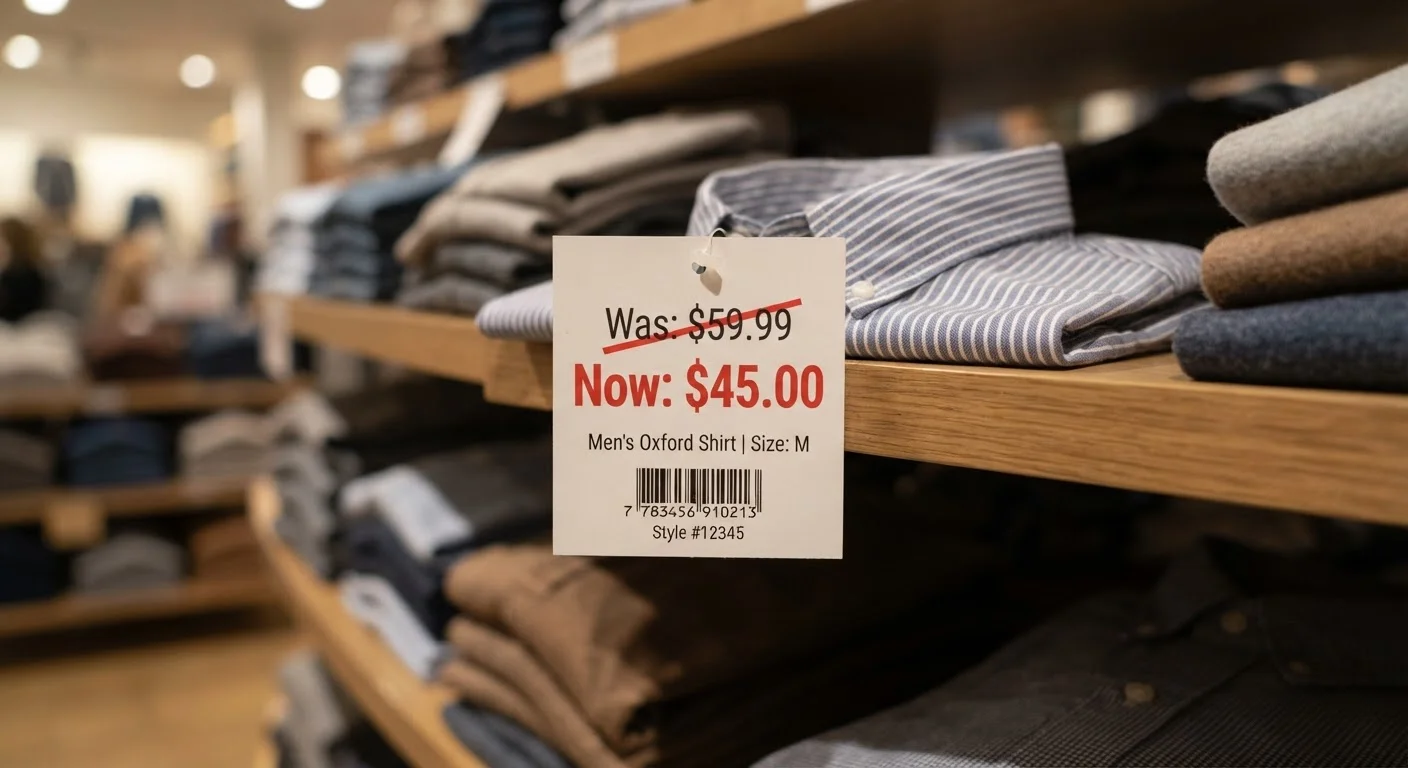
Photo: AdvisorBooth.net editorial
Key Takeaways
- A sale tag only tells you the price dropped - not whether it dropped from a fair starting point.
- Reference prices can be artificially inflated, making discounts look bigger than they are.
- Comparing prices across multiple sources is the most reliable way to verify a deal.
- Urgency cues like countdown timers are designed to bypass careful evaluation.
- A genuinely good price reflects fair market value for the item's quality and condition.
Why Sale Signs Don't Guarantee Savings
Retailers invest heavily in making you feel like you're winning. Bold red tags, percentage-off callouts, and crossed-out prices all trigger the same psychological response: the sense that an opportunity is slipping away. But none of those signals actually confirm that the price is fair - they only confirm that the listed price is lower than another listed price.
The problem is the baseline. A discount is only meaningful if the original price was genuine. When an item retails at $80, drops to $120 for a few weeks, then goes 'on sale' for $90, the 25% savings figure is mathematically real but practically misleading. You're paying more than the item's normal price and feeling good about it.
This is why understanding pricing psychology is foundational before evaluating any deal. Anchoring - the tendency to judge a price relative to the first number you see - is one of the most powerful tools in retail, and sale tags exploit it directly.
Reference Prices and Consumer Protection
What Actually Makes a Price 'Good'
A genuinely good price has nothing to do with what the tag said before. It means the amount you're paying is in line with - or below - what the item actually sells for across the broader market, for the same quality and specifications.
To evaluate this, you need a real market reference, not just the store's own pricing history. That means checking at least two or three independent sources: other retailers, manufacturer websites, or price-tracking tools that log historical pricing data. If the price holds up in that comparison, the deal is real. If the store's 'regular' price was already higher than comparable outlets, the sale is cosmetic.
Unit price comparisons add another layer of clarity, especially for consumables and packaged goods. A sale on a larger pack isn't automatically better value if the per-unit cost is higher than a smaller regular-priced alternative.
62%
Shoppers influenced by sale tags
Research published in the Journal of Consumer Research has found that reference price displays significantly increase purchase likelihood, regardless of whether the original price reflects an actual prior selling price.
3-5x
How often 'sale' prices match normal prices elsewhere
Consumer advocacy analyses have repeatedly found that a substantial share of promotional 'sale' prices at major retailers are available at the same or lower price at competing outlets without any sale designation.
Tactics That Create False Urgency
Once you know what a fair price looks like, you also need to recognize the tactics designed to stop you from looking. Countdown timers, 'only 3 left in stock' messages, and flash sale windows all compress your decision-making time - deliberately. The goal is to trigger action before you've had a chance to verify.
These cues aren't always dishonest. Sometimes inventory really is limited and the sale genuinely ends. But they're reliable signals to slow down, not speed up. A good price will still be a good price after you've spent ten minutes checking comparisons. If the 'deal' evaporates the moment you start verifying it, that's informative.
Popular shopping myths - like the idea that loyalty program prices are always competitive, or that bulk packaging always saves money - operate the same way: they substitute a feeling of savings for an actual one.
Building a Reliable Personal Benchmark
The most practical defense against misleading sale prices is knowing what things actually cost before you need to buy them. Shoppers who track prices on items they purchase regularly - even informally - are far harder to mislead than those who rely on the retailer's own framing.
A few habits that reinforce accurate price perception: compare across multiple outlets before any significant purchase; use unit pricing rather than sticker price as your primary comparison point; and consult seasonal price cycle guides to understand when genuine markdowns tend to occur for specific categories.
The underlying principle is straightforward: a good price is defined by the market and the product's value to you - not by how the seller frames it. Sale signs are marketing. Price verification is information. Only one of those tells you what something is actually worth.
Frequently Asked Questions
The content on this site is for informational purposes only and is not a substitute for professional advice. Always consult a qualified professional for guidance specific to your situation.