
Common Myths About Getting a Good Deal

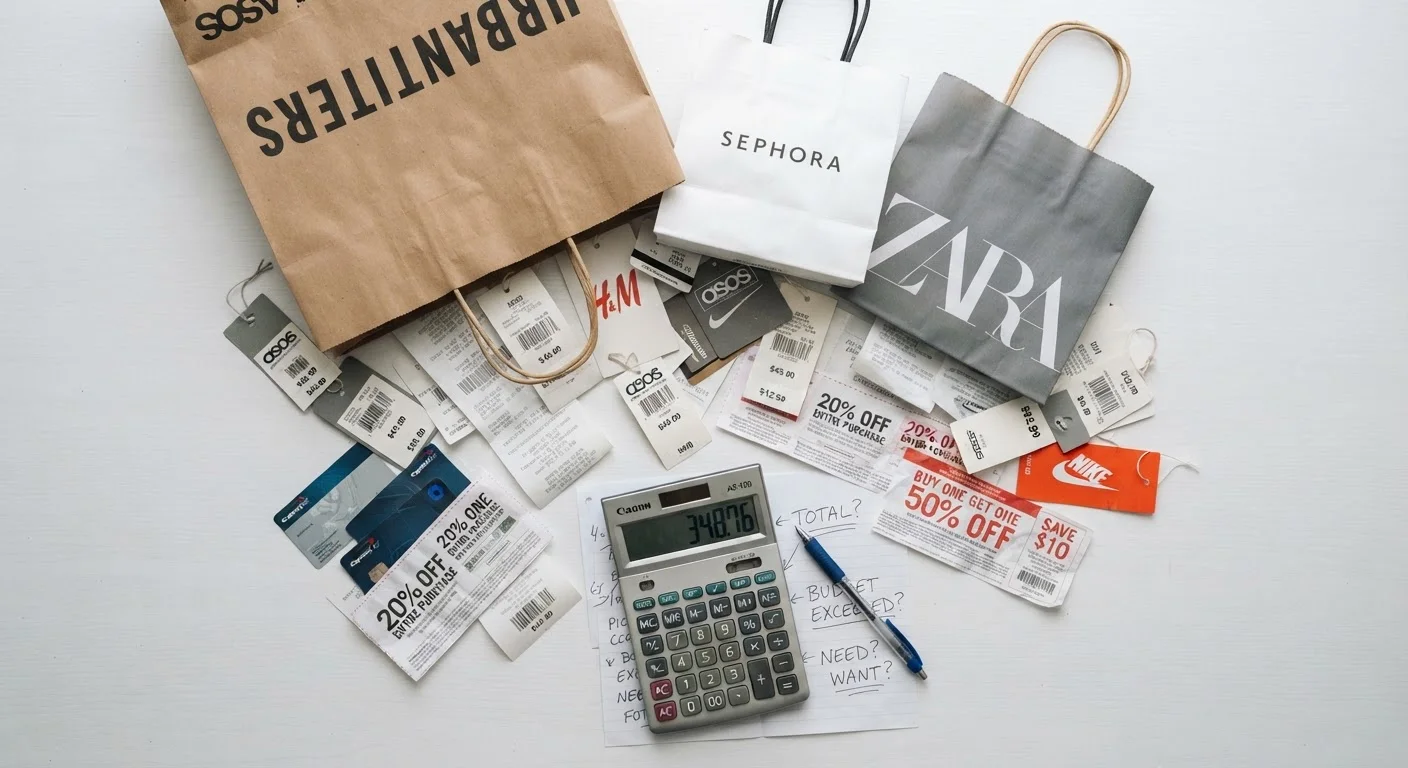
Photo: AdvisorBooth.net editorial
Key Takeaways
- A sale price only saves money if the original price was fair to begin with.
- Bulk buying can cost more if products expire or go unused before you finish them.
- Loyalty program points often carry restrictions that significantly reduce their real-world value.
- Free shipping thresholds can push you to spend more than you planned to save less.
- Price-comparison tools and purchase history are your most reliable guides to true value.
Why Shopping Myths Are So Convincing
Retailers invest heavily in making pricing feel intuitive - and that investment works. Crossed-out numbers, countdown timers, and loyalty dashboards are all designed to trigger a sense of opportunity. The problem is that many of the mental shortcuts shoppers use to decide whether something is a good deal are based on assumptions that don't hold up under scrutiny.
This isn't about blaming consumers. These myths persist because they're partly true, some of the time. Bulk buying sometimes does save money. Sales sometimes are genuine. But "sometimes" is doing a lot of heavy lifting, and understanding exactly when these rules apply - and when they don't - is the difference between spending confidently and spending more than you needed to.
The myths below are among the most common, and the most costly. See how many you've assumed were simply facts. For a broader look at how retailers use psychology to frame prices, understanding what separates a sale price from a good price is a useful starting point.
Myth
If it's on sale, I'm saving money.
Fact
You only save money if the pre-sale price was a fair market price - and that's not always the case.
Retailers sometimes inflate a product's "original" price before a promotional period so the discount looks larger than it is. This practice, sometimes called reference price inflation, has been the subject of consumer protection enforcement actions in multiple U.S. states. The percentage off the sticker is only meaningful if the sticker price itself was real and competitive. Before assuming a sale is saving you money, check what the item costs at other retailers without a sale tag - that comparison is far more informative than the crossed-out number.
Myth
Buying in bulk always saves money.
Fact
Bulk pricing saves money only when you use the full quantity before it expires or goes to waste.
The per-unit cost on a large package is often lower, but that math only holds if you consume the entire quantity. Perishable goods that spoil, cleaning products that sit unused, or clothing bought in multiples that go out of style all represent spending more, not less. Bulk buying also ties up cash in inventory sitting in your home rather than in your account. The savings calculation needs to include spoilage rate, storage space, and whether you'd realistically use that much of the product.
Myth
Free shipping means the retailer is giving me something for nothing.
Fact
Free shipping thresholds are a sales tool designed to increase average order value, and they usually work.
When a retailer sets a free-shipping threshold - say, orders over a certain dollar amount - many shoppers add items to their cart specifically to reach it. Spending an extra amount to avoid a smaller shipping fee often costs more than just paying for shipping directly. It's worth doing the math: if adding another item costs more than the shipping fee you're avoiding, you're not coming out ahead. Free shipping on items you were already planning to buy is a genuine perk; free shipping as a reason to buy more is a cost, not a benefit.
Myth
Loyalty points are basically free money.
Fact
Points have real constraints - expiration dates, redemption minimums, and category restrictions - that reduce their practical value.
Loyalty programs are structured to encourage repeat spending, not simply to reward it. Points typically expire if an account goes inactive, often can only be redeemed in increments above a minimum threshold, and may be restricted to certain product categories or excluded from already-discounted items. The effective return rate on points - when you calculate what you actually redeem relative to what you spend - is frequently far lower than the advertised earn rate implies. Programs also change their terms, sometimes reducing the value of points already accumulated. Read the terms before you shift purchasing behavior to collect points you may not be able to use the way you expected.
Myth
A higher price means better quality.
Fact
Price and quality correlate inconsistently across most product categories - premium pricing often reflects branding, not performance.
Independent product testing consistently finds that higher-priced options don't uniformly outperform lower-priced alternatives. In many categories - particularly household staples, over-the-counter products, and basic apparel - store-brand and lower-priced items perform comparably to premium versions. Price signals quality in some narrow cases (certain raw materials, complex manufacturing processes), but it's not a reliable shortcut. For a closer look at where generic products hold up, the persistent myths about store brands are worth reviewing.
Myth
If I use a coupon, I'm always saving money.
Fact
Coupons only produce savings when applied to purchases you would have made anyway at a price you'd otherwise have paid.
Coupons are a marketing tool before they're a savings tool. Manufacturers and retailers issue them to drive trial of new products, move slow-selling inventory, or encourage shoppers to switch brands - not purely to benefit the buyer. Using a coupon on a product you wouldn't otherwise buy, or buying a larger size than you need to meet a minimum, means spending money you hadn't planned to spend. The coupon offset rarely covers the full unplanned purchase. Apply coupons to items already on your list, and verify the final price is still competitive before assuming you've found a deal.
Putting These Facts to Work at Checkout
Knowing the myths is step one. Changing behavior at the moment of purchase is harder, because the store environment is specifically designed to make you act before you think. A few practical habits help counteract that pressure.
Track prices before you need something. Many browser extensions and retailer apps log historical pricing. If you can see that an item was the same price three weeks ago without a "sale" label, the markdown stops feeling urgent.
Do the per-unit math on bulk items. Divide the total price by the quantity or weight and compare it to the standard-size version - including at competing stores. Warehouse pricing isn't always lower per unit.
Spending More to Save Is Still Spending More
Read loyalty program terms before you accumulate points. Check expiration dates, redemption minimums, and whether points can be used on the categories you actually buy. A program that sounds generous in the sign-up email may have fine print that limits real-world utility. Our guide on when loyalty programs are genuinely worth your attention walks through those signals in detail.
Finally, be skeptical of deals that seem exceptionally steep - a dramatically low price on an unfamiliar site can signal a fraudulent storefront rather than a bargain. Recognizing fake online stores before you enter payment details is an essential part of safe shopping.
~60%
Shoppers who add items to hit free shipping
Research from the National Retail Federation has consistently found that a majority of online shoppers add items to their cart specifically to qualify for free shipping thresholds.
$175B+
Unredeemed loyalty points annually (U.S. estimate)
Industry analyses of U.S. loyalty program data have estimated that hundreds of billions of points go unredeemed each year, representing value consumers earned but never collected.
The content on this site is for informational purposes only and is not a substitute for professional advice. Always consult a qualified professional for guidance specific to your situation.