
That "Too Good to Be True" Deal Probably Is: Recognizing Fake Storefronts

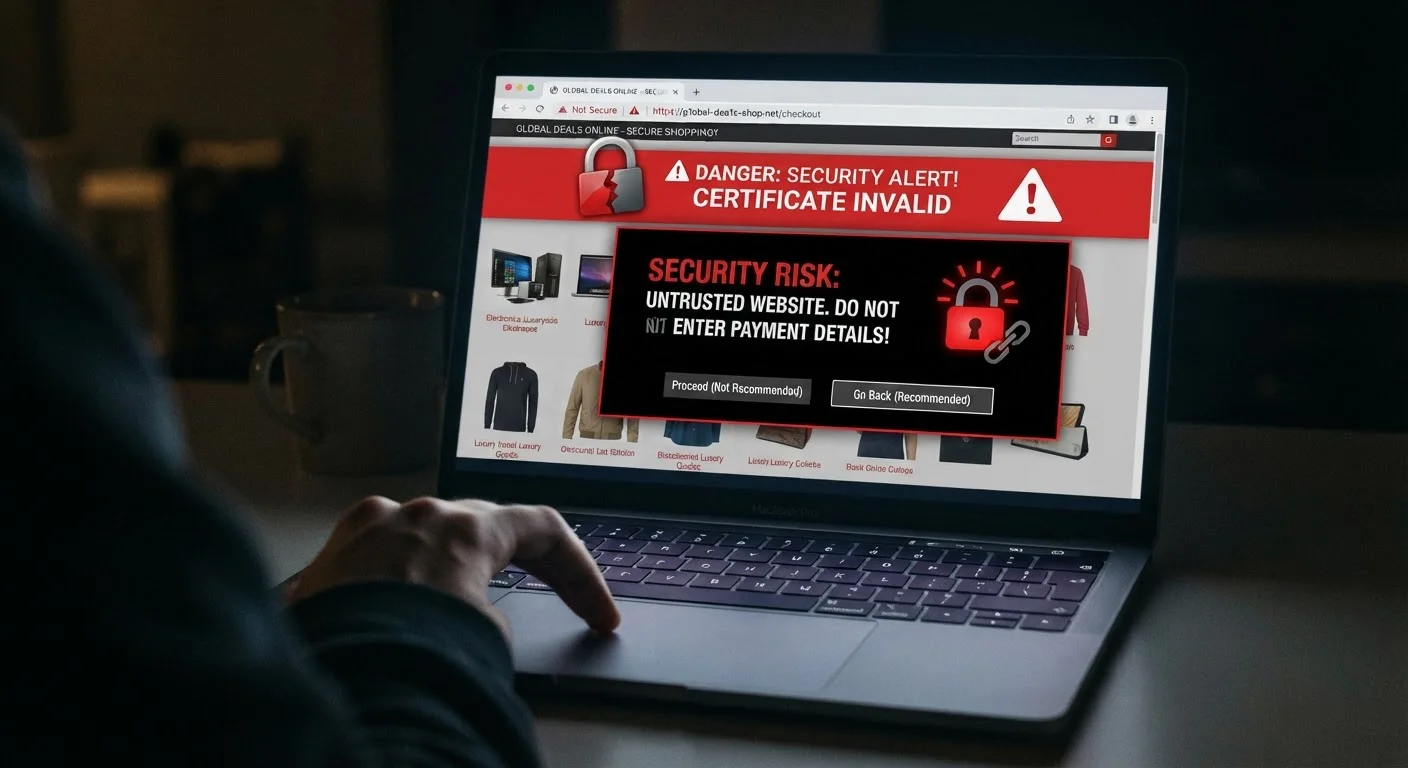
Photo: AdvisorBooth.net editorial
Key Takeaways
- Fraudulent online stores often mimic real retailers with copied logos, layouts, and product images.
- Prices dramatically below market value are one of the strongest signals of a scam site.
- Checking a domain's registration age and contact details can quickly reveal a fake storefront.
- Payment method options - or the lack of them - are a reliable red flag to examine before checkout.
- Running a quick reverse image or URL search costs nothing and can save you significant money.
Why Fake Storefronts Are Hard to Spot
Fraudulent online stores have become sophisticated. Scammers routinely clone the visual identity of well-known retailers - copying logos, color schemes, and product photography - to create storefronts that feel familiar at a glance. Coupled with cheap domain registration and free website builders, launching a convincing fake store requires minimal skill and almost no money.
Understanding the mechanics behind these scams helps consumers build better instincts. For a deeper look at how these operations work from the inside, see how online shopping scams actually work.
Social Media Ads Are a Common Entry Point
The mistakes below represent the most common ways consumers get caught - and each one is avoidable with a few extra minutes of scrutiny before you check out.
Common Mistakes That Put Shoppers at Risk
Trusting a polished design as proof of legitimacy.
Ignoring suspiciously low prices as just a 'great deal.'
Skipping the contact page and 'About Us' section entirely.
Accepting only wire transfers, gift cards, or cryptocurrency as valid payment methods.
Not verifying reviews or checking third-party reputation sources.
Before completing any purchase from an unfamiliar site, it's worth running through a structured verification process. The pre-purchase safety checklist is a practical resource you can bookmark and use every time.
Your Card Data May Already Be at Risk
Also pay attention to seller profiles if you're buying through a marketplace. Vague locations, new accounts, and missing feedback are all signals worth pausing on - the article on red flags in seller profiles breaks these down in detail.
$8.8B+
Consumer losses to fraud reported in 2022
According to the Federal Trade Commission's 2022 Consumer Sentinel Network report, Americans reported losing more than $8.8 billion to fraud, with online shopping among the top categories.
35%
Share of fraud reports involving online shopping
The FTC has consistently found that online shopping and negative reviews account for among the highest volume of consumer fraud reports filed each year.
This article is for general informational and educational purposes only. It does not constitute legal or financial advice. If you believe you have been the victim of fraud, contact your financial institution and report the incident to the Federal Trade Commission at reportfraud.ftc.gov.
The content on this site is for informational purposes only and is not a substitute for professional advice. Always consult a qualified professional for guidance specific to your situation.