
Zones vs. Rooms: Two Ways to Think About Organizing Your Home

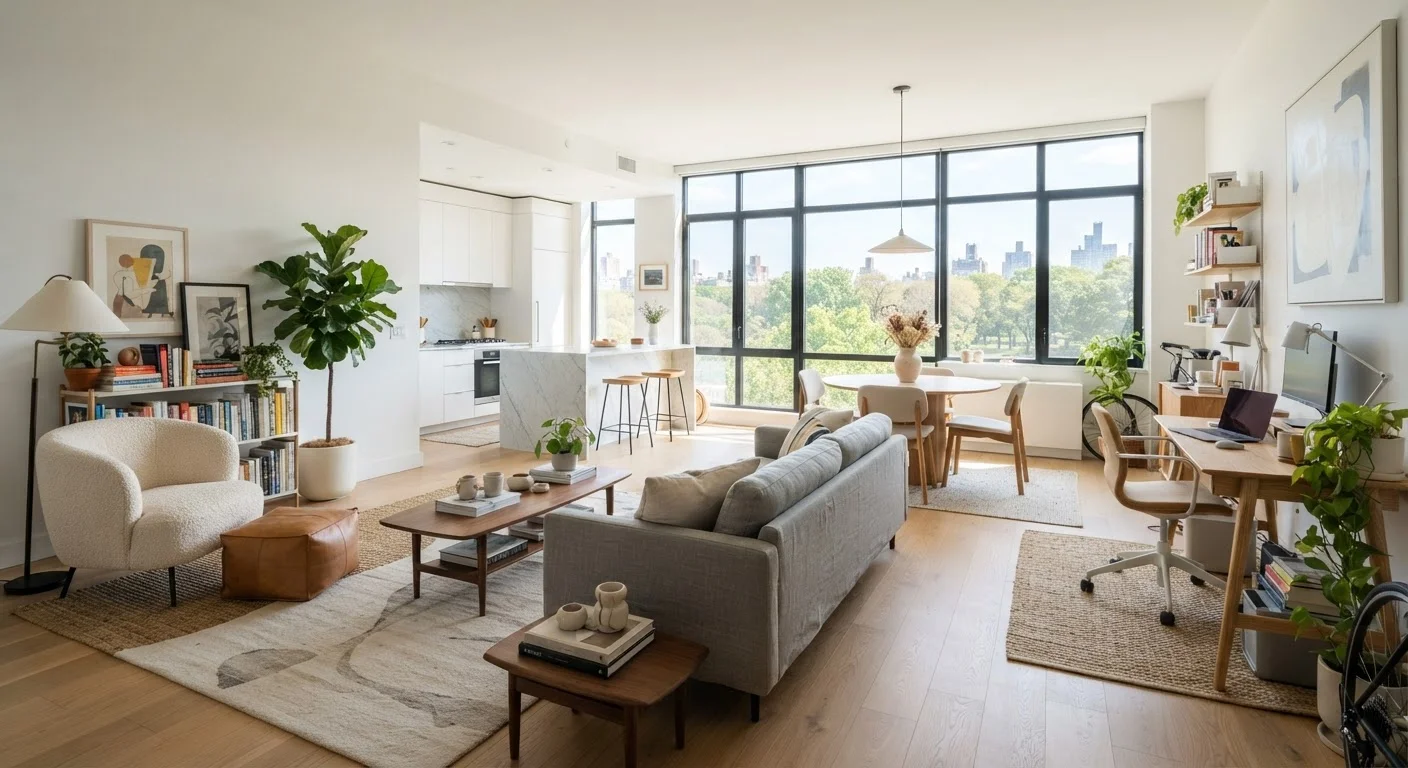
Photo: AdvisorBooth.net editorial
Key Takeaways
- Room-by-room organizing works best when each space has one clear, dedicated purpose.
- Zone-based organizing groups items by activity, regardless of which physical room they're in.
- Open-plan layouts often benefit most from the zone approach.
- Both methods can be combined - use zones within rooms for extra flexibility.
- The right system is the one your household can consistently maintain.
What Each Approach Actually Means
Room-by-room organizing treats each room as its own self-contained project. You declutter, sort, and store everything within that room's four walls before moving on. The logic mirrors how most homes are physically laid out: bedrooms, kitchens, bathrooms, and living rooms each have a general purpose, and that purpose guides what belongs there.
Zone-based organizing shifts the focus from architecture to activity. Instead of asking "What belongs in the living room?" you ask "Where do we do homework, pay bills, or practice hobbies?" Items are grouped by the task they support, and a zone can occupy a corner of a room, span multiple rooms, or coexist with other zones in one shared space.
Neither approach is new - professional organizers have used both for decades - but knowing which one suits your household can save significant time and frustration. If you've ever reorganized a space only to find it undone within days, the method may have been the mismatch, not your effort. See why the same spaces keep getting disorganized for more on that cycle.
How They Compare Side by Side
The table below breaks down the core differences so you can quickly see which aligns with how your household actually operates.
| Criterion | Room-by-Room | Zone-Based |
|---|---|---|
| Core logic | Organized by physical space | Organized by activity or function |
| Best layout fit | Homes with distinct, separate rooms | Open-plan or multipurpose spaces |
| Getting started | Pick a room and finish it | Map activities, then group items |
| Flexibility | Lower - tied to room boundaries | Higher - crosses room lines freely |
| Household coordination | Easier to assign responsibility | Requires shared understanding of zones |
| Works for multipurpose rooms | Can struggle | Handles well |
| Sense of progress | Clear milestones per room | Less defined - improvement is gradual |
One pattern worth noting: room-by-room organizing tends to work well when rooms have clear, single purposes. The moment a guest bedroom doubles as a home office and a craft room, room-based logic starts to strain. Zone thinking handles multipurpose spaces more naturally because it doesn't require a room to do just one thing.
Room-by-Room: Strengths and Limits
The room-by-room method offers a concrete, satisfying workflow. You can close a door at the end of the day with a visible sense of completion, which helps maintain momentum - especially for larger homes. It's also easier to delegate: assigning one household member to one room is straightforward and measurable.
The main limitation appears in homes where activities bleed across rooms. Craft supplies stored in the spare bedroom, used at the kitchen table, and finished in the living room create a fragmented system that no single room can solve on its own. For homes dealing with limited square footage, our storage solutions for small living spaces guide offers strategies that complement either approach.
57%
Americans say clutter causes daily stress
A survey by the National Association of Productivity and Organizing Professionals found that over half of respondents linked household clutter directly to elevated stress levels.
~30 min
Average time lost daily to disorganization
Research from the National Association of Professional Organizers has suggested that disorganized households can lose roughly 30 minutes per day searching for misplaced items.
Zone-Based: Strengths and Limits
Zone organizing shines in open-plan layouts and shared households. By anchoring zones to activities - a reading zone, a bill-paying zone, a morning-routine zone - you create functional logic that doesn't depend on architectural boundaries. Everything needed for a task lives together, reducing the daily friction of hunting items down.
The challenge is consistency. Zones require household members to return items to their activity group rather than to the nearest flat surface. In homes where household members have different tidiness standards, this can create friction unless expectations are clearly established upfront.
Zone thinking also works well inside individual rooms. A home office, for instance, can contain separate zones for focused work, reference materials, and equipment - effectively applying zone logic within a room-based framework. Organizing a home office for focus is one area where this hybrid approach is especially practical.
Choosing - or Combining - Both
Many well-organized homes use a hybrid: room-by-room as the macro structure and zone logic within each room. Start by identifying your home's most friction-heavy spots - the places where clutter consistently returns or where you spend the most time searching for things. If the issue follows room boundaries, the room approach likely fits. If the issue follows an activity (everything related to school, hobbies, or work is scattered), zones will serve you better.
A few practical steps to get started:
- Map your activities - List the six to eight things your household does most often at home.
- Trace where each activity happens - Note which rooms or corners are involved.
- Decide your primary method - If activities stay contained to rooms, organize room by room. If they spread, organize by zone.
- Test one area first - Apply your chosen approach to one room or zone, live with it for two weeks, and adjust before expanding.
For a broader look at how organizing methods fit into a long-term home strategy, the complete home organization guide covers systems and habits that support whichever approach you choose.
Neither System Requires Perfection
The content on this site is for informational purposes only and is not a substitute for professional advice. Always consult a qualified professional for guidance specific to your situation.