
Shared Spaces, Different Standards: Organizing a Home With Multiple People

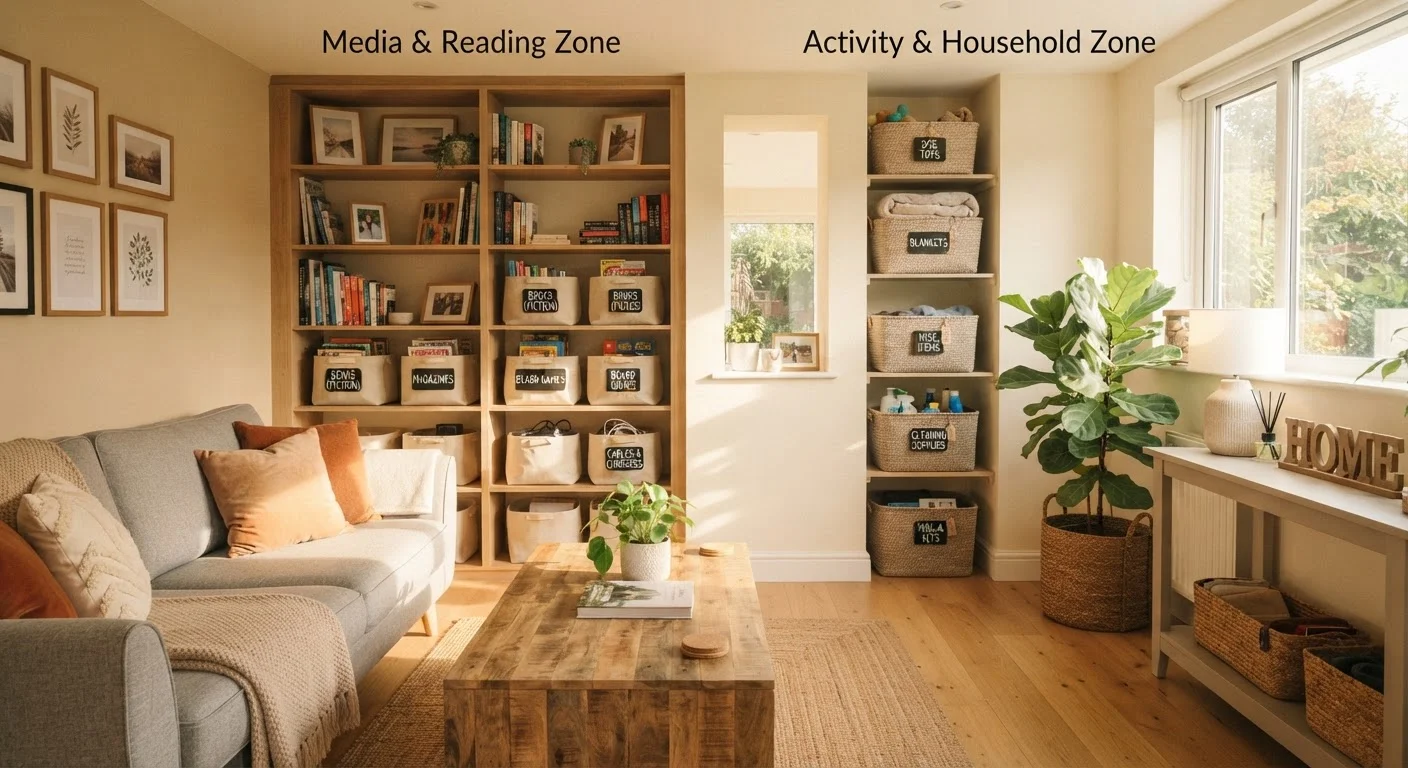
Photo: AdvisorBooth.net editorial
Key Takeaways
- Different tidiness standards are normal - the goal is a workable system, not perfect uniformity.
- Defining shared-space minimums prevents ongoing conflict without requiring everyone to match habits.
- Giving each person dedicated personal storage reduces friction in communal areas.
- Simple, low-effort systems are more likely to be followed by everyone in the household.
- Regular, brief household check-ins help catch problems before resentment builds.
Why Shared-Space Organizing Is Its Own Challenge
Organizing a home you share with others is fundamentally different from organizing on your own. When you live alone, your system only has to work for one brain and one set of habits. Add a partner, a roommate, or children, and suddenly the system has to accommodate multiple definitions of "tidy," different daily rhythms, and competing priorities about what's worth putting away.
This is why many people find themselves redoing the same organization tasks week after week - not because the system was wrong, but because it was only designed for one person's standards.
This Is About Systems, Not Personalities
The practical goal in any multi-person household isn't a showroom-clean home. It's a functional home where everyone understands what's expected and the baseline is actually maintainable.
Best Practices for Organizing With Multiple People
These principles apply whether you're organizing with a partner, roommates, or a multigenerational family. The common thread is designing around what people will actually do - not what you wish they'd do.
- Set shared-space minimums together. Decide as a household what "good enough" looks like for each communal area. Dishes in the sink by end of day, shoes off at the door, common surfaces cleared before guests arrive - whatever the household can genuinely commit to. Write it down somewhere visible if it helps.
- Give everyone dedicated personal storage. A major source of shared-space clutter is personal items with nowhere to go. Assign each person a drawer, shelf, or bin in high-traffic areas. When someone's items end up on the coffee table, they have a clear destination to return them to.
- Design for the least organized person, not the most. A system that requires perfect execution will fail. Aim for frictionless enough that even the busiest or least detail-oriented household member can follow it most of the time. Many common organizing myths stem from expecting perfection rather than consistency.
- Use zones to separate personal and shared territory. Organizing by zone rather than by room can help clarify which spaces are communal and which are personal, reducing the gray areas where clutter accumulates.
- Keep shared storage simple and labeled. The more categories you create, the harder it is for everyone to use the system correctly. In kitchens especially, fewer, broader categories tend to hold up better across multiple users.
Quick Ways to Reduce Shared-Space Friction Today
“The goal is not to impose one person's organizational style on the whole household. It's to find the lowest common denominator that everyone can actually maintain - and build from there.”
— Julie Morgenstern, Professional organizer and author of 'Organizing From the Inside Out'
The tactics above don't require a full weekend overhaul. Most households see immediate improvement just from adding a drop basket and having a five-minute conversation about the kitchen counter.
Keeping the System Working Over Time
Even well-designed shared systems drift. Life changes, routines shift, and what worked for a household of two may not work once a third person moves in. Building in occasional maintenance is what separates systems that last from systems that collapse after a month.
Start With One Room, Not the Whole House
A brief weekly reset is usually enough to prevent major backsliding. Many households find a Sunday evening routine - 10 minutes each, everyone tidies their own contributions to shared spaces - keeps things from accumulating into a larger problem. This is closely related to what makes the one-in, one-out approach sustainable: it's small, regular, and requires a decision, not a project.
If one area keeps slipping, treat it as a system problem rather than a behavior problem. Ask whether the storage solution is actually convenient, whether there are enough of them, or whether the agreed standard was realistic in the first place. Adjusting the system is almost always more effective than repeated reminders. For compact homes where space itself is the constraint, dedicated small-space storage strategies can help free up the communal areas that tend to collect the most.
The content on this site is for informational purposes only and is not a substitute for professional advice. Always consult a qualified professional for guidance specific to your situation.