
One-In, One-Out: What It Actually Takes to Maintain a Clutter-Free Home

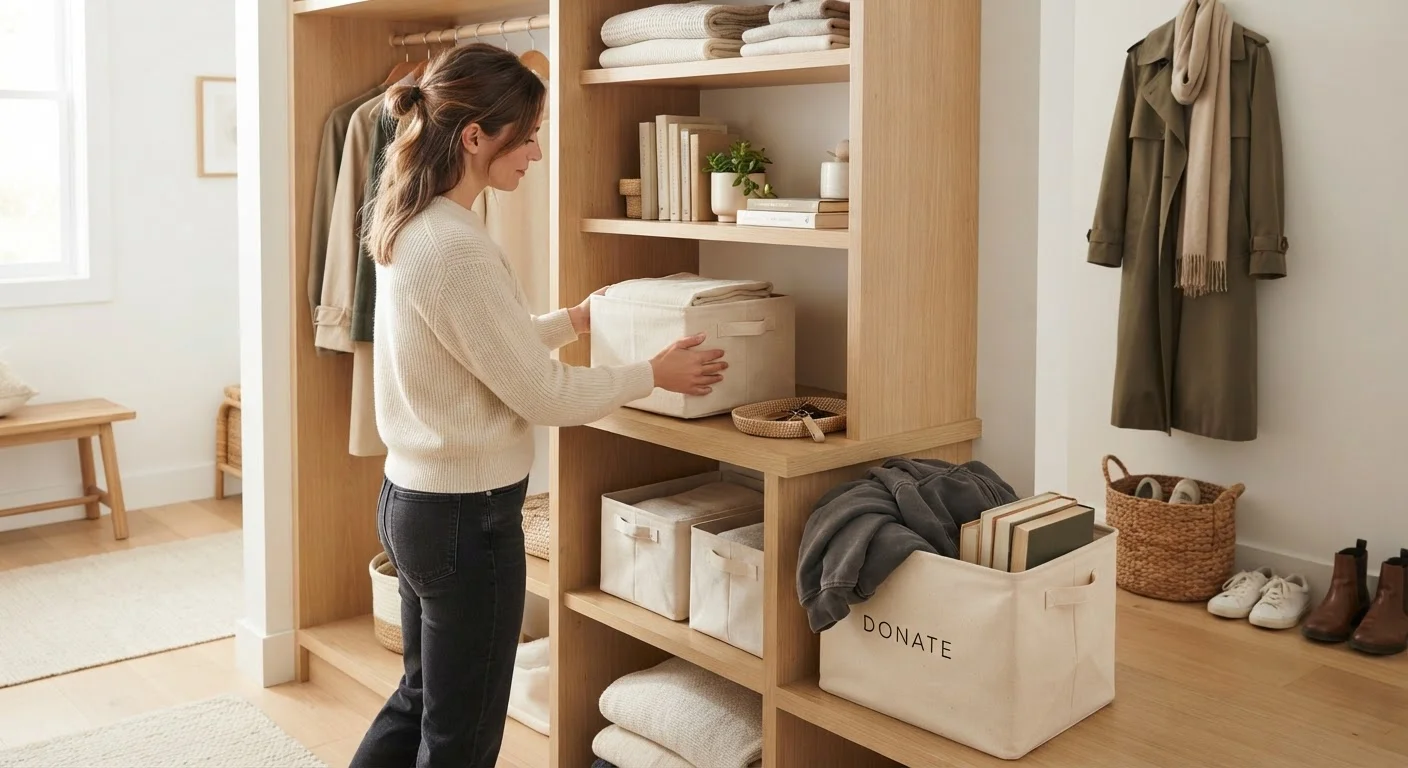
Photo: AdvisorBooth.net editorial
Key Takeaways
- The one-in, one-out rule prevents clutter from building up rather than fixing clutter that already exists.
- It works best as a habit applied consistently to specific categories like clothing, kitchen tools, or books.
- The rule needs adjustment in multi-person households where individual decisions affect shared spaces.
- Exceptions are inevitable - the key is returning to the habit, not enforcing it perfectly every time.
- Starting with one high-clutter category is more effective than trying to apply the rule everywhere at once.
Why the Rule Is Harder Than It Sounds
The one-in, one-out rule is one of the most frequently recommended home organization habits - and one of the most frequently abandoned. On paper it's elegantly simple: bring something in, let something go. In practice, it asks you to make a deliberate decision every single time you acquire something, which runs against the grain of how most people shop and accumulate things.
The core problem is that most clutter doesn't arrive all at once. It sneaks in - a gadget here, a bag of clothes from a well-meaning relative there, a kitchen tool bought on impulse. Each individual item seems harmless. The one-in, one-out rule only works if you apply it consistently to these small, everyday additions, not just the obvious purchases.
If your home is already over capacity, the rule won't dig you out. It's a maintenance habit, not a reset. That's why so many people who try it end up frustrated - they expect it to solve a backlog it was never designed to address. If that sounds familiar, consider starting with a broader whole-home declutter before layering this habit on top.
Start Before You're Overwhelmed
Where It Works Best - and Where It Doesn't
The rule performs reliably in categories where items are relatively interchangeable and space is clearly defined. Clothing is the classic example: a drawer or closet has a natural limit, and a new shirt swapping out an old one makes physical sense. The same logic applies to books, kitchen tools, toys, and linens.
It works less cleanly in categories that don't have natural containers or that include items of wildly different sizes. Replacing a small candle with a large piece of furniture isn't really one-for-one in any meaningful sense. Similarly, sentimental items, seasonal gear, and consumables (groceries, cleaning supplies) generally don't fit the rule well and don't need to.
The most practical approach is to identify two or three categories in your home where clutter consistently builds up, and apply the rule specifically there. Trying to enforce it across every domain at once tends to feel overwhelming and rarely sticks. As you build the habit in one area, expanding it elsewhere becomes more natural.
1 in 4
American households with clutter-related storage problems
Research from UCLA's Center on Everyday Lives of Families found that managing household belongings was a significant source of daily stress in many American homes.
~$1,000/yr
Average spent on items later donated or discarded
Consumer research consistently finds that a meaningful share of household purchases go unused; exact figures vary by study and household income level.
Making It Work in a Shared Home
When more than one person lives in a space, the one-in, one-out rule gets complicated quickly. What counts as shared space versus personal space? What happens when one person's acquisition affects everyone's storage? These questions don't have universal answers, but they do need to be discussed rather than assumed.
A workable starting point is to apply the rule to clearly personal categories - each person manages their own clothing, books, and hobby items - while shared spaces like the kitchen and living room are governed by household agreement rather than individual habit. This avoids the friction of one person policing another's acquisitions, which rarely ends well.
For households with children, strict one-in, one-out often isn't realistic. Kids grow, interests shift, and gifts arrive from outside the household. A seasonal approach - sorting toys and clothes at the start of each season - tends to be more manageable and still keeps accumulation in check. For more on navigating these dynamics, see organizing a home with multiple people.
Building the Habit So It Actually Sticks
Habits stick when they're tied to existing routines and when the friction to follow them is low. A few practical approaches make one-in, one-out feel like second nature rather than a chore.
- Keep a donation spot visible. A box near a closet or by the front door makes it easy to drop something in the moment you decide it should go. Items that have to travel across the house to leave tend to stay.
- Pair the habit with shopping. Before buying something new, ask what you'd remove to make room. This doesn't mean you always have to say no - it just builds the connection between acquiring and releasing.
- Batch the outgoing items. Some people prefer a monthly or quarterly sweep rather than item-by-item decisions. Both approaches work; the key is that things actually leave the house, not just migrate to a different pile.
- Forgive slippage. Life gets busy. The habit will lapse during moves, life changes, and busy seasons. The goal isn't perfection - it's returning to the practice when you can.
If you find yourself repeatedly reorganizing the same areas, the issue may run deeper than volume. Understanding why the same spaces get messy again can help you find a more lasting fix.
The Rule Isn't a Moral Framework
Frequently Asked Questions
The content on this site is for informational purposes only and is not a substitute for professional advice. Always consult a qualified professional for guidance specific to your situation.