
Decluttering Your Home From Scratch

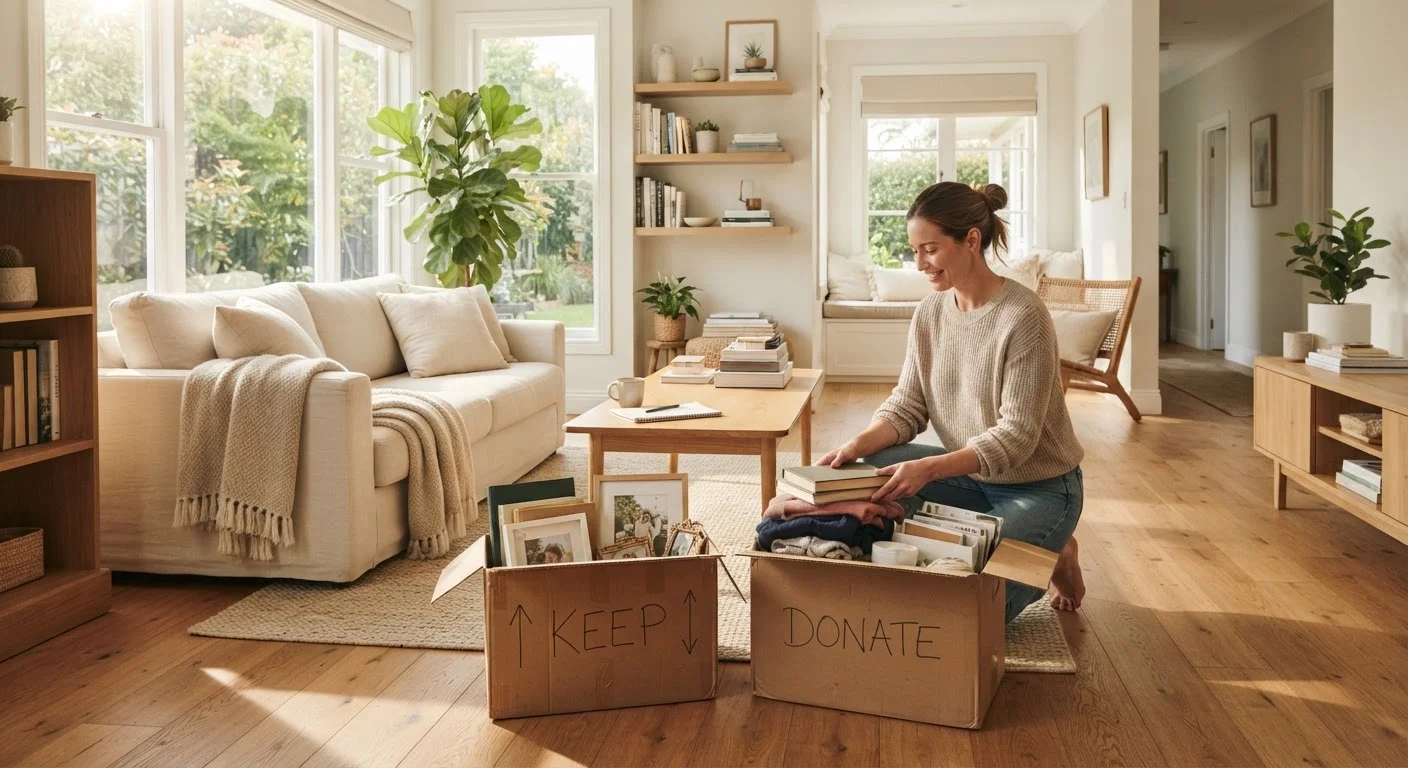
Photo: AdvisorBooth.net editorial
Key Takeaways
- Starting small - one shelf, one drawer - is more effective than attempting a full-home purge in a single day.
- A simple keep, donate, discard framework removes most of the decision fatigue from sorting.
- High-traffic areas like entryways and kitchens deliver the fastest visible improvement.
- Letting go of items responsibly through donation or recycling reduces environmental waste.
- Maintenance habits, not one-time events, are what keep a home clutter-free long term.
Getting Your Head in the Right Place
Before you touch a single drawer, it helps to understand why decluttering feels hard. Most people aren't disorganized by nature - they're simply holding on to objects tied to identity, memory, or guilt. Recognizing this upfront makes the process less emotionally draining.
One useful mindset shift: decluttering is not about achieving a magazine-perfect home. It's about creating a space that's easier to live in day to day. Lower the bar from perfect to functional, and you'll move faster and feel better about the results.
Also worth knowing: you don't have to do this all at once. There's a persistent myth that a real declutter means clearing the whole house in a weekend. That's rarely realistic and often leads to abandoned projects. Our article on common organization myths unpacks this in more detail.
Take a 'before' photo of cluttered spaces
Where to Begin: Choosing Your Starting Point
Pick one small, clearly bounded space: a single shelf, a bathroom cabinet, or a junk drawer. Not a whole room - just one area you can complete in under an hour. The goal is a finished result that builds confidence and momentum.
Avoid starting with sentimental items. Photos, keepsakes, and inherited objects require the most emotional energy. Save them for later, once you've sharpened your decision-making instincts on neutral things like duplicate kitchen tools or outdated paperwork.
Set a timer for 45 to 60 minutes. Focused, time-boxed sessions produce better decisions than open-ended ones that drift into exhaustion. When the timer goes off, stop - even if you're not done. You can always come back.
The Sorting Process: A Simple Decision Framework
Set out three containers before you begin: one for keep, one for donate, and one for discard. Label them clearly. As you handle each item, place it in one of the three - no maybe pile allowed. The maybe pile is where progress goes to stall.
Sunk cost
Money or effort already spent that cannot be recovered. Holding onto an item just because you paid for it is letting sunk cost override practical usefulness.
One-in, one-out rule
A maintenance habit where every new item brought into the home means one existing item leaves - keeping overall volume stable.
Decision fatigue
The mental exhaustion that comes from making too many choices in a row, which leads to worse decisions over time. Sorting in short sessions helps avoid it.
Donation pipeline
The practical path from deciding to let go of something to actually getting it out of the house - including bagging, scheduling a drop-off, and following through.
For items you're unsure about, ask: Have I used this in the past year? Would I replace it if it were gone? If the answer to both is no, it's a strong candidate for the donate or discard box. Don't let sunk cost - what you paid for something - override whether it's actually useful now.
For kitchens specifically, duplicates are the biggest source of clutter. See our guide on kitchen drawer organization for targeted help with the spaces that accumulate the most.
Room-by-Room Priorities
Once you've built some momentum, work through rooms in order of daily impact:
- Entryway: Shoes, coats, bags, and mail are the usual culprits. A cleared entry sets the tone for the whole home.
- Kitchen: Focus on expired pantry items, duplicate utensils, and gadgets used fewer than once a year.
- Bedroom: Clothing you no longer wear, mismatched linens, and items that don't belong in a sleep space.
- Bathrooms: Check expiration dates on medications and personal care products - this is quick, high-value work.
- Living areas: Books, media, decorative items, and anything that landed there from another room.
- Storage spaces last: Garages, basements, and attics hold the densest clutter and deserve their own dedicated sessions.
For a structured checklist covering every room, the seasonal decluttering checklist is a practical companion to keep alongside this guide.
What to Do With What You're Letting Go
Once your donate and discard boxes are full, act on them promptly. Items that sit in bags by the door have a way of creeping back. Schedule a drop-off at a donation center within a day or two of finishing each session.
For discard items: check whether your municipality offers recycling drop-offs for electronics, textiles, or hazardous materials like old paint. Many communities have periodic collection events. Sending less to landfill is worth the small extra effort.
Anything with resale value is fine to set aside, but be realistic about your follow-through. If you haven't listed something for sale within two weeks of deciding to sell it, move it to the donate pile instead.
Keeping It That Way
Decluttering once is a start. Staying clutter-free is a habit. The most effective maintenance habit is the one-in, one-out rule: when something new comes into the house, something else leaves. It sounds simple because it is - and it works.
Set aside 10 minutes at the end of each week to return items to their proper places and flag anything accumulating. Catching small drift early prevents it from compounding into a project again.
For a deeper look at building systems that hold up across every area of your home, home organization from every angle covers the long-term picture well. The goal isn't a perfect home - it's a home that's genuinely easier to live in every day.
Don't buy storage before you've sorted
Frequently Asked Questions
The content on this site is for informational purposes only and is not a substitute for professional advice. Always consult a qualified professional for guidance specific to your situation.