
Kitchen Drawer Chaos: Organizing the Spaces That Collect Everything

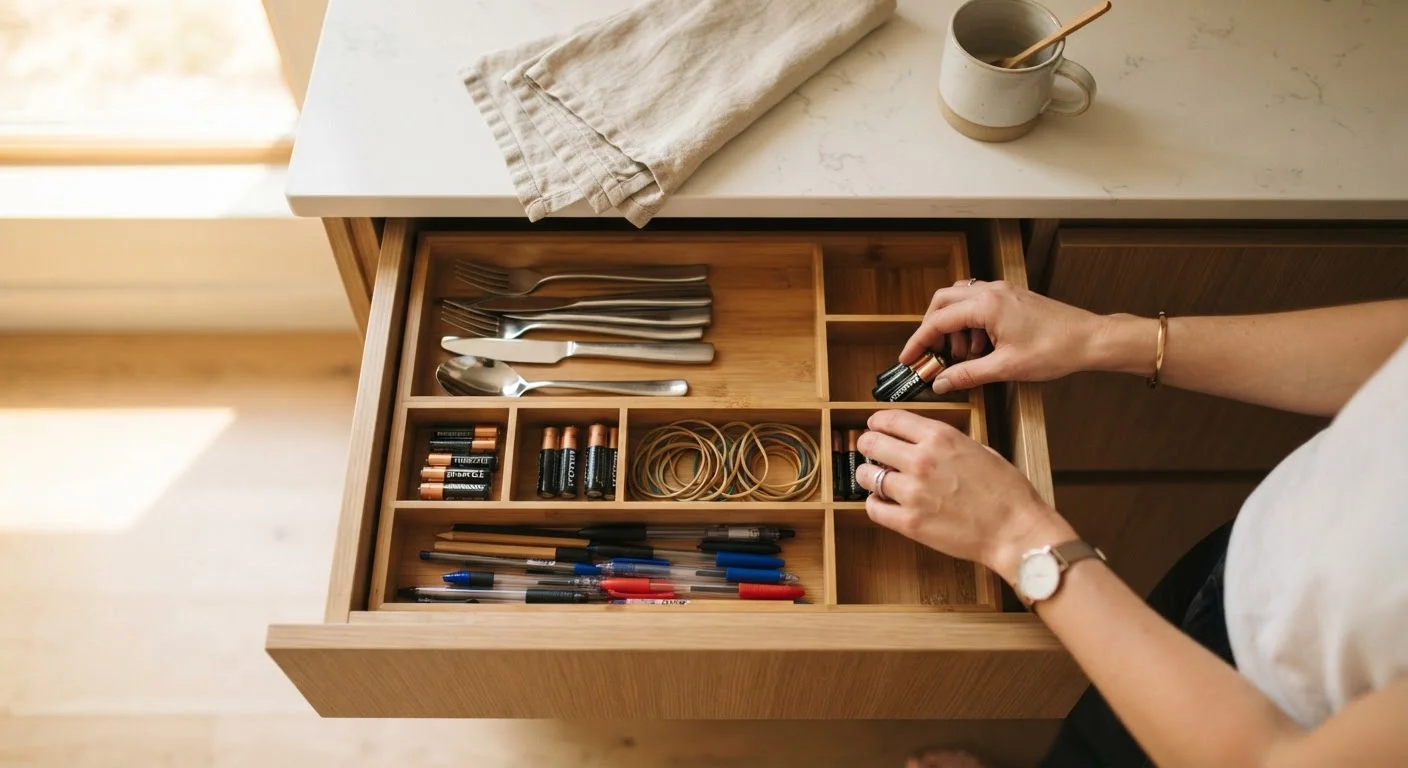
Photo: AdvisorBooth.net editorial
Key Takeaways
- Empty the drawer completely before sorting - you can't organize what you can't see.
- Group items by function, not by where they happened to land.
- Dividers and small bins are more effective than expensive organizer systems.
- Regular five-minute resets prevent drawers from reverting to chaos.
- Relocating misplaced items is just as important as discarding broken ones.
Why Kitchen Drawers Become Catch-Alls
Kitchen drawers attract clutter because they're convenient and enclosed. Out of sight means out of mind - so expired coupons, mystery keys, and dead batteries accumulate alongside the tools you actually reach for every day. The problem isn't laziness; it's the absence of a clear system.
Most households have at least one dedicated "junk drawer," but even purposeful drawers - silverware, cooking utensils, kitchen linens - gradually drift toward disorder. The fix doesn't require purchasing an elaborate organizer set. It requires a method and about an hour of focused effort.
If you're approaching a broader home reset, the full decluttering guide covers the mindset and process from start to finish. For kitchen drawers specifically, the steps below will get you from chaos to functional in a single session.
What you will need
What You'll Need
Before you start pulling items out, gather your supplies. Having everything on hand keeps the process moving without interruption.
Drawer dividers or small bins
Create dedicated compartments so different categories of items don't mix together.
Trash bag
Immediately discard broken items, expired coupons, and obvious trash as you sort.
Masking tape and marker
Temporarily label zones while you test the layout before committing to a final arrangement.
Small zip-close bags
Contain loose small items like rubber bands, twist ties, or batteries that don't warrant their own bin.
Step-by-Step: Organizing Any Kitchen Drawer
These steps work for a junk drawer, a utensil drawer, or any kitchen storage space that's stopped working for you. Tackle one drawer at a time to avoid overwhelm.
Empty the Drawer Completely
Pull every item out and place it on a flat surface. Don't try to sort while items are still inside - you'll miss things buried at the back and end up rearranging rather than truly organizing. Wipe out the interior of the drawer with a damp cloth while it's empty.
Sort Everything Into Categories
Group items by function on your work surface. Common kitchen drawer categories include: cutting and prep tools, measuring tools, batteries and small hardware, pens and notepads, takeout menus or coupons, and miscellaneous. Keep categories broad at this stage - you're building a map, not filing a cabinet.
Discard, Relocate, or Keep
For each item, ask three questions: Is it broken or expired? Discard it. Does it belong somewhere else in the home? Set it aside to relocate. Is it useful and genuinely kitchen-related? Keep it. Be honest - duplicate tools, single-use gadgets used twice in five years, and mystery items with no clear purpose are all candidates for the discard pile.
Assign a Zone for Each Category
Decide where each category will live inside the drawer before placing dividers. High-frequency items - the things you grab daily - should sit at the front or in the most accessible position. Rarely used items move to the back. Sketch a rough layout or use masking tape labels to mark zones before you commit.
Place Dividers and Return Items
Install your dividers or bins according to the zone plan. Place items into their assigned sections. Avoid overfilling any compartment - if a section is jammed, either reduce the contents or reconsider the zone boundaries. A compartment that's 70-80% full is easier to maintain than one that's packed tight.
Relocate the Items That Don't Belong
Return the set-aside items to their proper homes throughout the house. Don't let them sit on the counter - that just moves the clutter without resolving it. If several items lack a logical home anywhere, that's a signal to reconsider whether they're worth keeping at all.
One Drawer at a Time Works Best
Keeping Drawers Organized Long-Term
A freshly organized drawer stays tidy only if items consistently return to their designated spots. The two biggest reasons drawers relapse are unclear homes for everyday items and household members who don't know the system. If you share your space, the strategies for organizing with multiple people article offers practical ways to get everyone on the same page.
Build a short reset into your routine - once a week, spend two to three minutes returning stray items and discarding obvious trash. Pair this with a seasonal decluttering pass to catch the slow creep of new clutter before it takes hold.
Finally, resist the urge to let a single drawer absorb everything homeless. If an item doesn't belong in the kitchen, return it to where it does belong - or decide whether it belongs in your home at all. That habit, more than any organizer bin, is what keeps drawers functional for the long run.
The content on this site is for informational purposes only and is not a substitute for professional advice. Always consult a qualified professional for guidance specific to your situation.