
Storage Solutions for Small Living Spaces

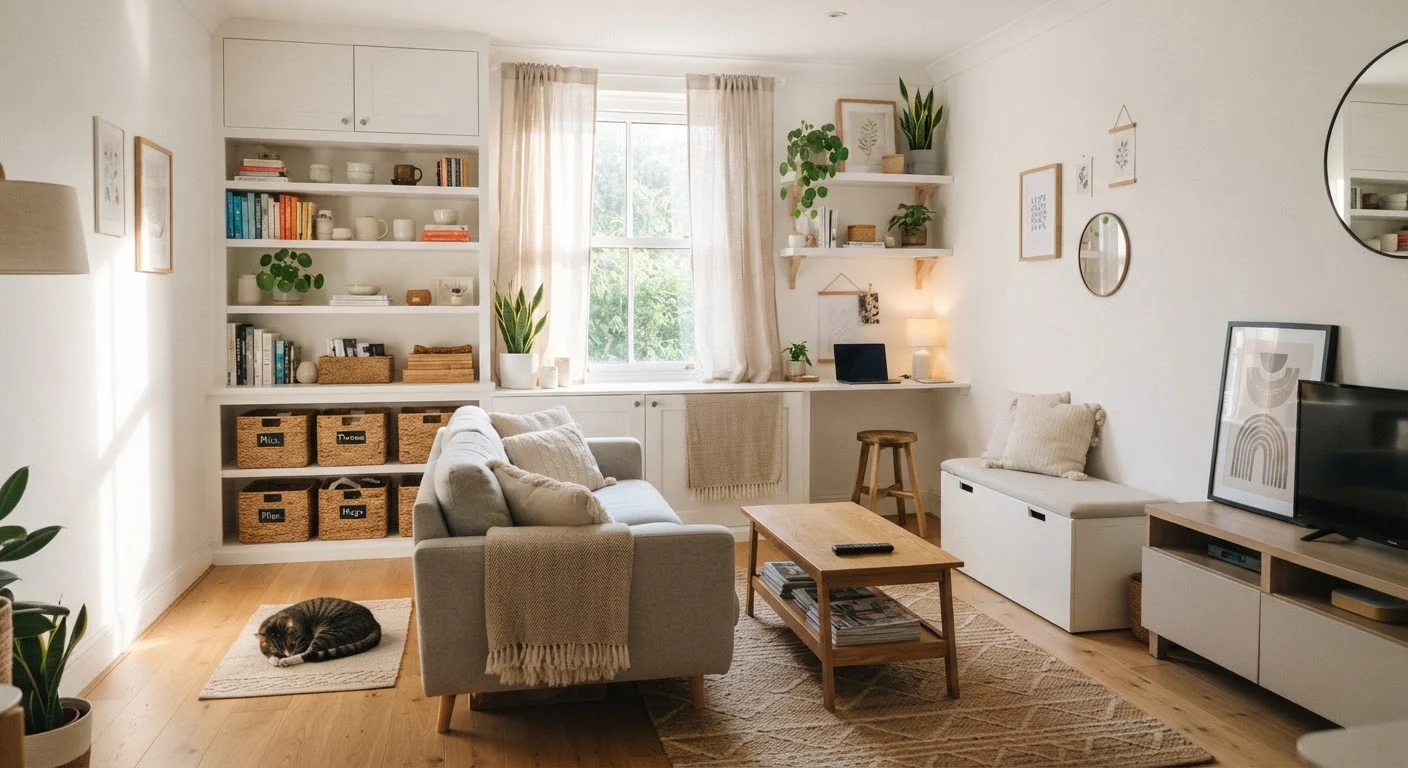
Photo: AdvisorBooth.net editorial
Key Takeaways
- Vertical wall space is one of the most underused storage opportunities in small homes.
- Multi-functional furniture - like beds with drawers or ottomans with lids - doubles usable storage without adding footprint.
- Decluttering before organizing is essential; storage solutions only work when paired with intentional editing.
- Consistent zones for everyday items reduce clutter and make small spaces easier to maintain.
- Small bathroom and kitchen upgrades can dramatically increase perceived and functional storage capacity.
Why Small Spaces Demand Smarter Systems
Living in a compact apartment or a modestly sized home isn't a problem to solve - it's a design challenge to work with. The difference between a cramped space and a calm one usually isn't square footage; it's how intentionally that space is used. Without a system, clutter accumulates fast, surfaces disappear, and the home starts to feel smaller than it actually is.
The strategies below focus on making every corner count - without requiring a renovation budget or a complete lifestyle overhaul. Whether you're in a studio apartment or a two-bedroom starter home, these approaches are adaptable and practical. For a broader look at organizing systems across every area of your home, see our comprehensive home organization guide.
Go vertical with wall-mounted shelving
Most small spaces have more vertical real estate than horizontal surface area. Wall-mounted shelves above desks, sofas, and beds put that space to work - storing books, baskets, and everyday items without touching the floor plan. Floating shelves in particular keep the visual footprint light while adding meaningful capacity.
When planning shelf placement, aim for a consistent height across a room to create visual order rather than a cluttered patchwork. Adjustable shelving systems are especially useful because you can reconfigure them as your needs change over time.
Vertical space is the most overlooked storage opportunity in any small room.
Choose furniture that earns its footprint
In a compact home, every piece of furniture should justify its floor space. Beds with built-in drawers, ottomans with interior storage, and dining benches with lift-up seats all fold extra storage into furniture you already need. This approach is far more efficient than adding standalone storage units that eat into an already limited layout.
When evaluating any new furniture purchase for a small space, ask whether a version with integrated storage exists at a comparable quality level. Often it does, and the functional gain is significant.
Every furniture piece in a small home should justify its footprint with added function.
Establish consistent zones for everyday items
Clutter tends to pile up where there's no designated home for things. Establishing clear zones - a spot by the door for bags and keys, a single drawer for chargers and cables, a defined shelf for mail - prevents the slow drift that makes small spaces feel chaotic.
This is closely related to the broader question of whether to organize by room or by activity. Our article on zones vs. rooms explores both approaches in depth. Either way, consistency is the key: if household members know where things live, items are more likely to end up there.
When everything has a designated spot, clutter has nowhere to quietly take root.
Declutter before you organize
No storage system can compensate for too much stuff. Before investing in shelving, bins, or furniture upgrades, do an honest edit of what you actually use and need. Items that haven't been touched in a year, duplicates, and things kept out of obligation rather than utility all take up space that better-used items could occupy.
A useful frame: organize what you have, then store what remains. Trying to store everything without first reducing volume is one of the most common organizing mistakes in small spaces - and it leads to full bins, full shelves, and still-cluttered counters.
Organizing works only when there's less to organize - edit before you arrange.
Maximize hidden and underused areas
The space under a bed, the tops of kitchen cabinets, the insides of closet doors, and the area above a refrigerator are all commonly ignored storage zones. Flat storage containers slide neatly under beds for seasonal items or extra linens. Over-door organizers on pantry or closet doors can hold a surprising volume of small items.
In kitchens specifically, drawer chaos is a common pain point - our guide on kitchen drawer organization walks through practical methods to sort and maintain these spaces. In bathrooms, similar logic applies: small bathroom upgrades can meaningfully expand functional storage without structural changes.
Hidden zones - under beds, over cabinets, behind doors - are among the most overlooked storage spots.
Use consistent, contained visual systems
Open shelving in small spaces works best when what's on display is intentional. Matching storage bins, uniform containers, and cohesive baskets reduce visual noise even when a shelf is full. The goal isn't perfection - it's reducing the number of competing visual elements that make a space feel busier than it is.
Labeling containers also helps maintain the system over time, especially in shared households. Clear or consistent labeling means anyone in the home can put things back in the right place, which is often the difference between a system that lasts and one that collapses within a month.
Visual consistency on shelves reduces perceived clutter even when storage is nearly full.
Putting It All Together
Storage in small spaces works best as a layered system rather than a single fix. Combining vertical shelving, multi-use furniture, and consistent zones creates the kind of calm that holds up over time - not just right after a big organizing session.
Start with one area, not the whole home
If you share your home with others, it's worth aligning on where things live before building out a storage system. Our guide on organizing shared spaces offers practical ways to find common ground. And if you're curious about how a more stripped-back approach fits into all of this, the trade-offs of minimalist organization is worth a read before committing to any single method.
The content on this site is for informational purposes only and is not a substitute for professional advice. Always consult a qualified professional for guidance specific to your situation.