
The Trade-Offs of Minimalist Home Organization

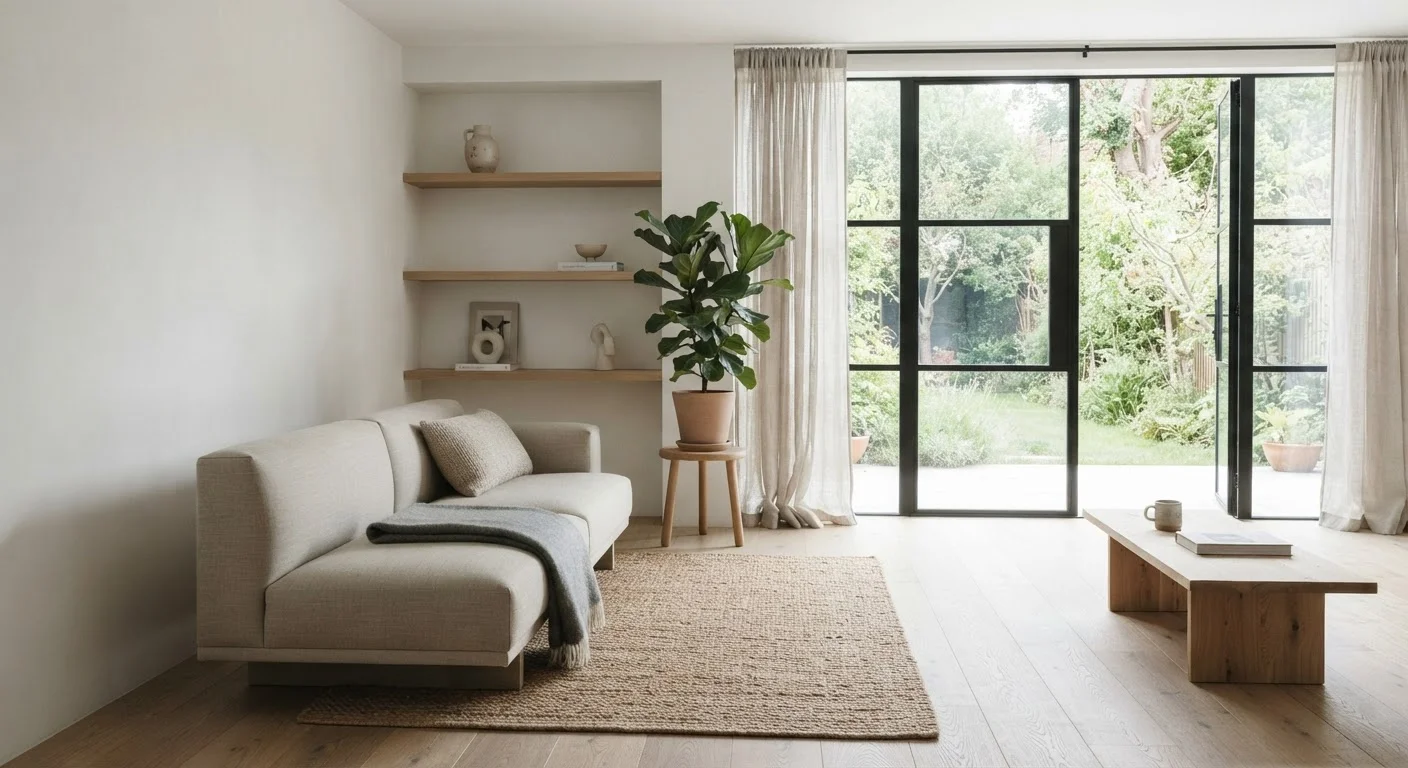
Photo: AdvisorBooth.net editorial
Key Takeaways
- Minimalist organization reduces visual clutter and can lower daily decision fatigue.
- Paring down possessions too aggressively can mean replacing items you actually need.
- Minimalism works best when adapted to your household's real daily routines.
- Shared households may struggle to align on what counts as 'enough' to keep.
- The upfront effort to declutter can be significant before benefits are felt.
Reduces visual clutter and mental load
Cleared surfaces and defined storage spots make a home feel calmer and easier to navigate, which many people report translates to lower stress at home.
Cleaning takes noticeably less time
With fewer objects to move or dust around, routine cleaning tasks are faster - a tangible time saving that compounds week over week.
Easier to maintain over the long term
When every item has a fixed place, putting things away becomes automatic rather than a decision, making tidiness easier to sustain.
Can reduce unnecessary spending
Intentional ownership often naturally curbs impulse purchases since each new item must justify its place - a habit that can align with broader saving strategies.
Makes moving or redecorating simpler
Fewer possessions mean less to pack, transport, or reconfigure - a practical advantage when life circumstances change.
Risk of discarding genuinely useful items
Aggressive decluttering sometimes leads to getting rid of things you end up needing, requiring replacement purchases that cost more than keeping the original item would have.
High upfront time and emotional effort
A thorough initial declutter can take days or weeks, and sorting through personal belongings is often emotionally draining - particularly with inherited or sentimental items.
Difficult to maintain in shared households
When household members have different tolerances for clutter or attachment to possessions, enforcing a minimalist system can create ongoing conflict.
Can feel cold or impersonal if taken too far
Stripped-back spaces may lack the warmth and personality that make a house feel like a home, which can affect comfort and wellbeing for some people.
Doesn't naturally accommodate life changes
A tightly minimized home leaves little buffer for new needs - a growing family, a new hobby, or working from home can quickly expose inflexibility in the system.
What Minimalist Home Organization Actually Means
Minimalist home organization isn't simply about owning fewer things. It's a deliberate approach to keeping only what serves a clear purpose or brings consistent value - and giving everything a defined place. In practice, that often means reducing duplicate items, eliminating "just in case" storage, and creating systems where visual noise is intentionally limited.
It's worth separating the aesthetic of minimalism (bare surfaces, neutral tones) from the functional principle (intentional ownership and storage). You can apply minimalist thinking to a home full of colour and personality - the core idea is that clutter doesn't accumulate by default. If you're starting from scratch, our decluttering guide walks through every stage of the process.
The Real Advantages
When minimalist organization is implemented thoughtfully, several practical benefits emerge quickly.
Reduces visual clutter and mental load
Cleared surfaces and defined storage spots make a home feel calmer and easier to navigate, which many people report translates to lower stress at home.
Cleaning takes noticeably less time
With fewer objects to move or dust around, routine cleaning tasks are faster - a tangible time saving that compounds week over week.
Easier to maintain over the long term
When every item has a fixed place, putting things away becomes automatic rather than a decision, making tidiness easier to sustain.
Can reduce unnecessary spending
Intentional ownership often naturally curbs impulse purchases since each new item must justify its place - a habit that can align with broader saving strategies.
Makes moving or redecorating simpler
Fewer possessions mean less to pack, transport, or reconfigure - a practical advantage when life circumstances change.
One often-overlooked gain is how a pared-back home affects decision-making. With fewer objects competing for attention, daily choices - where to put something down, what to grab first, how to clean up - become faster. This effect is sometimes called reducing decision fatigue, where too many small choices throughout a day gradually drain mental energy.
Cleaning also becomes meaningfully faster. Fewer items on counters and floors means less to move, dust around, or reorganize. For households where cleaning is a source of tension, this practical payoff alone can justify a more minimalist approach.
The Real Disadvantages
Minimalism has genuine drawbacks that tend to surface once the initial enthusiasm of a big declutter fades.
Risk of discarding genuinely useful items
Aggressive decluttering sometimes leads to getting rid of things you end up needing, requiring replacement purchases that cost more than keeping the original item would have.
High upfront time and emotional effort
A thorough initial declutter can take days or weeks, and sorting through personal belongings is often emotionally draining - particularly with inherited or sentimental items.
Difficult to maintain in shared households
When household members have different tolerances for clutter or attachment to possessions, enforcing a minimalist system can create ongoing conflict.
Can feel cold or impersonal if taken too far
Stripped-back spaces may lack the warmth and personality that make a house feel like a home, which can affect comfort and wellbeing for some people.
Doesn't naturally accommodate life changes
A tightly minimized home leaves little buffer for new needs - a growing family, a new hobby, or working from home can quickly expose inflexibility in the system.
Perhaps the most underestimated challenge is how minimalism interacts with shared households. When two or more people live together with different tidiness thresholds, agreeing on what stays and what goes is rarely straightforward. Our article on navigating shared spaces with different standards covers strategies for finding common ground without conflict.
Minimalism Looks Different for Every Household
It's also worth checking common assumptions before committing to any system - some popular organization beliefs can actually make the process harder rather than easier. The article on home organization myths is a useful reality check.
Finding a Balance That Works for Your Home
The most sustainable version of minimalist organization is one tailored to how your household actually lives - not how a styled photo suggests it should look. A few practical principles help bridge the gap.
- Audit before you cut. Spend a week noting what you actually reach for daily versus what sits untouched. That data is more reliable than assumptions about what you "should" keep.
- Don't conflate minimalism with deprivation. If you cook elaborate meals, a well-stocked kitchen is functional, not excessive. The goal is intentionality, not scarcity.
- Build in flexibility. Life changes - a new hobby, a baby, a home office - and a rigid minimal system can create friction when needs shift. Build storage capacity slightly above your current needs.
For homes with limited square footage, storage solutions for small spaces can help you apply minimalist principles without sacrificing function. And for a broader look at how organization systems hold up over time, our comprehensive home organization guide covers spaces, systems, and lasting habits together.
1,000+
Hours per year spent on housework by average US adult
According to the U.S. Bureau of Labor Statistics American Time Use Survey, Americans spend significant time on household activities - clutter that slows cleaning compounds this meaningfully.
~25%
Of homeowners cite clutter as a major stress source
Various consumer research surveys have consistently found that home disorganization ranks among the top sources of household stress for American adults.
The content on this site is for informational purposes only and is not a substitute for professional advice. Always consult a qualified professional for guidance specific to your situation.