
Native Plants vs. Ornamental Cultivars for Pollinators

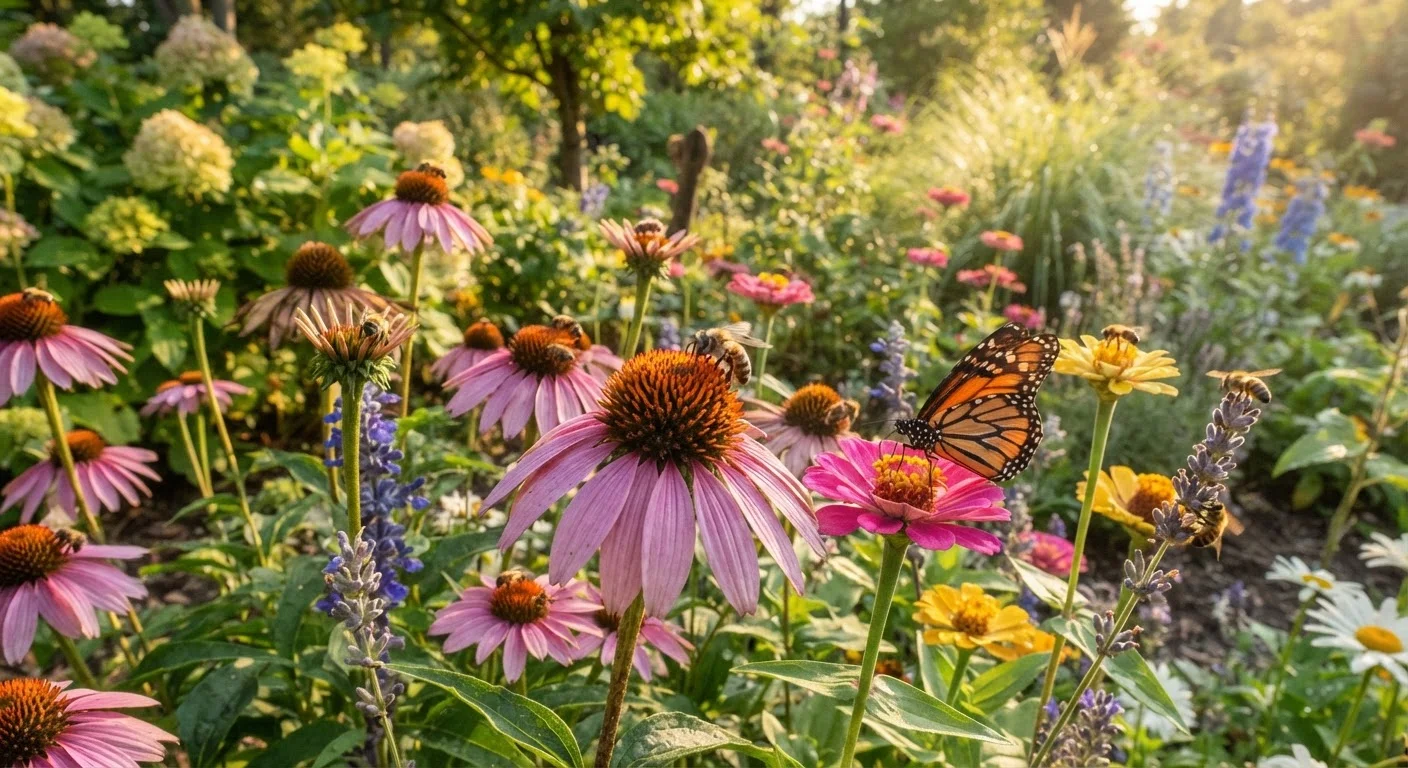
Photo: AdvisorBooth.net editorial
Key Takeaways
- True native plants generally provide more reliable food and habitat resources for native pollinators than cultivated varieties.
- Many ornamental cultivars are bred for appearance, which can reduce pollen, nectar, or scent that pollinators depend on.
- Some cultivars - especially straight-species or minimally altered selections - still offer meaningful pollinator support.
- Mixing natives with carefully chosen cultivars can balance ecological value with garden aesthetics.
- Plant origin and flower structure matter more than native vs. cultivar labels alone when assessing pollinator value.
What Separates a Native Plant from a Cultivar?
A true native plant is a species that evolved naturally in a specific region before human cultivation - shaped over millennia by local soils, climate, insects, and wildlife. An ornamental cultivar (short for "cultivated variety") is a plant that has been deliberately selected or bred by humans for specific visual or horticultural traits: unusual flower color, compact growth, doubled petals, or extended bloom time.
The distinction matters because those breeding choices - even subtle ones - can alter the very features pollinators rely on. Doubled flowers, for instance, may look lush but can physically block bees from reaching pollen and nectar. Altered pigmentation sometimes signals a reduction in the UV patterns that guide bees to blooms. And some cultivars produce significantly less scent, which pollinators use as a long-range attractant.
It's worth noting that not all cultivars are equal. A "straight species" cultivar selected only for compact size differs greatly from one bred for sterile, double blooms. Knowing what was changed - and why - helps you evaluate pollinator value more accurately than any label alone.
| Criterion | True Native Plants | Ornamental Cultivars |
|---|---|---|
| Pollinator visitation | Generally higher, broader species range | Varies widely by degree of modification |
| Larval host plant value | Strong - co-evolved with native species | Often reduced, especially with altered leaf chemistry |
| Flower accessibility | Open, single-form blooms typical | Doubled/modified forms may block pollen access |
| Regional adaptability | Naturally adapted to local soils and climate | May need more inputs to thrive locally |
| Garden aesthetics | Natural, informal appearance | Wider color and form options, more controlled |
| Availability | Growing but varies by region | Widely available at most garden centers |
| Maintenance once established | Generally low - adapted to local conditions | Variable - some need more water or fertilizer |
What Research Generally Suggests About Pollinator Support
Several studies published in horticultural and ecological journals have compared native plants with their cultivated counterparts for pollinator visitation. The general finding: true natives tend to attract more pollinators, more species, and more visits - particularly from specialist native bees that evolved alongside those specific plant species.
Research from the Mt. Cuba Center in Delaware, for example, has documented notably higher bee visitation rates on straight native species compared with many of their cultivated forms. However, results vary significantly by plant group and the degree of modification. Some cultivars performed comparably to their native parents, while others - especially those with dramatically altered flower forms - attracted far fewer pollinators.
~3x
More bee visits on native vs. cultivar forms
Mt. Cuba Center research has found that straight native species can attract significantly more bee visits than many cultivated counterparts in comparable garden settings.
90%+
Specialist caterpillar species tied to native plants
Entomologist Doug Tallamy's research estimates that the vast majority of specialist herbivore insects - including many butterfly larvae - depend on specific native plant genera.
Lepidoptera (butterflies and moths) present a more complex picture. Many caterpillars require a specific host plant species to complete their life cycle - and some research suggests that cultivar modifications, including changes to leaf chemistry, can reduce a plant's value as a larval host even when its flowers still attract adults.
If supporting the full pollinator life cycle - not just adult feeding visits - is your goal, native plants are generally the more dependable choice, based on current research.
How to Make Smart Choices for Your Garden
You don't have to choose only one approach. Many experienced gardeners build a layered strategy that prioritizes natives as the ecological backbone while using well-chosen cultivars for aesthetic accent or to fill gaps in bloom timing.
Here's a practical framework:
- Start with natives for at least 50-70% of your pollinator plantings. This threshold, suggested by some ecologists, helps ensure sufficient habitat resources even when cultivar value varies.
- Evaluate cultivars by flower structure, not just origin. Single, open-faced flowers - regardless of cultivar status - generally allow easier pollinator access than doubled or tubular forms.
- Choose cultivars closest to the straight species when possible. A native coneflower cultivar selected only for a slightly deeper color is a different proposition than one with a completely restructured bloom form.
- Consider bloom timing. A well-placed cultivar that extends bloom into late fall, when natives are winding down, can still meaningfully support pollinators preparing for winter.
For broader landscape planning, the principles here connect well with companion planting strategies and low-maintenance landscaping approaches that reduce garden labor while supporting wildlife. If you're deciding where to plant - in-ground, raised beds, or containers - see our comparison of raised beds vs. in-ground gardens and container gardening options for context on how your setup affects plant selection. For long-term garden planning, pairing natives and cultivars thoughtfully also ties into how you think about perennials vs. annuals in your overall design.
"Native" Labels Aren't Always Straightforward
The content on this site is for informational purposes only and is not a substitute for professional advice. Always consult a qualified professional for guidance specific to your situation.