
Container Gardening: Advantages, Limitations, and When It Makes Sense

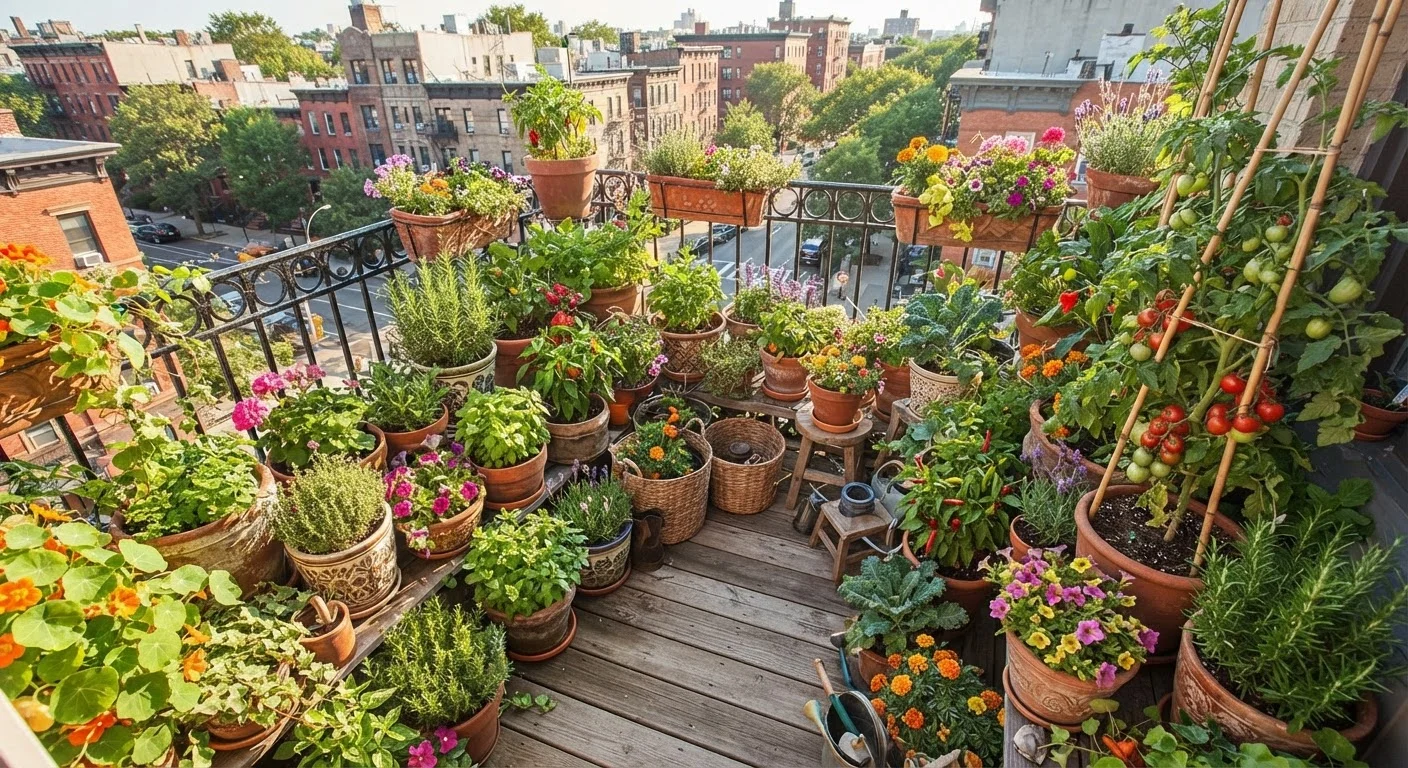
Photo: AdvisorBooth.net editorial
Key Takeaways
- Container gardening works well in small spaces like balconies, patios, and driveways with limited ground area.
- Pots require more frequent watering and fertilizing than in-ground beds because nutrients leach out faster.
- Containers give you precise control over soil quality and can be moved to follow sunlight or avoid frost.
- Plant size is inherently limited by root volume, making containers less suitable for large fruiting crops.
- Container gardens are often the most practical entry point for renters or gardeners with poor native soil.
Works in any space, including balconies and patios
Containers make growing possible in places where there's no accessible ground at all. A few square feet of balcony or a small driveway strip can support herbs, greens, and even compact fruiting plants.
Full control over soil composition
You choose exactly what goes into each container, bypassing poor native soil entirely. This is particularly valuable in urban environments or older properties where ground contamination may be a concern.
Plants can be moved to optimize conditions
Pots can follow sunlight across a patio throughout the season and be brought indoors or to a sheltered spot when frost threatens, extending the growing window significantly.
Easier to manage pests and disease
Isolating plants in containers helps prevent many soil-borne diseases and makes it simpler to remove or treat a single affected plant without disturbing the rest of your garden.
Low barrier to entry for beginners
The smaller scale and contained environment make it easier to observe plant behavior and correct problems quickly, building confidence before tackling a larger growing area.
Requires much more frequent watering
Containers dry out far faster than in-ground beds because they have limited soil volume and no connection to groundwater. In summer heat, some pots may need daily watering or even twice daily for small containers.
Nutrients deplete quickly and must be replaced
Watering leaches fertilizer out of the growing mix rapidly. Container plants typically need regular supplemental feeding throughout the growing season, adding both cost and maintenance time.
Root space is fundamentally limited
Large or deep-rooted plants - including most vining crops, corn, and full-size fruit trees - cannot reach their potential in a container. Restricted roots usually mean restricted growth and lower yields.
Containers can be heavy and hard to move when full
A large pot filled with moist growing mix can easily weigh 50 pounds or more. Planning placement carefully before filling is essential, and large containers are often impractical to relocate once established.
Potting mix must be refreshed periodically
Over time, commercial potting mix compresses, loses structure, and becomes depleted of nutrients. Most containers benefit from having their mix partially or fully replaced every one to two growing seasons.
Plants are more vulnerable to temperature extremes
The soil in a pot heats and cools much faster than ground soil, which can stress roots in both summer heat and early autumn cold. Insulating pots or choosing appropriate materials helps but requires active attention.
What Container Gardening Actually Involves
Container gardening means growing plants in pots, planters, window boxes, raised troughs, or any vessel that holds soil rather than planting directly into the ground. The container becomes the plant's entire growing environment - it defines root space, drainage, and nutrient availability all at once.
Almost any plant can technically grow in a container, but results depend heavily on matching pot size to plant type, choosing an appropriate growing mix (standard garden soil is generally too dense and compacts badly in pots), and maintaining consistent moisture. Unlike in-ground beds, containers have no connection to the broader soil ecosystem, so the gardener takes on more of those supporting roles manually.
For a broader foundation on growing food from scratch, see our beginner vegetable garden guide - many of its site-selection and spacing principles apply equally to container setups.
The Real Advantages of Growing in Pots
Container gardening's strongest selling points aren't just about making do with less space - they represent genuine capabilities that in-ground gardens often can't match.
Works in any space, including balconies and patios
Containers make growing possible in places where there's no accessible ground at all. A few square feet of balcony or a small driveway strip can support herbs, greens, and even compact fruiting plants.
Full control over soil composition
You choose exactly what goes into each container, bypassing poor native soil entirely. This is particularly valuable in urban environments or older properties where ground contamination may be a concern.
Plants can be moved to optimize conditions
Pots can follow sunlight across a patio throughout the season and be brought indoors or to a sheltered spot when frost threatens, extending the growing window significantly.
Easier to manage pests and disease
Isolating plants in containers helps prevent many soil-borne diseases and makes it simpler to remove or treat a single affected plant without disturbing the rest of your garden.
Low barrier to entry for beginners
The smaller scale and contained environment make it easier to observe plant behavior and correct problems quickly, building confidence before tackling a larger growing area.
Mobility is one of the most underappreciated advantages. You can shift pots to chase the sun as seasons change, bring tender plants indoors before frost, or rearrange a patio display entirely within an afternoon. That flexibility doesn't exist once plants are in the ground.
Soil control is another significant benefit. If your native soil is compacted clay, contaminated, or rocky, containers let you bypass the problem entirely by filling pots with a purpose-mixed growing medium. This matters especially in urban areas where ground soil quality is often unknown or problematic.
The Limitations You Should Understand Before You Start
The constraints of container gardening are real, and going in without understanding them leads to frustration. The most common disappointments - yellowing leaves, wilting despite recent watering, stunted fruiting - typically trace back to a handful of predictable limitations.
Requires much more frequent watering
Containers dry out far faster than in-ground beds because they have limited soil volume and no connection to groundwater. In summer heat, some pots may need daily watering or even twice daily for small containers.
Nutrients deplete quickly and must be replaced
Watering leaches fertilizer out of the growing mix rapidly. Container plants typically need regular supplemental feeding throughout the growing season, adding both cost and maintenance time.
Root space is fundamentally limited
Large or deep-rooted plants - including most vining crops, corn, and full-size fruit trees - cannot reach their potential in a container. Restricted roots usually mean restricted growth and lower yields.
Containers can be heavy and hard to move when full
A large pot filled with moist growing mix can easily weigh 50 pounds or more. Planning placement carefully before filling is essential, and large containers are often impractical to relocate once established.
Potting mix must be refreshed periodically
Over time, commercial potting mix compresses, loses structure, and becomes depleted of nutrients. Most containers benefit from having their mix partially or fully replaced every one to two growing seasons.
Plants are more vulnerable to temperature extremes
The soil in a pot heats and cools much faster than ground soil, which can stress roots in both summer heat and early autumn cold. Insulating pots or choosing appropriate materials helps but requires active attention.
2×
How often containers may need watering vs. in-ground beds
Horticulture extension resources consistently note that container plants in warm weather often require watering twice as frequently as equivalent in-ground plantings due to limited soil volume.
~5 gal
Minimum container size for most tomato varieties
Most gardening extension services recommend at least a 5-gallon container for compact tomato varieties, with 10-15 gallons preferred for standard indeterminate types to support adequate root development.
Root restriction is perhaps the most fundamental limitation. A tomato plant that might spread roots three feet in all directions in the ground is confined to whatever volume your pot provides. Smaller root systems mean smaller plants and, often, reduced yields. Deep-rooted crops like corn, melons, or full-size pumpkins are genuinely poor candidates for containers regardless of pot size.
If you're weighing container growing against other structured options, our comparison of raised beds vs. in-ground gardens lays out how drainage, soil control, and labor compare across approaches.
When Container Gardening Makes the Most Sense
Container gardening isn't a compromise position - for the right situation, it's genuinely the most practical choice. Understanding when it makes sense helps you commit fully rather than second-guessing yourself mid-season.
Choosing the Right Container Material Matters
Renters and temporary residents benefit enormously from containers. You can invest in quality pots and soil, build up a productive growing setup, and take everything with you when you move. No permission from a landlord is needed to tend a collection of pots on a balcony or patio.
Gardeners with physical limitations often find that raised containers positioned at accessible heights reduce the bending and kneeling that in-ground gardening requires. A well-placed container at table height can make the difference between gardening being possible or not.
Beginners testing plant varieties can use containers to try herbs, greens, or compact flowering plants before committing to a larger plot. The smaller scale makes it easier to observe what's working without being overwhelmed. Once you're ready to expand, our companion planting guide offers practical ideas for pairing plants - principles that translate directly to multi-pot container arrangements.
Container setups also pair well with soil-enriching habits like composting. Even if your pots don't connect to native soil, you can add finished compost to your potting mix each season. Our home composting guide explains how to produce that compost from kitchen scraps with minimal effort.
The content on this site is for informational purposes only and is not a substitute for professional advice. Always consult a qualified professional for guidance specific to your situation.