
Highway Driving vs. City Driving: How the Skills Differ

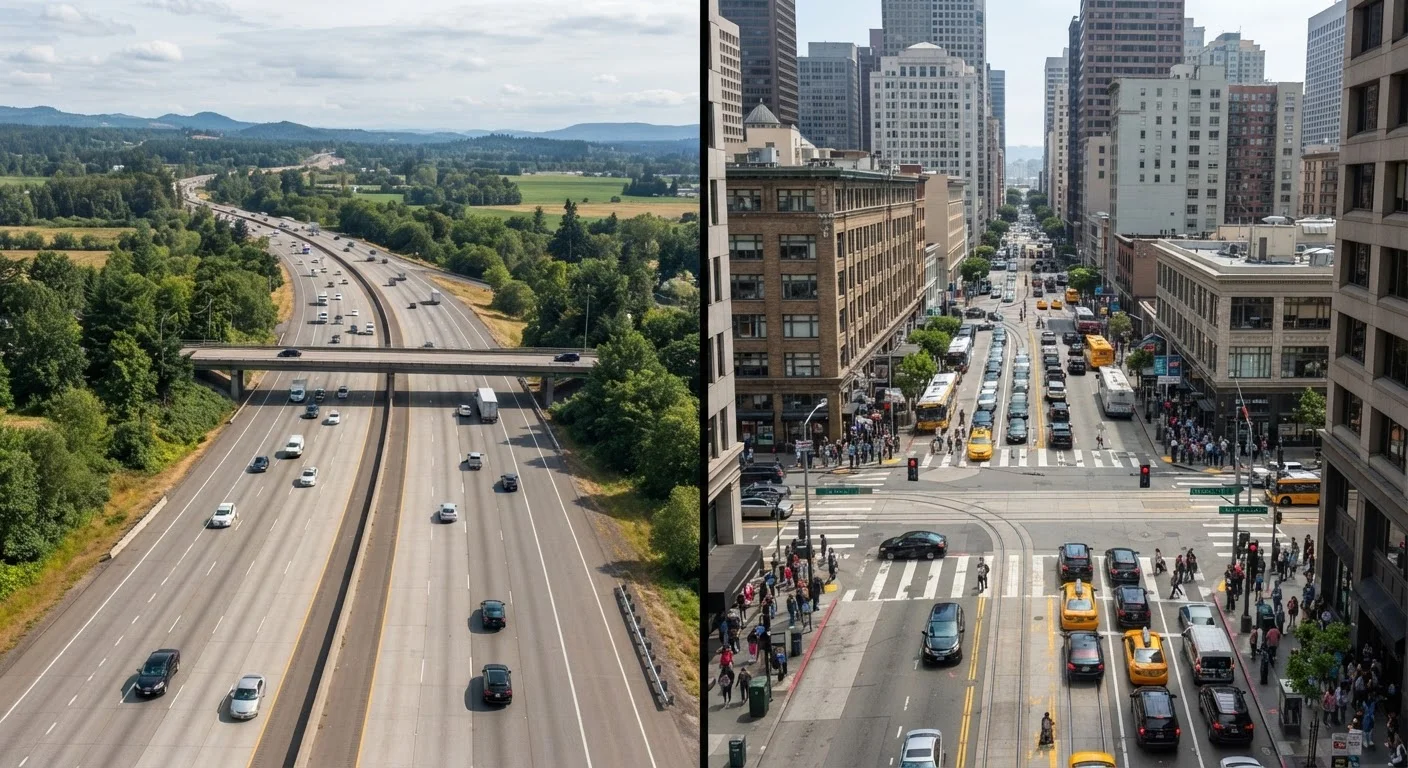
Photo: AdvisorBooth.net editorial
Key Takeaways
- Highway driving demands sustained attention at high speeds, while city driving requires rapid, frequent decisions in tight spaces.
- Following distance needs change dramatically: three-plus seconds on highways, more in stop-and-go urban traffic.
- Fatigue is a greater risk on highways; distraction from pedestrians and cyclists is a greater risk in cities.
- Merging, lane changes, and exit planning are highway-specific skills that require advance awareness.
- City driving relies heavily on scanning intersections, reading pedestrian signals, and anticipating door zones.
The Core Difference: Speed vs. Complexity
Highway and city driving aren't simply fast versus slow - they represent two distinct cognitive and physical demands placed on the driver. On an interstate, the challenge is sustained high-speed awareness: maintaining safe following distance, anticipating lane shifts well ahead, and managing the effects of monotony on attention. In a city, the challenge is rapid-fire decision-making: processing pedestrians stepping off curbs, cyclists in door zones, signal changes, and cross-traffic - often simultaneously.
Understanding these differences helps every driver recognize which skills to sharpen for each environment. As the principles of defensive driving make clear, safe driving is less about reaction speed and more about reading the environment before a threat develops.
| Criterion | Highway Driving | City Driving |
|---|---|---|
| Typical speed range | 55-75 mph | 15-45 mph |
| Primary hazard type | Speed, fatigue, merging | Pedestrians, cyclists, intersections |
| Recommended following distance | 3-4+ seconds | 2-3 seconds minimum |
| Decision frequency | Low - long planning horizon | High - constant micro-decisions |
| Fatigue risk | High - monotony induces drowsiness | Lower - frequent stimulation |
| Crash severity potential | High - speed amplifies impact | Moderate - lower speed, but more conflict points |
| Key skill emphasis | Merging, distance management | Scanning, yielding, anticipation |
Highway-Specific Skills: Distance, Merging, and Fatigue
At 65-70 mph, a vehicle travels roughly 100 feet per second. That physics shapes every highway skill. Following distance should be at least three to four seconds behind the car ahead - more in poor weather. Drivers who cut this margin short leave almost no time to react to sudden braking.
Merging and lane changes are where highway crashes frequently begin. Effective merging means matching highway speed on the on-ramp, using mirrors and blind-spot checks together, and committing to a gap - not forcing one. For those still building this skill, our guide for new highway drivers walks through on-ramp technique in detail.
Driver fatigue is a highway-specific hazard that city traffic rarely produces. Repetitive scenery, constant speed, and reduced stimulation can cause drowsiness even in drivers who feel alert. The safest countermeasure is a planned stop every two hours or approximately every 100 miles. Caffeine can provide short-term alertness but is not a substitute for rest.
~36%
Of U.S. fatal crashes occurring on rural highways
According to NHTSA data, rural roads - including interstates - account for a disproportionate share of traffic fatalities relative to miles traveled.
~76%
Of pedestrian fatalities occurring in urban areas
NHTSA traffic safety data consistently shows that the vast majority of pedestrian deaths occur on urban roads rather than rural highways.
100 ft/sec
Distance traveled per second at 68 mph
This physics benchmark underscores why following distance and advance scanning are non-negotiable at highway speeds.
City-Specific Skills: Scanning, Yielding, and Anticipation
Urban driving compresses decision-making into seconds. Intersections - whether controlled by signals or stop signs - are the highest-risk locations in city environments. The skill that matters most here is active scanning: checking left, center, and right before entering any intersection, even on a green light, and looking for pedestrians completing a crossing before the light changed.
Cyclists and parked vehicles add another layer. The door zone - the area where a parked car's door can swing open - extends roughly three to four feet from the vehicle. Drivers should leave adequate clearance when passing parked cars and anticipate that a cyclist in the lane may be doing the same.
Pedestrian signals and crosswalks require a yielding mindset rather than a right-of-way assumption. Even when a driver has the legal right of way, pedestrians don't always yield, and the consequences of a collision are severe. City driving rewards patience and predictability - sudden acceleration or lane changes in dense traffic create confusion and risk. For drivers managing stress in congested environments, understanding what escalates and de-escalates road conflicts is a useful complement to technical skills.
Situational Awareness: How It Shifts Between Environments
On the highway, situational awareness operates at a longer range. Drivers should be scanning 12-15 seconds ahead - roughly a quarter mile at highway speed - and watching for brake lights, lane drift, or vehicles merging from on-ramps. The rearview mirror matters too: knowing what's behind you before you brake suddenly can prevent rear-end collisions.
In the city, awareness contracts to a tighter radius but must cover far more dimensions: sidewalk activity, cyclists, parked delivery vehicles, school zones, and turning trucks with wide swing arcs. Reducing distractions is especially critical in urban settings - research on phone use while driving indicates that even hands-free calls impose cognitive load that reduces hazard detection.
Both environments become significantly more demanding after dark or in adverse weather. Night driving and wet or foggy road conditions amplify the specific risks of each setting - reduced visibility on highways means longer stopping distances matter even more, while rain-slicked city intersections increase the chance of sliding through a crosswalk.
Recognizing which environment you're entering - and deliberately shifting your attentional style to match - is one of the most practical skills a driver can develop.
New Drivers Face Distinct Challenges in Each Setting
The content on this site is for informational purposes only and is not a substitute for professional advice. Always consult a qualified professional for guidance specific to your situation.