
Driving in Fog, Rain, and Snow: How Road Conditions Change the Rules

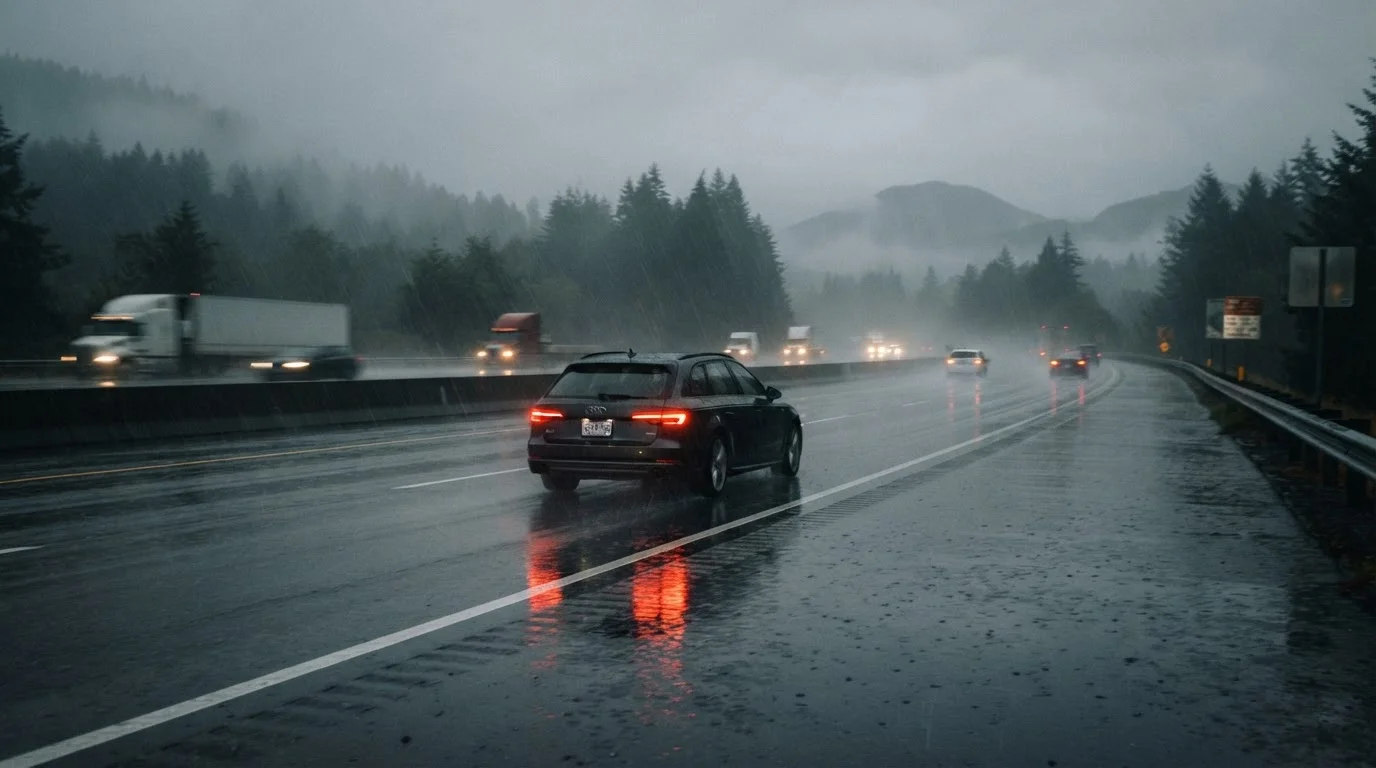
Photo: AdvisorBooth.net editorial
Key Takeaways
- Stopping distances increase dramatically on wet, icy, or snow-covered roads - following distance must expand accordingly.
- Posted speed limits reflect ideal dry conditions; drivers are responsible for adjusting speed to match actual road conditions.
- Low-beam headlights, not high beams, are the correct choice when driving in fog.
- Black ice is nearly invisible and most common on bridges, overpasses, and shaded roadways.
- Sudden steering or braking inputs on slippery surfaces can cause a skid - smooth, gradual inputs are essential.
- If conditions become too dangerous, pulling off safely and waiting is always a legitimate option.
Why Normal Driving Habits Fall Short in Bad Weather
Most drivers learn the rules of the road under fair conditions - dry pavement, good visibility, predictable traction. Adverse weather changes the physics of driving in ways that catch even experienced drivers off guard. Water, ice, and reduced visibility each reduce your margin for error, meaning the habits that work fine on a clear afternoon can become hazardous in a storm.
Understanding why road conditions change the rules is the first step toward adapting confidently. For a broader foundation on anticipating hazards before they develop, see our article on defensive driving mental habits. And before you head out in seasonal conditions, it's worth reviewing a seasonal vehicle preparation checklist to confirm your car is mechanically ready.
Smooth Inputs Are the Foundation of Traction
What to Do Before You Pull Out of the Driveway
Adjusting to bad weather starts before you turn the key. A few minutes of preparation can significantly reduce your risk on the road.
What you will need
Step-by-Step: Adjusting Your Driving for Each Condition
The following steps address the three most common adverse-weather scenarios American drivers encounter. Apply whichever steps match the conditions you face - and recognize that overlapping conditions (such as fog combined with wet roads) require compounding your adjustments.
Driving in Rain: Manage Speed and Following Distance
Rain reduces tire grip by creating a film of water between the tire and the road surface. At higher speeds, tires can lose contact with the road entirely - a phenomenon known as hydroplaning. To reduce the risk:
- Reduce your speed smoothly - aim for roughly 5-10 mph below the posted limit in moderate rain, and slow further in heavy rain.
- Increase your following distance from the standard 3-second rule to at least 4-6 seconds.
- Avoid sudden braking or sharp steering inputs, which can trigger a skid on wet pavement.
- Turn on your headlights - many states legally require this when wipers are in use.
If you feel the steering go light (a sign of hydroplaning), ease off the accelerator gently without braking hard and steer straight until grip returns.
Driving in Snow and Ice: Expect Dramatically Longer Stops
On packed snow or ice, stopping distances can be two to ten times longer than on dry pavement, depending on speed and conditions. Adjust your approach accordingly:
- Reduce speed significantly and accelerate slowly to avoid wheel spin.
- Increase following distance to a minimum of 8-10 seconds - more on ice.
- Brake gently and early. If your vehicle has ABS (anti-lock braking system), apply firm, steady pressure and let the system modulate - do not pump the pedal.
- Watch for black ice - a thin, nearly transparent layer of ice common on bridges, overpasses, exit ramps, and shaded sections of road. The road surface will look darker and slightly wet compared to surrounding pavement.
- Approach hills carefully: build momentum before an uphill and reduce speed well before a downhill, avoiding braking mid-slope if possible.
Driving in Fog: Maximize Visibility Without Blinding Others
Fog creates a unique challenge: your headlights can actually reflect off water droplets and reduce your own visibility if used incorrectly. Follow these guidelines:
- Use low-beam headlights, not high beams. High beams scatter off fog and worsen glare.
- If your vehicle is equipped with dedicated front fog lights, use them - they are designed to illuminate the road surface below the fog layer.
- Reduce speed so that your stopping distance stays well within your visible range. If you can only see 200 feet ahead, you should be able to stop within 200 feet.
- Use the right edge of the road or lane markings as a reference point rather than oncoming headlights, which can disorient you.
- Turn on rear fog lights if your vehicle has them - this makes you more visible to drivers behind you.
- Never suddenly stop on a road or highway in fog. If you must pull over, move as far off the roadway as possible, turn on hazard lights, and turn off headlights so other drivers do not mistake your parked position for a moving vehicle.
Posted Speed Limits Are Not a Safe Target in Bad Weather
When to Stay Off the Road Entirely
No destination is worth a preventable crash. If local authorities have issued a travel advisory, if your vehicle lacks appropriate tires for winter conditions, or if visibility has dropped to near zero, delaying your trip is the safest decision available. Adverse weather is a leading factor in thousands of traffic fatalities each year in the United States, according to the Federal Highway Administration.
Weather-related driving challenges also vary significantly between highway and city environments. Our comparison of highway versus city driving demands can help you think through the specific risks each setting presents. Similarly, fog and low-light conditions share some characteristics with night driving challenges - both require deliberate visibility management and reduced speeds.
This article provides general driver education and is not a substitute for formal driver training or official guidance from your state's Department of Motor Vehicles.
The content on this site is for informational purposes only and is not a substitute for professional advice. Always consult a qualified professional for guidance specific to your situation.