
The Case for-and Against-Saving Your Card Details on Shopping Sites

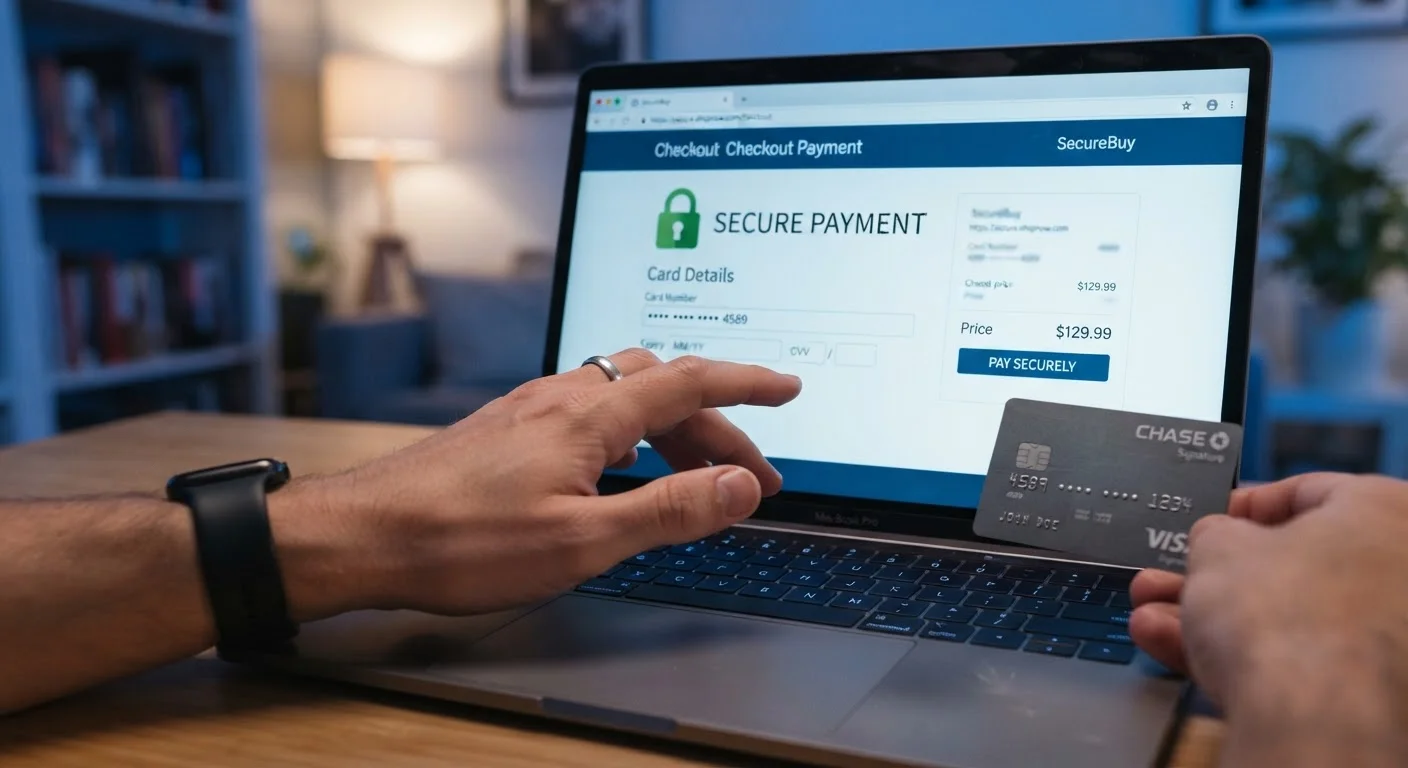
Photo: AdvisorBooth.net editorial
Key Takeaways
- Saving card details speeds up checkout but means your data lives on a third-party server.
- Reputable sites use encryption and tokenization, but no storage method is completely breach-proof.
- Virtual card numbers and digital wallets offer a middle ground between convenience and security.
- Your payment method choice matters as much as where you store it - credit cards generally offer stronger fraud protections than debit cards.
Significantly faster checkout on return visits
Skipping manual card entry cuts checkout to a few clicks, reducing the chance of abandoning a cart mid-process or making input errors.
Enables convenient subscription and reorder management
Many retailers link stored cards to repeat-order features, making it easier to manage ongoing purchases without re-entering information each time.
Reduces physical card handling in public settings
Not needing to retrieve your card in a café or on public Wi-Fi limits one form of visual theft, even though it shifts risk to the server side.
Tokenization limits exposure of your real card number
Compliant merchants store a token rather than your actual card number, meaning a breach of the retailer's database does not automatically expose your card to fraud.
Stored data is exposed if the retailer is breached
Even tokenized systems can leak supporting personal data during a breach, and not all merchants implement security to the same standard.
Compromised account login enables instant purchases
Anyone who gains access to your retailer account can complete purchases without knowing your card number, making account security as important as card security.
Removes natural spending pause at checkout
Frictionless payment can make it easier to complete impulsive purchases without reconsidering, a dynamic retailers consciously design for.
Card details persist even after you stop shopping there
Many shoppers forget to remove saved cards from dormant accounts, leaving data on servers they no longer monitor or trust.
Security quality varies widely by merchant
Smaller or older platforms may rely on outdated payment infrastructure, making the same 'save card' decision riskier than it would be on a major retailer.
What 'Saving Your Card' Actually Means
When you check the box that says "Save card for future purchases," you're authorizing the retailer - or its payment processor - to store a representation of your card details on their servers. In most cases, compliant merchants don't store your raw card number. Instead, they use a process called tokenization: your actual card number is replaced with a unique token that has no value outside that merchant's system. The card network or processor holds the real number in a secure vault.
That said, not every site handles this equally well. Smaller or older platforms may have weaker implementations. Before you save anything, it's worth checking whether a site processes payments through a well-known, PCI DSS-compliant gateway - a security baseline required of any business that handles card data. Understanding what data a retailer actually needs is equally important. See what online stores actually need from you for a breakdown of necessary versus optional checkout fields.
The Advantages of Storing Payment Information
Significantly faster checkout on return visits
Skipping manual card entry cuts checkout to a few clicks, reducing the chance of abandoning a cart mid-process or making input errors.
Enables convenient subscription and reorder management
Many retailers link stored cards to repeat-order features, making it easier to manage ongoing purchases without re-entering information each time.
Reduces physical card handling in public settings
Not needing to retrieve your card in a café or on public Wi-Fi limits one form of visual theft, even though it shifts risk to the server side.
Tokenization limits exposure of your real card number
Compliant merchants store a token rather than your actual card number, meaning a breach of the retailer's database does not automatically expose your card to fraud.
The convenience case is straightforward. Returning customers who have saved card details complete purchases faster, with fewer steps where an error - or a moment of hesitation - can derail the transaction. That frictionless experience is why major retailers invest in it. Beyond speed, some sites tie stored payment methods to features like one-click reorders, subscription management, or faster returns processing, which can add practical value for regular shoppers.
Stored cards also reduce how often you physically handle your card, which limits exposure from shoulder-surfing or keyloggers on shared or public devices - though it creates a different set of risks on the server side.
The Risks You're Taking On
Stored data is exposed if the retailer is breached
Even tokenized systems can leak supporting personal data during a breach, and not all merchants implement security to the same standard.
Compromised account login enables instant purchases
Anyone who gains access to your retailer account can complete purchases without knowing your card number, making account security as important as card security.
Removes natural spending pause at checkout
Frictionless payment can make it easier to complete impulsive purchases without reconsidering, a dynamic retailers consciously design for.
Card details persist even after you stop shopping there
Many shoppers forget to remove saved cards from dormant accounts, leaving data on servers they no longer monitor or trust.
Security quality varies widely by merchant
Smaller or older platforms may rely on outdated payment infrastructure, making the same 'save card' decision riskier than it would be on a major retailer.
The most significant risk is straightforward: if a retailer suffers a data breach, any stored payment information becomes a target. Even with tokenization, breaches can expose other personal details - names, email addresses, billing addresses - that make phishing attacks easier and more convincing.
There's also a behavioral risk. Frictionless checkout reduces the psychological pause that might otherwise prompt you to reconsider a purchase. Retailers design checkout psychology to minimize hesitation, and a saved card removes one of the last natural stopping points before you spend.
Finally, saved cards can complicate account security. If someone gains access to your retailer account - through a reused password or a phishing email - a saved card means they can make purchases without knowing your card number at all. Enabling two-factor authentication on retail accounts is a meaningful countermeasure, but many shoppers skip it.
billions
Records exposed in retail data breaches annually
IBM's annual Cost of a Data Breach Report consistently identifies the retail sector as one of the most frequently targeted industries for payment data theft.
$0
Typical consumer liability for credit card fraud
Under the Fair Credit Billing Act, consumers are generally not liable for unauthorized credit card charges reported promptly - a protection that does not apply equally to debit cards.
Smarter Alternatives to Leaving Your Card on File
If you want speed without permanently storing your card, several options strike a better balance:
- Digital wallets (such as those offered by major device and platform providers) store your card details locally or in an encrypted cloud environment under your control, and share only a one-time token with the merchant at checkout. The retailer never receives your actual card number.
- Virtual card numbers, offered by some card issuers, generate a temporary card number tied to your real account. You can set spending limits or expiration dates, and simply close the virtual number if it's compromised - without canceling your underlying card.
- Guest checkout remains the lowest-risk option for infrequent purchases. Yes, you'll re-enter your card number each time, but nothing persists on the retailer's server after the transaction settles.
Your choice of payment instrument also matters independently of where you store it. Credit and debit cards carry different fraud protections - understanding that distinction is part of shopping safely online. For a fuller picture, online shopping safety from start to finish covers account security, seller verification, and dispute resolution in one place.
Check for Saved Cards You've Forgotten About
A Practical Framework for Deciding
Rather than applying one rule everywhere, consider each retailer on its own merits:
- How often do you shop there? If you order from the same retailer every few weeks, the convenience payoff is real. For a one-time purchase, it isn't.
- How established is the site? Long-standing, high-traffic retailers face more scrutiny and typically invest more in payment security than smaller or newer platforms.
- Is your account secured? A saved card is only as safe as your login. Use a unique, strong password and enable two-factor authentication before saving any payment method.
- Do you review your statements? Regular monitoring - not just waiting for an alert - is what catches unauthorized charges early. If you don't review monthly, the risk calculation shifts.
Saving your card details is not inherently reckless, and avoiding it entirely is not the only responsible choice. What matters is making the decision intentionally, with a clear understanding of what you're trading and what protections you have in place.
The content on this site is for informational purposes only and is not a substitute for professional advice. Always consult a qualified professional for guidance specific to your situation.