
Online Shopping Safety From Start to Finish

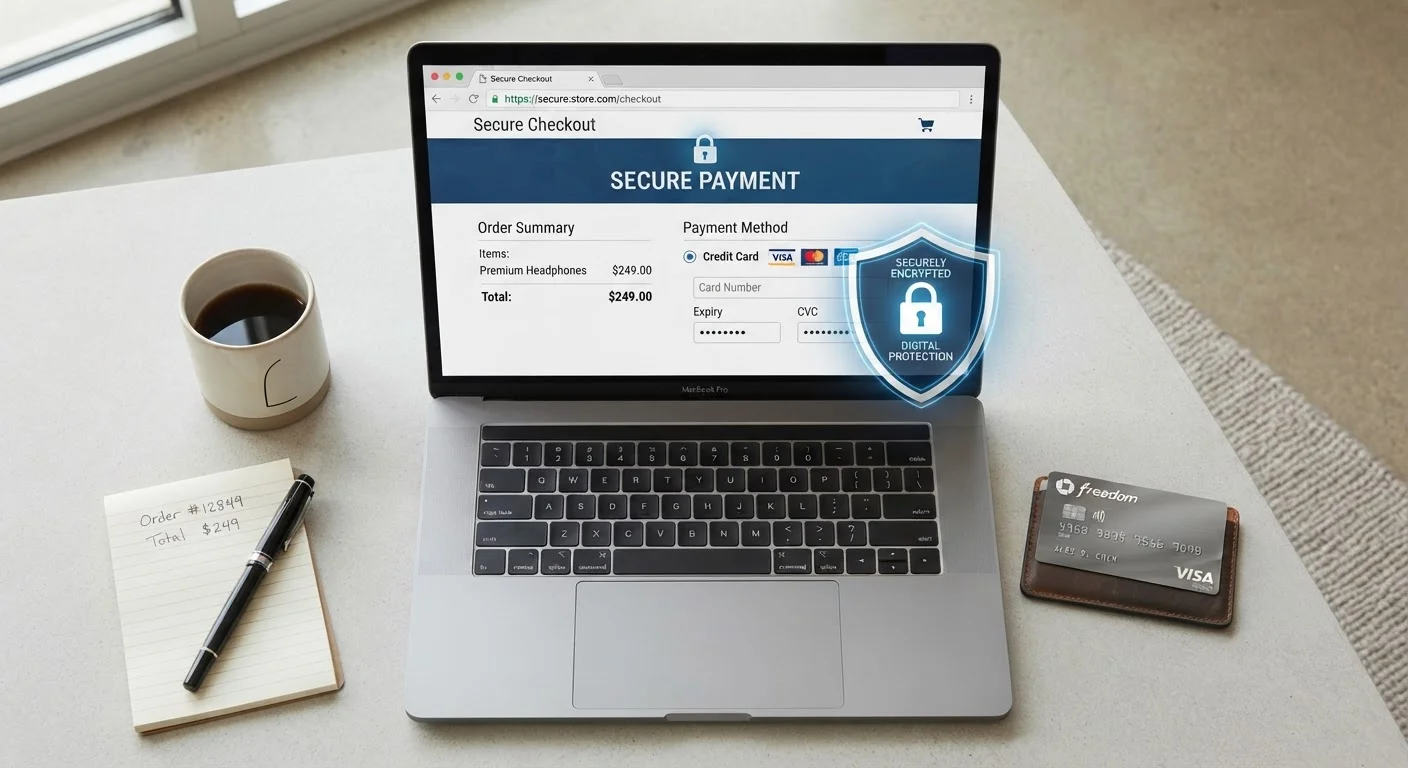
Photo: AdvisorBooth.net editorial
Key Takeaways
- Use a unique, strong password and two-factor authentication on every shopping account.
- Verify sellers through reviews, contact information, and return policies before paying.
- Credit cards and payment services with buyer protection offer the strongest dispute options.
- Act quickly if something goes wrong - most dispute windows are time-limited.
- Avoid saving card details on unfamiliar sites unless you understand the breach risk.
Why Online Shopping Safety Deserves Serious Attention
Online shopping fraud costs American consumers hundreds of millions of dollars every year, according to the Federal Trade Commission. The mechanics behind many of these losses aren't complicated - they exploit rushed buyers, weak account credentials, and unfamiliar seller environments. Understanding how online shopping scams actually work is the first step toward not becoming a statistic.
This guide walks through every stage of a purchase - account setup, site verification, payment, and dispute resolution - so you can shop with confidence rather than crossed fingers.
$10B+
Annual consumer fraud losses reported to FTC
The FTC's Consumer Sentinel Network reported consumers lost more than $10 billion to fraud in a recent annual reporting period, with online shopping among the top categories.
60-120 days
Typical dispute window for card transactions
Most credit card issuers allow chargebacks within 60 to 120 days of the transaction date, depending on the card network and issuer policy.
34%
Share of fraud reports involving online shopping
According to FTC data, online shopping and negative reviews consistently represent one of the largest single categories of reported consumer fraud.
Securing Your Accounts Before You Shop
Your shopping accounts are the front door to your payment details, address, and order history. Protecting them is non-negotiable.
- Use a unique password for each retailer. Reusing passwords means one breach can unlock dozens of accounts. A password manager makes this practical without requiring memorization.
- Enable two-factor authentication (2FA). Most major retailers support this. When enabled, a thief needs your password and your phone to get in.
- Use a dedicated email address for shopping. This limits phishing exposure to one inbox you can monitor closely.
If you're new to buying things online, our first-time online shopping guide covers account setup in plain language.
Set a unique, randomized email alias for each retailer using your email provider's alias feature. If that address starts receiving phishing attempts, you know exactly which site was compromised.
Before trusting a discount site you've never heard of, search the domain name plus the word 'complaints' or 'scam' in a search engine. This takes 30 seconds and surfaces problems that formal review systems often miss.
Verifying Sellers and Sites
Not every website selling goods is trustworthy. Before entering payment details, run through these checks:
- Look for HTTPS. The padlock in your browser's address bar confirms the connection is encrypted. This protects data in transit but does not mean the seller is legitimate.
- Check for a physical address and working contact information. Legitimate businesses provide these. A missing phone number or only a contact form is a yellow flag.
- Read recent reviews - off the seller's own site. Third-party review platforms and retailer feedback systems are harder to manipulate than on-site testimonials.
- Review the return and refund policy before purchase. Vague or no-returns policies are a warning sign. Our pre-purchase safety checklist gives you a structured way to run these checks quickly.
Deals That Seem Too Good to Be True
Choosing the Safest Payment Method
How you pay determines how easily you can recover money if something goes wrong.
- Credit cards offer the strongest consumer protection in the US. Under the Fair Credit Billing Act, you can dispute unauthorized charges and may dispute items not received or significantly different from what was described.
- Debit cards carry weaker protections and draw directly from your bank account - an unauthorized charge hits real money immediately.
- Payment services (such as digital wallets) vary widely. Some offer buyer protection programs; others do not. Read the terms before relying on them.
- Wire transfers and gift cards are essentially irreversible and favored by scammers for exactly that reason. Never use these methods with unfamiliar sellers.
Weigh the decision to store your card details carefully. Our analysis of saving card details on shopping sites explains the real exposure created by a site breach.
Also understand what buyer protection programs actually cover - and their limits - before assuming you're fully covered. See our breakdown of what buyer protection actually covers.
When Something Goes Wrong
Even careful shoppers sometimes face non-delivery, counterfeit goods, or unauthorized charges. Acting promptly matters - dispute windows are typically 60 to 120 days, depending on the payment method and platform.
- Contact the seller first with a clear, written description of the problem. Keep a record of all correspondence.
- File a dispute with your card issuer or payment service if the seller is unresponsive or unwilling to resolve the issue. Provide documentation: order confirmation, photos, screenshots, and message logs.
- Report to the FTC at ReportFraud.ftc.gov if you believe you've been defrauded. Reports help build enforcement cases, even if they don't guarantee individual refunds.
- Leave an honest review to protect other shoppers.
This article provides general consumer education and is not legal or financial advice. For issues involving significant sums, consider consulting a consumer protection attorney or your state attorney general's office.
Habits That Keep You Safe Long-Term
One-time precautions help, but durable safety comes from consistent habits.
- Review your bank and card statements weekly - catching fraud early minimizes damage.
- Avoid shopping on public Wi-Fi without a VPN, since unencrypted networks expose your session data.
- Delete accounts you no longer use - dormant accounts with saved payment info are a liability.
- Keep your device's operating system and browser updated; security patches close known vulnerabilities exploited by malicious sites.
- Be skeptical of unsolicited deals arriving by email or text. Verify offers by navigating directly to the retailer's website rather than clicking links.
When evaluating whether a purchase genuinely offers fair value beyond safety considerations, our guide to comparing value provides a practical framework.
The content on this site is for informational purposes only and is not a substitute for professional advice. Always consult a qualified professional for guidance specific to your situation.