
Watering Myths That Could Be Hurting Your Garden

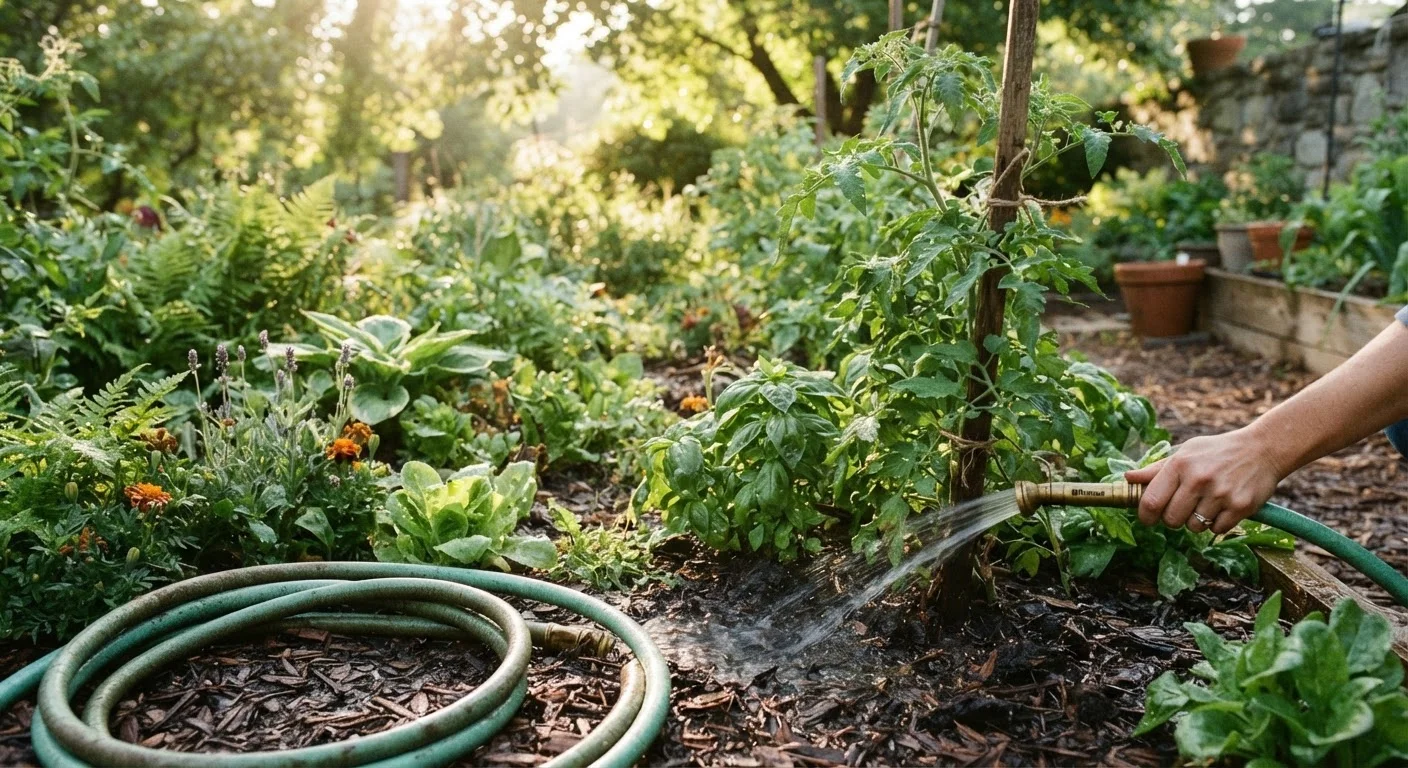
Photo: AdvisorBooth.net editorial
Key Takeaways
- Daily watering is often too much - most established plants thrive with deep, infrequent watering.
- Watering in the morning is generally better than evening, reducing disease risk overnight.
- Wilting doesn't always mean drought stress; overwatering causes the same visible symptoms.
- Sprinkler systems wet foliage unnecessarily - directing water to the root zone is more effective.
- Mulching around plants dramatically reduces how often you need to water.
Why Watering Myths Persist
Garden watering looks simple - point, spray, done. But the routines most of us learned by watching neighbors or following vague package instructions are often based on habit rather than plant science. Correcting these misconceptions can mean the difference between struggling plants and genuinely thriving ones.
The myths below are among the most common, and each one has a measurable effect on root health, disease pressure, and water efficiency. If your plants never quite look right despite regular watering, one of these misunderstandings may be to blame. You might also find that soil pH is quietly working against you even when your watering habits are solid.
Myth
Plants need to be watered every single day to stay healthy.
Fact
Most established plants do better with deep, infrequent watering - typically once or twice a week, depending on climate and soil type.
Daily shallow watering keeps moisture near the soil surface, which trains roots to stay shallow. Shallow roots make plants more vulnerable to heat and drought. When you water deeply but less frequently, roots follow the moisture downward, anchoring the plant and giving it access to a larger reservoir of soil water. The right frequency depends on your soil type, plant species, and weather - not a fixed daily schedule.
Myth
Wilting always means the plant needs more water.
Fact
Wilting is just as often a symptom of overwatering or root rot as it is of drought.
When roots sit in waterlogged soil, oxygen is displaced and roots begin to die. Damaged roots can't move water into the plant even when moisture is abundant - so the plant wilts despite wet soil. Before reaching for the hose, check the soil a few inches down. If it's already moist or saturated, withhold water and consider whether drainage is the real issue.
Myth
Watering in the evening is fine - it's cooler and less water evaporates.
Fact
Evening watering leaves foliage wet overnight, creating conditions where fungal diseases like powdery mildew and leaf blight thrive.
While it's true that cooler temperatures reduce evaporation, the problem is prolonged leaf wetness in still, humid nighttime air. Morning watering strikes a better balance: temperatures are still cool enough to limit evaporation, and any water that lands on leaves evaporates before nightfall. If your schedule only allows evening watering, aim water directly at the soil base and avoid wetting the foliage.
Myth
Overhead sprinklers are just as effective as drip irrigation.
Fact
Overhead sprinklers lose significant water to evaporation and surface runoff, and they wet foliage unnecessarily.
Drip systems and soaker hoses deliver water directly to the root zone at a slow rate the soil can absorb, dramatically reducing both waste and disease pressure. Overhead sprinklers distribute water broadly - much of it lands on leaves or compacted soil and runs off rather than soaking in. Where drip systems aren't practical, watering at soil level with a hose wand is a reasonable alternative. Smart irrigation setups are also one of the most effective ways to cut down on ongoing garden maintenance.
Myth
More water always means faster, healthier growth.
Fact
Excess water displaces soil oxygen, stunts root development, and promotes rot - it does not accelerate healthy growth.
Plant roots need both water and oxygen to function. Soil contains air pockets that roots depend on; waterlogging fills those pockets and suffocates the root system. Chronic overwatering also leaches nutrients out of the root zone and creates anaerobic conditions where harmful bacteria and fungi thrive. Consistent, appropriate watering - matched to the plant's actual needs - produces stronger growth than generous but poorly timed applications.
Practical Habits That Actually Work
Once the myths are cleared away, a few well-supported practices replace them. The goal is getting water where roots can use it, reducing waste, and avoiding the wet-foliage conditions that invite fungal disease.
50%
Outdoor residential water used on landscaping
According to the U.S. Environmental Protection Agency, roughly 50% of residential outdoor water use goes to landscape irrigation, and about half of that is lost to inefficiency.
6-8 in
Target soil depth for effective deep watering
University cooperative extension programs commonly recommend wetting soil to 6-8 inches to promote deep root growth in most vegetable and ornamental beds.
2-3 in
Mulch depth that meaningfully reduces soil moisture loss
Research from land-grant university extension programs indicates that a 2-3 inch organic mulch layer can reduce soil moisture evaporation by up to 70% compared to bare soil.
- Water deeply and less often. Aim to wet the soil 6-8 inches deep, then let the top inch or two dry before watering again. This encourages roots to grow downward rather than clustering at the surface.
- Check the soil before you water. Stick a finger or a wooden dowel two inches into the soil. If it comes out moist, hold off. Visual cues like slight leaf droop can be misleading.
- Apply mulch generously. A 2-3 inch layer of organic mulch over your beds dramatically slows evaporation. Proper mulching technique is one of the highest-return habits any gardener can adopt.
- Time your watering for morning. Morning watering gives foliage time to dry before evening, cutting down on mildew and fungal problems that thrive in prolonged moisture.
Container gardeners face their own version of these challenges - pots dry out faster and have less buffer for mistakes. See the tradeoffs of container gardening for guidance tailored to that setup. If you're looking for ways to reduce garden work overall, drought-tolerant landscaping principles can lower your watering demands significantly - even if you don't live in a dry climate.
Overwatering Is the More Common Mistake
The content on this site is for informational purposes only and is not a substitute for professional advice. Always consult a qualified professional for guidance specific to your situation.