
Soil pH and Why Your Plants Are Struggling Despite Good Care

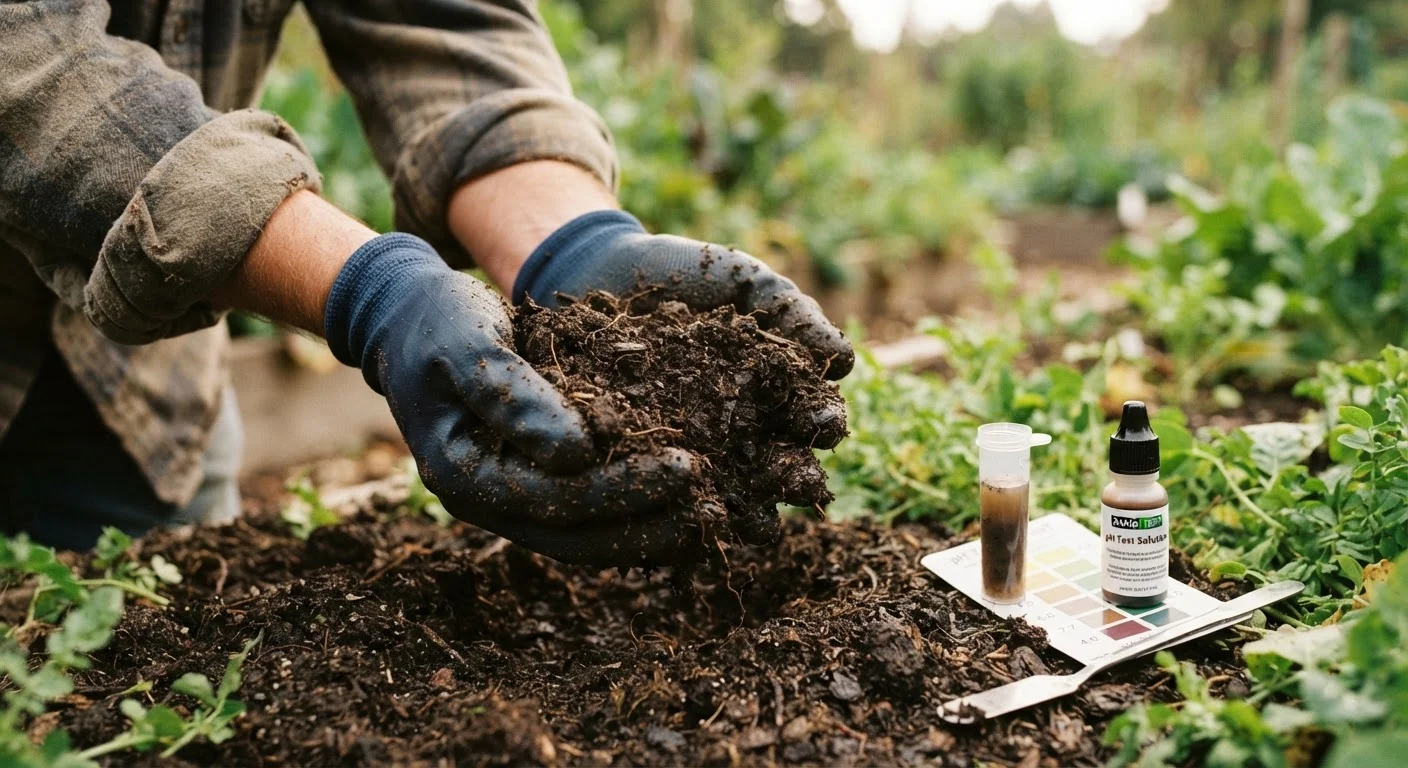
Photo: AdvisorBooth.net editorial
Key Takeaways
- Soil pH controls whether nutrients in the soil can actually be absorbed by plant roots.
- Most common garden plants prefer a slightly acidic pH between 6.0 and 7.0.
- Yellowing leaves and stunted growth can be pH problems, not just watering or fertilizer issues.
- A simple, inexpensive soil test tells you exactly where your pH stands before making changes.
- Lime raises pH in acidic soils; sulfur lowers pH in alkaline soils - both work gradually.
- Container and raised-bed soils can drift in pH faster than in-ground garden beds.
What Soil pH Actually Does to Your Plants
You water consistently, fertilize on schedule, and give your plants plenty of sunlight - yet leaves turn yellow, growth stalls, and something always seems off. The culprit is often invisible: soil pH.
Think of pH as a gatekeeper for nutrients. Even when nutrients like iron, calcium, and phosphorus are physically present in your soil, roots can only absorb them within a specific pH window. Outside that range, nutrients become chemically "locked up" - present but biologically unavailable. Pouring on more fertilizer doesn't help when the gate is closed.
This is why two identical plants, side by side, can perform completely differently if their soil conditions vary. It's also why troubleshooting garden problems without a soil test is largely guesswork. If you've been chasing common watering mistakes or adjusting sun exposure without results, pH may be the missing piece.
6.0-7.0
Ideal pH range for most vegetables and flowers
University extension guidelines consistently identify this range as optimal for nutrient availability in general garden crops.
0-14
The full soil pH scale
Values below 7 are acidic; values above 7 are alkaline; 7.0 is neutral - most garden plants sit comfortably in the lower-middle portion.
4.5-5.5
Preferred pH for acid-loving plants
Crops like blueberries and ornamentals like azaleas and rhododendrons are specifically adapted to this more acidic range.
How to Test Your Soil pH at Home
Testing is straightforward and inexpensive. You have two practical options:
- Home test kits: These use chemical reagents or color-matched strips to give a reading within minutes. They're widely available at garden centers and provide a useful ballpark, though they're less precise than lab analysis.
- Laboratory soil tests: Your local cooperative extension service (affiliated with land-grant universities across the U.S.) offers mail-in soil testing, often for a modest fee. Lab results typically include pH, nutrient levels, and specific amendment recommendations tailored to your region and crop type.
To collect a sample, gather small amounts of soil from several spots in your garden bed at a depth of about 4-6 inches, then mix them together. This composite sample gives a more representative picture than a single scoop from one corner.
Test in Multiple Spots Across Your Yard
Adjusting pH: Raising and Lowering
Once you have your reading, amendments can shift pH in either direction - but patience is key. These are slow, steady corrections, not overnight fixes.
To Raise pH (make soil less acidic)
Ground limestone - commonly called garden lime - is the standard amendment for acidic soils. Calcitic lime adds calcium; dolomitic lime adds both calcium and magnesium, which is useful if your soil is also magnesium-deficient. Application rates depend on your current pH, your target pH, and your soil texture. Sandy soils shift more easily; clay soils require more amendment to achieve the same change.
To Lower pH (make soil less alkaline)
Elemental sulfur is the most common amendment for overly alkaline soils. Soil bacteria convert it to sulfuric acid gradually, which lowers pH over weeks to months. Peat moss worked into soil can also contribute modest acidification. For container plants - which tend to drift in pH faster - understanding the unique demands of potted growing can help you stay ahead of the problem.
Always follow product label rates and re-test your soil 6-8 weeks after amending to gauge progress before applying more.
Choosing the Right Approach for Your Garden
Before spending time and money on amendments, consider whether your plants are simply mismatched to your natural soil. Some plants are adapted to conditions many gardeners fight against. Blueberries thrive in acidic soils that would trouble tomatoes. Lavender and many herbs prefer the alkaline end of the spectrum. Choosing plants suited to your existing pH is often the most sustainable long-term approach.
If you're committed to a specific plant in challenging soil, ongoing amendment is manageable - but understand it requires monitoring. Soil pH is not a one-time fix; rainfall, decomposing organic matter, irrigation water chemistry, and the fertilizers you use can all nudge pH over time. Building annual or biennial testing into your gardening routine takes the guesswork out of the equation and keeps your plants in the zone where all your other care can actually pay off.
Frequently Asked Questions
The content on this site is for informational purposes only and is not a substitute for professional advice. Always consult a qualified professional for guidance specific to your situation.