
Garden Tool Basics: What Each One Is Actually For

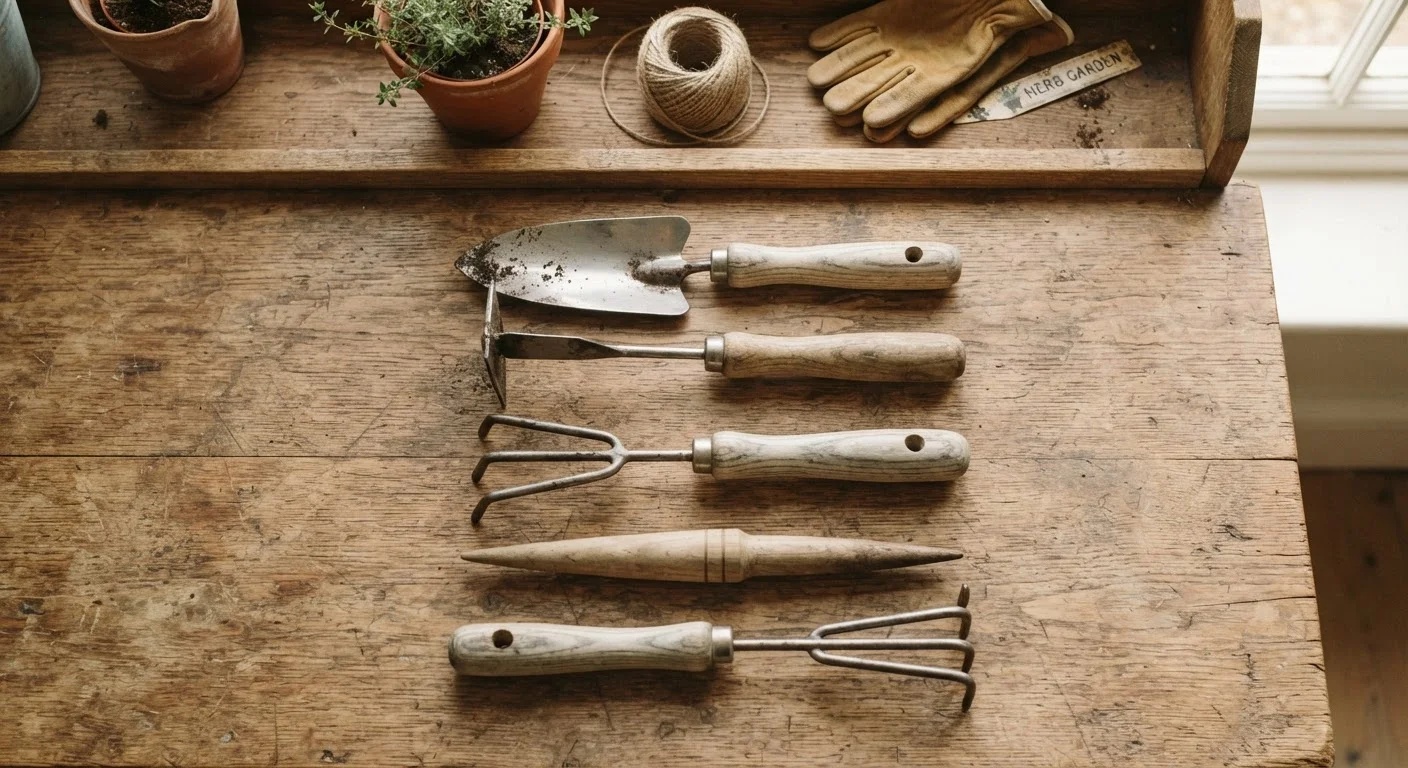
Photo: AdvisorBooth.net editorial
Why Tool Choice Actually Matters
Walk into any garden center and the tool wall can feel overwhelming. Dozens of handles, blades, and tines all look vaguely similar - yet each one exists to solve a specific problem in soil or plant care. Using the wrong tool for a job doesn't just make work harder; it can compact soil you're trying to loosen, damage roots you're trying to protect, or leave weeds intact when you thought you'd removed them.
This guide cuts through the confusion. Think of it as a quick-reference field guide: each common tool, its defining feature, and the exact job it handles best. Whether you're setting up your first vegetable garden or simply filling gaps in your existing toolkit, knowing what you're reaching for - and why - makes every hour outdoors more productive.
| Most versatile hand tool | Garden trowel |
| Best tool for surface weeding | Stirrup hoe (cuts on push and pull) |
| Deepest aerating tool | Broadfork |
| Best for precise seed planting | Dibber |
| Soil leveling and seedbed prep | Bow rake or soil rake |
| Taproot weed removal | Cape Cod weeder or hori-hori |
Digging and Breaking Ground
These are the heavy-lifters - tools built to move, turn, or penetrate soil.
- Garden spade: Flat, straight-edged blade designed for edging beds, slicing sod, and digging clean-sided holes. Not ideal for scooping.
- Round-point shovel: Curved blade that bites into soil easily and scoops efficiently. Best for moving loose material and transplanting larger plants.
- Garden fork (digging fork): Four heavy tines for breaking up compacted ground, turning compost, and loosening root vegetables at harvest without slicing them.
- Broadfork: A wide two-handled fork you press into the ground with your body weight, then rock back. It aerates soil deeply without inverting layers - popular in no-till gardening.
For raised bed gardening versus in-ground plots, the tools you reach for most may differ - see our comparison of raised beds vs. in-ground gardens for context.
Cultivation
The practice of loosening the top layer of soil to reduce surface crusting, improve water absorption, and disrupt young weed growth. Cultivation is generally shallow and does not turn or invert soil layers.
No-till gardening
A growing method that avoids deep soil turning in order to preserve beneficial soil structure, fungi, and microorganisms. Tools like the broadfork aerate without fully inverting the soil profile.
Taproot
A single dominant root that grows straight down from a plant, common in weeds like dandelions. Taprooted weeds must be removed completely or they will regrow from the root left behind.
Dibber (dibble)
A pointed tool used to make uniform planting holes in soil for seeds, bulbs, or seedling plugs. It creates consistent depth without over-disturbing surrounding soil.
Broadfork
A wide, two-handled fork with long tines that the gardener drives into soil using body weight. It loosens and aerates soil deeply while leaving layers mostly undisturbed.
Hori-hori
A Japanese-origin garden knife with a thick, pointed, partially serrated blade. It functions as a multi-purpose tool for transplanting, dividing roots, digging, and cutting.
Weeding and Cultivation Tools
These tools work at or just below the soil surface to disrupt weeds and break crusted soil without deep disturbance.
- Standard hoe (draw hoe): A flat blade on a long handle. You pull it toward you to sever weed roots just below the surface. Works fastest in loose soil between rows.
- Stirrup hoe (hula hoe): An open rectangular blade that cuts on both the push and pull stroke - more efficient than a standard hoe for dense weed coverage.
- Hand cultivator: A short-handled three-pronged claw for close work around plants. Loosens a thin layer of soil to improve water infiltration and uproot small weeds.
- Cape Cod weeder: An L-shaped blade for slipping under taprooted weeds like dandelions and popping them out whole. Excellent for working between tight plantings.
Planting and Fine Work
Precision tools for sowing seeds, setting transplants, and working in confined spaces.
- Trowel: The most-used hand tool in gardening. A short, pointed blade for digging small holes, transplanting seedlings, and mixing amendments into a small area.
- Dibber (dibble): A pointed stick - wood or metal - pressed into soil to create a planting hole of consistent depth. Speeds up repetitive seed or bulb planting.
- Bulb planter: A cylindrical tube that cuts and removes a core of soil to a set depth, then deposits it back over the bulb. More efficient than a trowel for planting dozens of bulbs.
- Garden knife (hori-hori): A thick, serrated blade useful for dividing perennials, cutting roots, opening bags, and transplanting in rocky or clay-heavy soil.
Precise planting technique pairs well with good watering practice - explore common watering myths that could be hurting your garden after you get plants in the ground.
Raking and Finishing
Rakes prepare seedbeds, collect debris, and level surfaces after digging.
- Bow rake (garden rake): Rigid, short metal tines on a curved head. Levels soil, breaks clods, and works amendments into the top few inches before planting.
- Leaf rake: Fan-shaped with flexible tines spread wide. Built for gathering fallen leaves and light lawn debris - not for soil work, where it bends under resistance.
- Soil rake (flat-head rake): Stiff, flat tines used to create a fine, even seedbed surface. Often interchangeable with the bow rake in casual use, but worth distinguishing if bed prep is a priority.
Having the right set of tools in place before you start - diggers, weeders, planting tools, and a good rake - means less interruption and more time actually gardening. If you're planning companion plantings or mixed beds, take a look at which garden pairings actually work and why to make the most of your prepared beds.
The content on this site is for informational purposes only and is not a substitute for professional advice. Always consult a qualified professional for guidance specific to your situation.