
Weekly Meal Planning: A Practical Checklist for Nutritional Balance

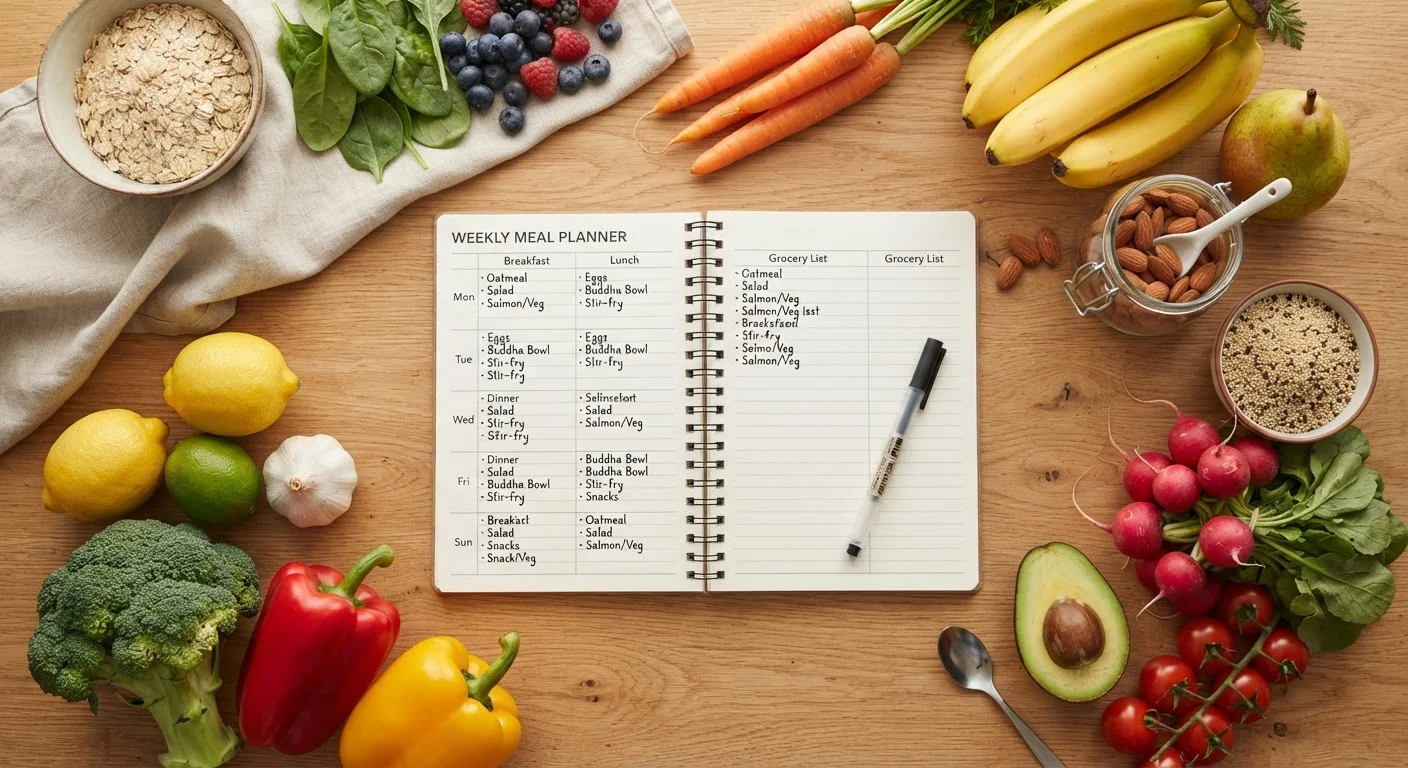
Photo: AdvisorBooth.net editorial
Key Takeaways
- Meal planning doesn't require nutritional expertise - a simple framework covers most bases.
- Covering key food groups each week is more practical than counting individual nutrients.
- Planning reduces both food waste and the daily stress of deciding what to cook.
- A well-stocked pantry makes flexible, balanced eating much easier throughout the week.
- Budgeting and nutrition goals work together - not against each other - when you plan ahead.
Why a Weekly Meal Plan Works
Most of us don't struggle with nutrition because we lack information - we struggle because daily life is unpredictable and cooking decisions happen at the worst possible moments: when we're tired, hungry, and staring at an open fridge. A weekly meal plan shifts those decisions to a calmer moment, making it far easier to eat in a way that feels good.
You don't need a dietitian's credentials to plan balanced meals. If you're new to thinking about what you eat, our beginner's guide to nutrition offers a grounding starting point. This checklist builds on those basics, translating them into a repeatable weekly routine anyone can follow.
The goal here isn't perfection - it's consistency. A plan you can stick to 80% of the time will serve you far better than a flawless one you abandon by Wednesday.
Weekly Planner Template
A simple grid (paper or digital) mapping meals to each day of the week - keeps your plan visible and easy to follow.
Pantry Inventory List
A running log of what's in your pantry, fridge, and freezer so you plan around what you have.
Grocery List App or Notepad
Used to organize your shopping list by store section, reducing time in the store and forgotten items.
Kitchen Scale
Helpful for portioning batch-cooked meals evenly, particularly useful if you're cooking for multiple people.
Freezer-Safe Containers
Allows you to store double-batch meals safely, giving you ready-made options in future weeks.
How to Use This Checklist
Work through these groups once a week - ideally on the same day each week, so it becomes a habit. Most people find Saturday or Sunday morning works well, but any day that gives you time before your main grocery trip is fine. You don't need to plan every meal down to the gram; covering the broad categories below is enough to keep variety and balance in your week.
If you're also looking to stretch your food dollars, pair this with our guide to eating well on a budget for strategies that complement planning without sacrificing quality.
Before You Start Planning
Covering Key Food Groups
Meal Structure and Variety
Grocery List and Logistics
Quick End-of-Week Review
Making It Stick Week After Week
The biggest obstacle to consistent meal planning isn't motivation - it's friction. The more steps stand between you and a complete plan, the easier it is to skip. A few habits reduce that friction significantly.
Keep a running pantry inventory so you always know what you have. Our resource on pantry stocking without waste offers a practical system for this. Once your plan is set, your grocery list practically writes itself - and our guide to smart grocery shopping can help you navigate the store efficiently.
Meal planning also has a meaningful overlap with household budgeting. When you know what you'll cook, impulse purchases drop and food waste shrinks - both of which show up in your monthly spending. If you track household finances, consider reviewing food costs as part of your monthly budget review.
Avoid Over-Planning as a Form of Stress
This article is for general informational and educational purposes only. It is not medical or dietary advice. If you have specific health conditions, dietary restrictions, or nutritional concerns, please consult a qualified healthcare professional or registered dietitian.
The content on this site is for informational purposes only and is not a substitute for professional advice. Always consult a qualified professional for guidance specific to your situation.