
Reading Online Reviews Without Getting Fooled by Fake Ones

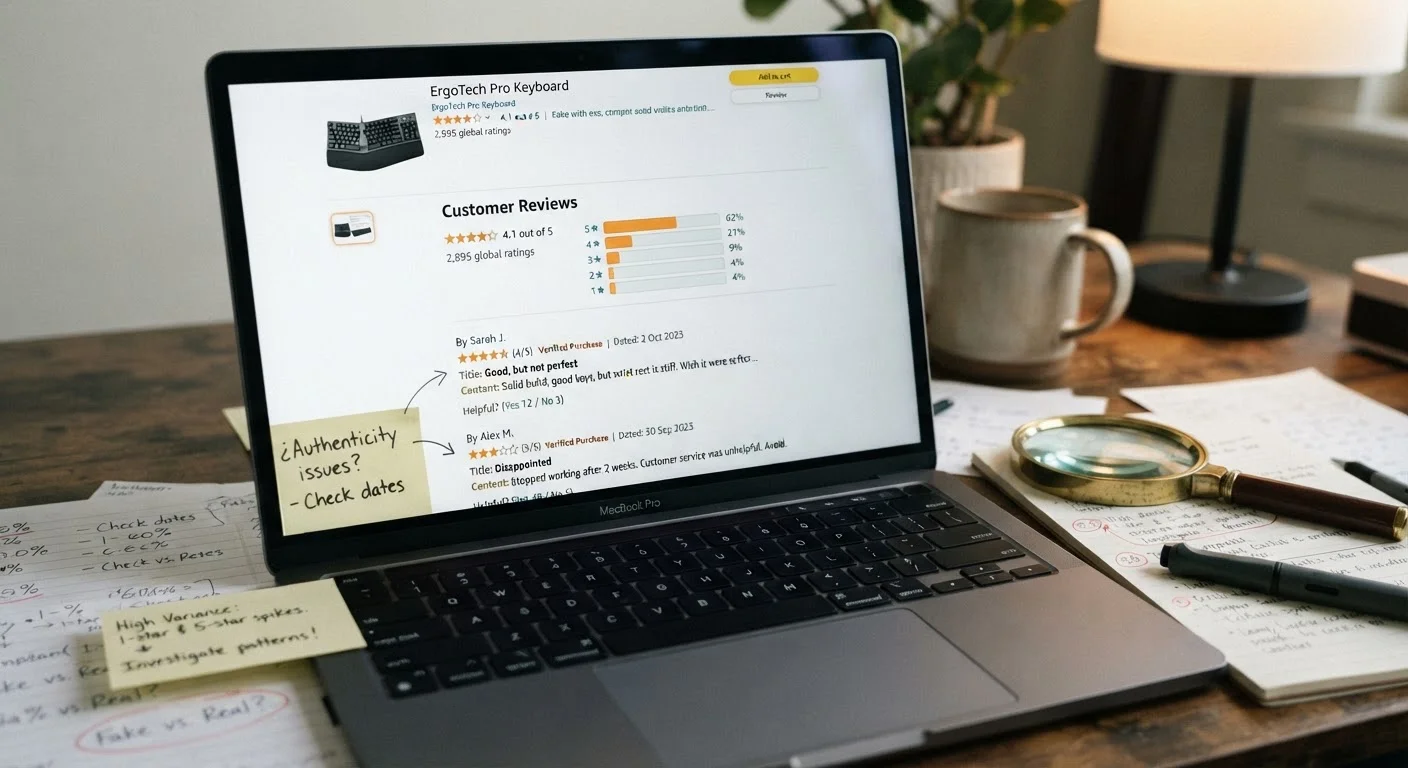
Photo: AdvisorBooth.net editorial
Key Takeaways
- A suspiciously high volume of five-star reviews in a short timeframe is a common red flag for fake feedback.
- Review language that sounds generic, overly enthusiastic, or repetitive often signals manufactured content.
- Third-party review analysis tools can quickly flag suspicious rating patterns you might miss manually.
- Low and mid-star reviews tend to be more informative and harder to fabricate than glowing five-star ones.
- Checking reviews on multiple independent platforms gives you a more accurate picture of a product.
Why Fake Reviews Are So Hard to Spot
The fake review industry has grown sophisticated alongside the platforms it exploits. Early tactics - bulk accounts posting identical text - are now easily filtered by retailer algorithms. Modern fake reviews are often written by real people hired through third-party platforms, which makes them linguistically diverse and harder to flag automatically. Some sellers offer free products or cash incentives in exchange for glowing feedback, creating reviews that are technically 'authentic' but commercially motivated.
Understanding this landscape helps calibrate your skepticism. You're not trying to identify a bot; you're looking for patterns of incentivized or manufactured opinion. The signals are subtler than outright fabrication, which is why a structured approach matters more than gut instinct alone. For context on how deceptive online selling tactics fit into a broader picture, see our guide on how online shopping scams actually work.
Fake Reviews Are Widespread and Regulated
Reviews are just one input when evaluating a product. Pair them with objective quality signals - materials, specifications, and construction details. Our guide on evaluating quality without touching the product covers that ground in detail.
What You'll Need Before You Start
What you will need
Fakespot or ReviewMeta
Browser-based tools that analyze review patterns on major retail sites and assign a reliability grade based on linguistic and behavioral signals.
Google Search (site-specific)
Search the product name plus words like 'forum' or 'reddit' to find unsponsored user discussions outside the retailer's ecosystem.
Web Archive / Wayback Machine
Check whether a seller's page or review history changed dramatically in a short period, which can indicate review manipulation.
Step-by-Step: How to Evaluate Reviews Critically
Look at the review volume and timing
Open the product listing and sort reviews by most recent. Scroll back through the timeline. A legitimate product typically accumulates reviews gradually. If hundreds of five-star reviews appeared within a few days or weeks - especially around the product's launch - that is a warning sign worth investigating further.
Read the one-, two-, and three-star reviews first
Low and mid-range reviews are harder to fake and are routinely ignored by shoppers drawn to star averages. They often contain the most specific, practical feedback: build quality issues, inaccurate sizing, poor customer service experiences. Filter by these ratings deliberately before reading any five-star content.
Analyze the language in five-star reviews
Genuine positive reviews usually mention a specific use case, compare the product to alternatives, or note one small drawback alongside praise. Fake reviews tend to use superlatives without context ('Amazing! Best purchase ever!'), repeat similar phrasing across multiple reviewers, or sound like a marketing description rather than personal experience. Copy a few suspicious phrases into a search engine to see if the same text appears elsewhere.
Run the product through a review analysis tool
Tools like Fakespot and ReviewMeta apply algorithms to publicly available review data and flag patterns humans would miss - such as unusual reviewer overlap, linguistic similarity across reviews, or spikes in unverified purchases. Install the browser extension or paste the product URL directly into the tool's website. Treat the output as one data point, not a definitive verdict.
Search for independent opinions outside the retailer
Retailers have little incentive to surface negative reviews prominently. Search the product name on independent forums, enthusiast communities, or consumer discussion boards. Real users discussing products in their own spaces tend to be more candid - and those conversations are much harder for sellers to manipulate. This step is especially valuable for higher-cost purchases.
Check whether reviews are actually for the product you're buying
On large marketplaces, multiple sellers sometimes share a single product listing, and reviews from older or different versions of an item get pooled together. Confirm that the reviews reference the specific variation you intend to purchase - the color, size, model number, or generation. A listing might show 4.8 stars based largely on reviews for a previous, now-discontinued version.
Cross-Reference Before You Commit
Putting It All Together
No single signal definitively proves a review is fake, but a cluster of red flags - rapid volume spikes, generic language, suspicious reviewer profiles, and low scores on analysis tools - builds a compelling case for skepticism. Treat reviews as directional rather than authoritative. They're most useful when they surface consistent themes about real-world use, durability, or fit-for-purpose performance.
If a product's review profile leaves you uncertain, that uncertainty itself is useful information. Redirect your research to independent sources, and consider whether the product's specifications give you enough objective data to decide without relying on community feedback at all. Smart shopping means triangulating across multiple signals - reviews included, but never reviews alone.
Don't Rely on Star Averages Alone
The content on this site is for informational purposes only and is not a substitute for professional advice. Always consult a qualified professional for guidance specific to your situation.