
Reading Between the Lines of Product Specifications

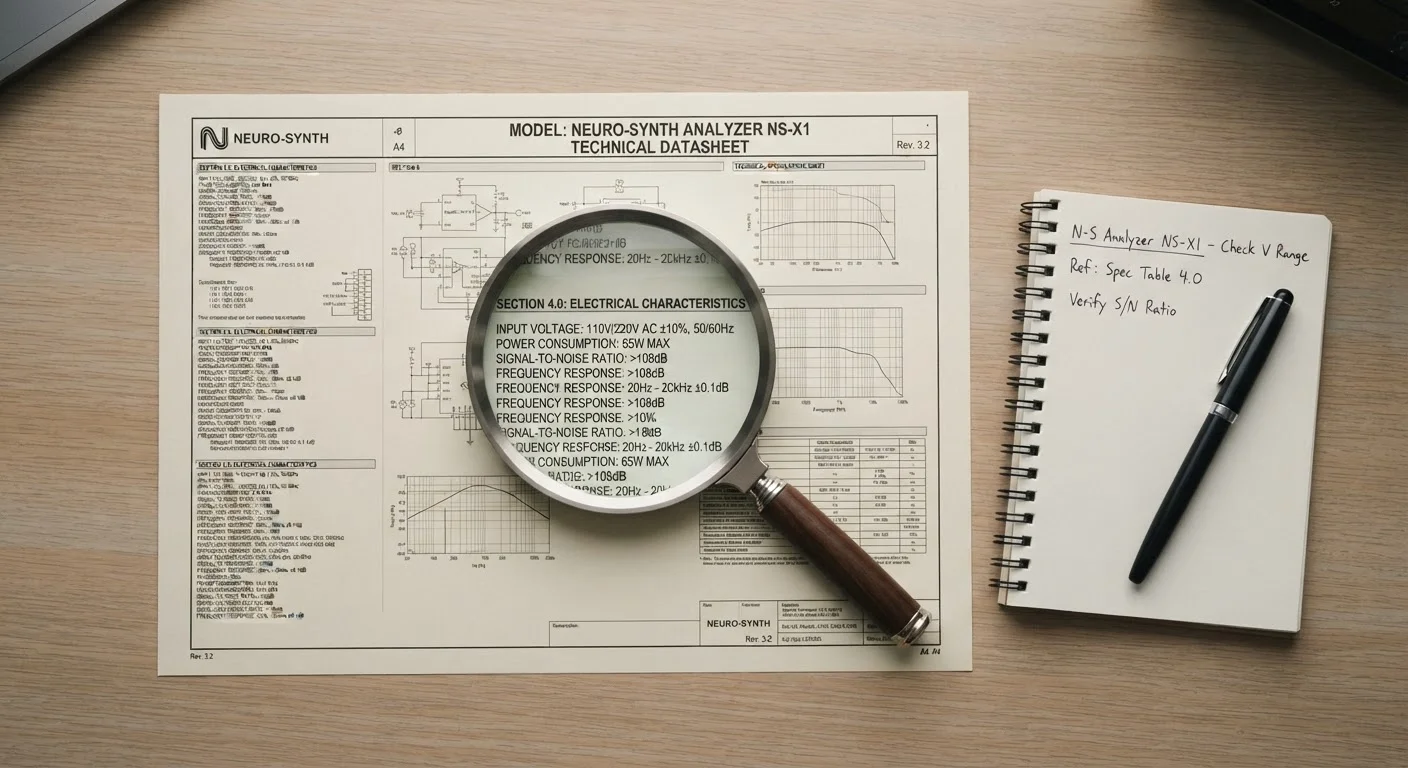
Photo: AdvisorBooth.net editorial
Key Takeaways
- Manufacturers often highlight the most flattering spec figures, which may not reflect everyday performance.
- Testing conditions for listed specs rarely match real-world use - always look for independent verification.
- Understanding what a spec actually measures is more useful than comparing raw numbers between products.
- Missing specs can be as telling as the ones that are present in a product listing.
- Third-party reviews and lab tests are the most reliable way to ground-truth manufacturer claims.
Why Spec Sheets Are Designed to Persuade, Not Inform
A product specification sheet is a marketing document first and a technical reference second. The figures on it are real - but they're selected, framed, and sequenced to make a product look as favorable as possible against the competition. Understanding that dynamic is the foundation of reading specs critically.
Manufacturers operate in categories where consumers have been trained to compare specific numbers: megapixels, gigahertz, watts, lumens. Once a category benchmark exists, every brand optimizes their spec sheet to win that comparison - even if the headline number doesn't reflect the experience you'll actually have. A vacuum with a high suction-wattage rating may perform worse on carpet than a lower-rated competitor, because wattage measures power draw, not cleaning effectiveness.
This is true across categories. Understanding how numbers are constructed - not just what they say - is the same analytical skill required in other domains. Just as a real estate market report requires knowing which metrics signal real conditions versus noise, product specs require knowing which figures reflect real use.
What you will need
How to Work Through a Spec Sheet Step by Step
The steps below give you a repeatable process for any product category - from electronics to appliances to vehicles. Use the tools listed here alongside your analysis.
Manufacturer's spec sheet or product listing
The primary document you'll be analyzing for meaningful vs. misleading figures.
Independent review or lab test source
Provides real-world performance data to compare against manufacturer claims.
Notepad or comparison spreadsheet
Helps you track and compare specs across multiple products side by side.
Identify which specs are being emphasized - and why
Before reading any number, notice which specs are featured prominently. Manufacturers lead with figures that make their product look competitive, not necessarily the ones that matter most to you. A laptop listing that opens with "up to 18-hour battery life" is telling you something - look at the fine print on how that was measured.
Ask yourself: is this spec relevant to how I'll actually use this product? A camera sensor megapixel count is frequently highlighted but rarely the biggest factor in photo quality for most users.
Decode the testing conditions behind the numbers
Most published specs are measured under controlled, often idealized conditions. Battery life figures are commonly tested with screen brightness at minimum and no active applications running. Vehicle fuel economy estimates from official testing cycles frequently differ from what drivers experience on mixed roads.
When you see a maximum or "up to" figure, treat it as a ceiling, not a typical result. Look for any footnote or methodology note attached to the number - reputable manufacturers publish these, and their absence is itself a red flag.
Cross-reference specs with independent testing data
Manufacturer claims should be the starting point of your research, not the ending point. Search for independent lab tests or detailed editorial reviews that actually measure the product under realistic conditions. For electronics, this often means looking for standardized benchmark scores rather than relying on packaging copy.
For screens and displays, our guide on screen resolution numbers can help you understand which figures correlate to visible quality. For a broader electronics context, the Devices & Gadgets hub covers many common categories with plain-language breakdowns.
Notice what the spec sheet leaves out
Omissions are often as informative as the specs that are listed. If a product prominently advertises audio output wattage but omits total harmonic distortion - a measure of audio clarity - that gap suggests the manufacturer knows the distortion figure isn't favorable. If a wireless router spec sheet shows maximum speed but not range at that speed, that's worth noting.
Build a mental checklist for each product category. For TVs: contrast ratio and local dimming zones. For laptops: sustained vs. peak processor performance. For appliances: energy consumption under actual load, not just idle. Absent figures often matter most.
Compare specs across products using identical units and conditions
Comparing specs between products is only meaningful when they're measured the same way. Storage speeds may be listed as read speed on one product and sequential write speed on another. Noise levels can be listed in decibels (dB) at different distances. Sound output may quote peak versus continuous wattage.
Whenever possible, find a third-party source that has tested both products using the same methodology. This is especially useful when evaluating a vehicle purchase - the Buying a Car hub covers how to evaluate vehicle data beyond what the window sticker presents.
Pair your spec analysis with qualitative signals
Specs don't capture everything. Build quality, material durability, software reliability, and long-term support aren't easily reduced to a single figure. Pair your quantitative spec reading with qualitative research: look at verified purchase reviews for durability patterns, and check whether a product's real-world performance aligns with its spec advantages on paper.
Our guide to evaluating quality when you can't touch the product walks through these methods in detail. And to ensure the reviews you're reading are genuine, see how to spot fake reviews before drawing conclusions.
Build a Category Checklist Before You Shop
When Specs Don't Tell the Whole Story
Even a perfectly read spec sheet has limits. Specs describe components and their measured outputs under controlled conditions - they don't describe how a product behaves as a system over time, under real load, or after a software update. Two products with identical spec figures can deliver noticeably different experiences because of design decisions that aren't quantified anywhere on the listing.
This is why pairing spec literacy with broader research habits matters. For complex purchases like vehicles, specs are just one input among many - understanding add-ons and extras presented after the fact is equally important to protecting your total investment. Similarly, if you're evaluating smart home devices where compatibility matters as much as raw specs, see what a smart home hub actually does for context that spec sheets rarely provide.
The goal isn't to become a technical expert in every product category - it's to ask better questions, recognize which numbers are likely to be gamed, and know when to look beyond the listing entirely.
Spec Inflation Is Common Across Price Tiers
The content on this site is for informational purposes only and is not a substitute for professional advice. Always consult a qualified professional for guidance specific to your situation.