
Your Pre-Trip Vehicle Safety Walkthrough

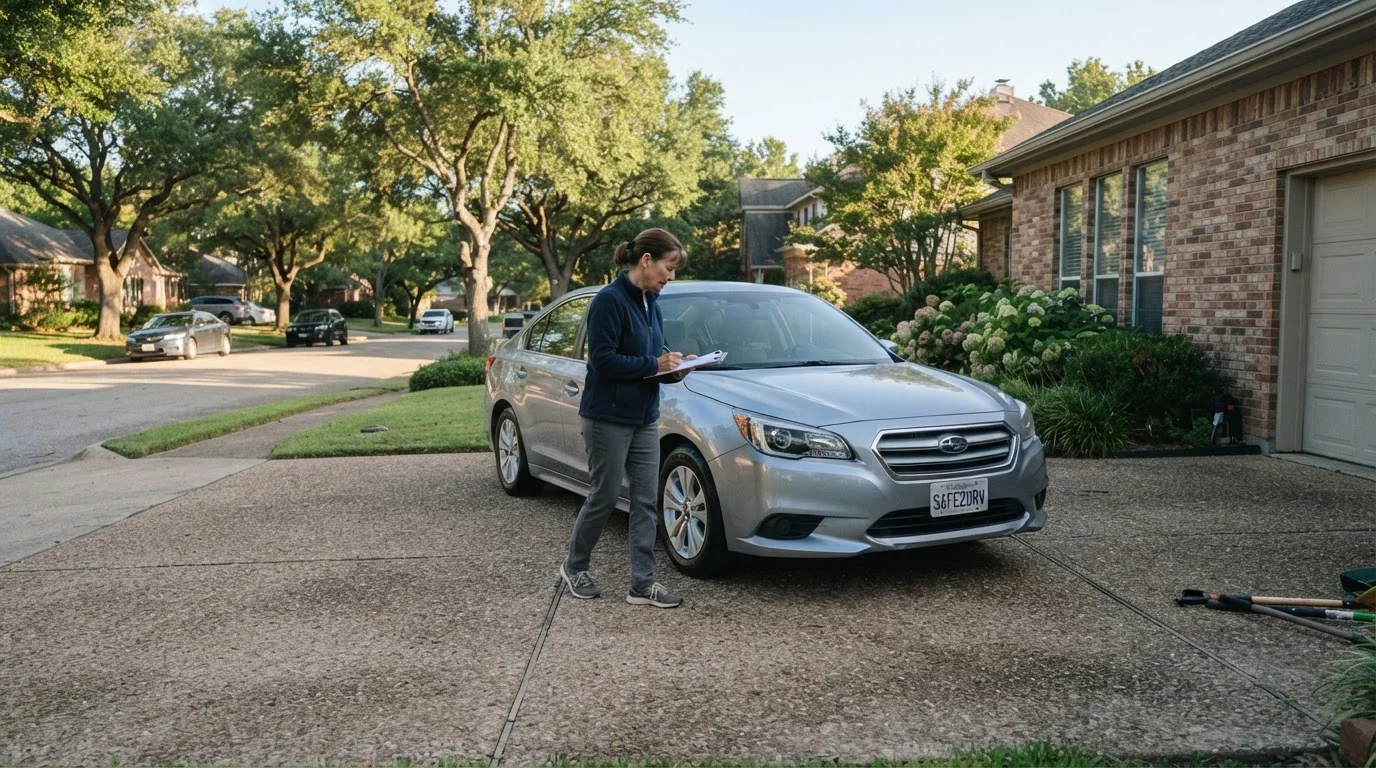
Photo: AdvisorBooth.net editorial
Key Takeaways
- Most pre-trip checks take under 20 minutes and require no special tools.
- Tires, lights, and fluids are the three highest-priority inspection areas before any drive.
- Dashboard warning lights should always be investigated before departure, not ignored.
- Mirrors and seatbelts are legal safety requirements in every U.S. state-verify them every trip.
- Catching a small issue at home is far safer and cheaper than dealing with it on the road.
Why a Pre-Trip Check Matters
The majority of roadside breakdowns and many collision-contributing factors involve conditions that were present before the driver left home-underinflated tires, burned-out brake lights, or low engine oil. A structured walkthrough conducted before you drive converts a reactive mindset into a proactive one, giving you the chance to address small problems while you still have options.
This checklist is designed for any driver, any vehicle, and any trip length. It works as a quick daily habit for commuters and as a more deliberate check before longer road trips. The tools required are minimal, and the entire process takes under 20 minutes. For drivers who are newer to vehicle ownership, pairing this walkthrough with a broader understanding of routine maintenance can make a real difference-see our guide for first-time car owners for the foundational context.
Illuminated Warning Lights Require Action
What You'll Need
You don't need a mechanic's toolbox to complete this check. The items listed below are enough for a thorough walkthrough at home or in a parking lot. Keep them in your vehicle so the inspection is always available-not just when you happen to remember to grab a gauge.
Tire pressure gauge
Measures tire inflation in PSI so you can compare against the manufacturer's recommended pressure.
Penny or tread-depth gauge
Provides a simple way to assess whether tire tread depth remains within safe limits.
Clean rag or paper towel
Used to wipe the oil dipstick clean for an accurate fluid-level reading.
Flashlight or phone torch
Helps inspect tires, undercarriage, and fluid reservoirs in low-light conditions.
Vehicle owner's manual
Provides manufacturer-specific fluid capacities, PSI values, and warning light definitions for your exact model.
If your vehicle came with a built-in tire pressure monitoring system (TPMS), note that the dashboard warning typically only activates when pressure is already 25% below the recommended level. Checking manually with a gauge will catch lower-level deviations that the sensor won't flag yet.
The Complete Pre-Trip Checklist
Work through each group in order. The sequence is intentional-starting outside with tires and lights before moving inward to fluids and controls allows you to complete the exterior inspection while the engine is still cold, which matters when it comes to safely checking coolant levels.
Tires
Lights & Visibility
Fluids
Mirrors & Seatbelts
Dashboard & Controls
Emergency Preparedness
Never Check Coolant on a Hot Engine
Low Brake Fluid Is a Red Flag
For tires specifically, understanding how to read a gauge accurately and locate your vehicle's correct PSI target makes the process faster and more reliable. Our practical tire pressure walkthrough covers the full method step by step.
Making This a Habit
Consistency is what makes a safety check valuable. The most effective approach is to attach it to something you already do-parking in the same spot at home, for instance, gives you a consistent visual reference point to notice new fluid spots on the ground or a tire that looks lower than usual.
For seasonal transitions, this pre-trip checklist pairs well with a deeper vehicle review. Extreme heat stresses cooling systems and tires, while cold weather accelerates battery drain and affects tire pressure significantly. Our seasonal car care guide covers the additional checks worth scheduling when conditions change.
Modern safety technology-including ABS, ESC, and blind-spot monitoring-adds an important layer of protection, but these systems depend on your vehicle being in good mechanical condition to function as intended. A pre-trip check keeps the foundation solid so those systems can do their job. Learn more about how active safety systems work and what they cannot compensate for.
The content on this site is for informational purposes only and is not a substitute for professional advice. Always consult a qualified professional for guidance specific to your situation.