
Why Tailgating Is More Dangerous Than Most Drivers Realize

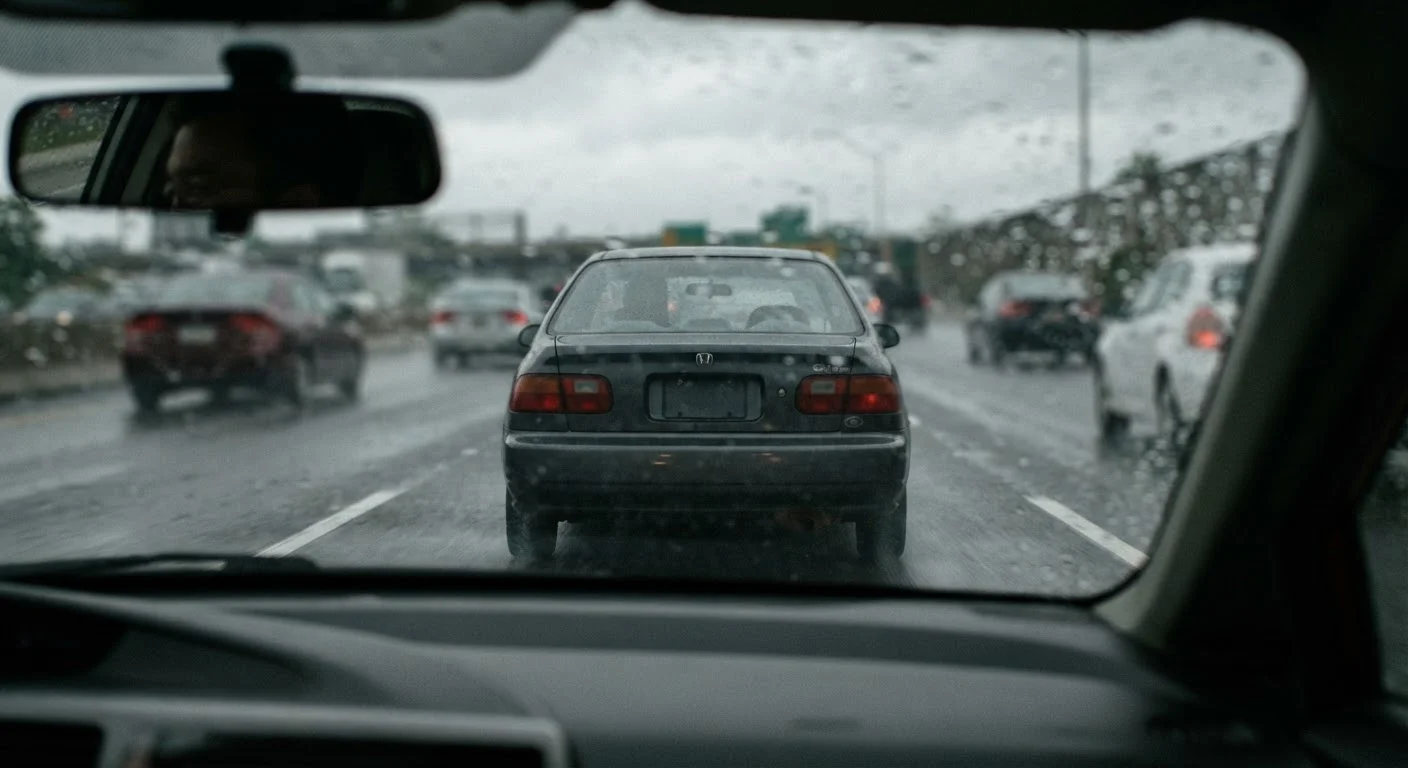
Photo: AdvisorBooth.net editorial
Key Takeaways
- At 60 mph, a car travels roughly 88 feet every second - reaction time alone can consume 150+ feet.
- The 3-second rule is the widely recommended minimum following distance under good conditions.
- Tailgating is a factor in a significant share of rear-end crashes, which are among the most frequent collision types in the U.S.
- Wet or icy roads dramatically extend braking distance, requiring even greater following distance.
- Tailgating can provoke road rage; maintaining space protects you legally and behaviorally.
- Larger or heavier vehicles require more stopping distance than standard passenger cars.
The Physics of Following Distance
Most drivers intuitively know they should leave space ahead, but few grasp the actual math. At 60 mph, your vehicle covers approximately 88 feet every single second. By the time the average driver perceives a hazard, processes it, and moves their foot to the brake - typically 1.5 seconds - the car has already traveled over 130 feet. Add braking distance on top of that, and a full stop from highway speed can require 300 feet or more under ideal conditions.
That gap evaporates instantly when a driver is following just one or two car lengths behind. Worse, braking distance is not linear: it scales with the square of velocity. A vehicle traveling at 60 mph needs roughly four times the braking distance of one traveling at 30 mph, not twice. This is why small increases in speed carry disproportionately large consequences.
~29%
Share of all U.S. crashes that are rear-end collisions
According to the National Highway Traffic Safety Administration (NHTSA), rear-end crashes are consistently one of the most frequent collision types on American roads.
300+ ft
Total stopping distance at 60 mph on dry pavement
This estimate, widely cited by driver education sources, combines average reaction distance with braking distance for a standard passenger vehicle.
4×
Braking distance increase when speed doubles
Because braking distance scales with the square of velocity, doubling speed from 30 to 60 mph quadruples the distance needed to stop - a fact that surprises many drivers.
The 3-Second Rule - and When to Extend It
The 3-second rule is a practical, easy-to-apply method for maintaining a safe following distance at any speed. Select a stationary reference point - a sign, overpass, or lane marking. When the vehicle ahead passes it, count slowly: one-thousand-one, one-thousand-two, one-thousand-three. If you reach that point before you finish counting, you are following too closely.
Three seconds is a minimum, not a target to optimize around. Several conditions require you to extend that cushion significantly:
- Rain or wet pavement: Wet roads can more than double stopping distance. Many safety organizations suggest doubling the gap in rain.
- Snow or ice: Braking distances can increase by ten times or more on icy surfaces.
- Night driving: Reduced visibility means hazards appear later. See our guide to night driving challenges for additional strategies.
- Towing a trailer or driving an SUV or truck: Heavier vehicles with greater inertia require substantially more stopping distance.
- Driving behind a large truck: Trucks obstruct your sightlines, so you need extra space to see and react to hazards beyond them.
Apply the 3-Second Rule at Any Speed
Why Tailgating Happens - and Why It's Riskier Than People Think
Tailgating is rarely about aggression alone. Distracted driving, misjudgment of speed, and an inflated sense of one's own reaction time all contribute. Research consistently shows that people tend to overestimate how quickly they can stop their vehicle and underestimate how fast it is moving. The result is a gap that feels adequate but physically is not.
There is also a behavioral dimension. Following closely can be an expression of frustration or an attempt to pressure the driver ahead into moving over. This creates a dangerous feedback loop: the tailgated driver may brake unpredictably or become agitated themselves. That dynamic is a well-documented precursor to road rage incidents - see our related piece on what escalates and de-escalates road conflicts for more on managing that risk.
It is also worth noting that rear-end collisions are among the most common crash types in the United States, according to federal crash data. A significant proportion involve following-distance violations. Even at relatively low speeds, these crashes cause whiplash injuries, vehicle damage, and legal liability for the following driver.
Maintaining Space as a Defensive Habit
Experienced defensive drivers treat following distance as their primary safety buffer - the margin that gives them options when something goes wrong ahead. Adequate space means you can brake gradually rather than emergency-stop, avoid multi-vehicle chain-reaction crashes, and keep your sightlines open to spot hazards sooner.
This same principle applies when sharing the road with motorcycles and cyclists, who can stop more quickly than cars or who may react to road hazards invisible to drivers behind them. Our guide on sharing the road with vulnerable road users covers why that space is especially critical around two-wheeled travelers.
Building consistent following-distance habits also reduces driver stress. When you are not crowding the vehicle ahead, you have more time to scan the full road environment, anticipate lane changes, and make smooth, controlled adjustments - the hallmarks of calm, confident driving.
Frequently Asked Questions
The content on this site is for informational purposes only and is not a substitute for professional advice. Always consult a qualified professional for guidance specific to your situation.