
Teen Drivers and Graduated Licensing: What the Research Shows

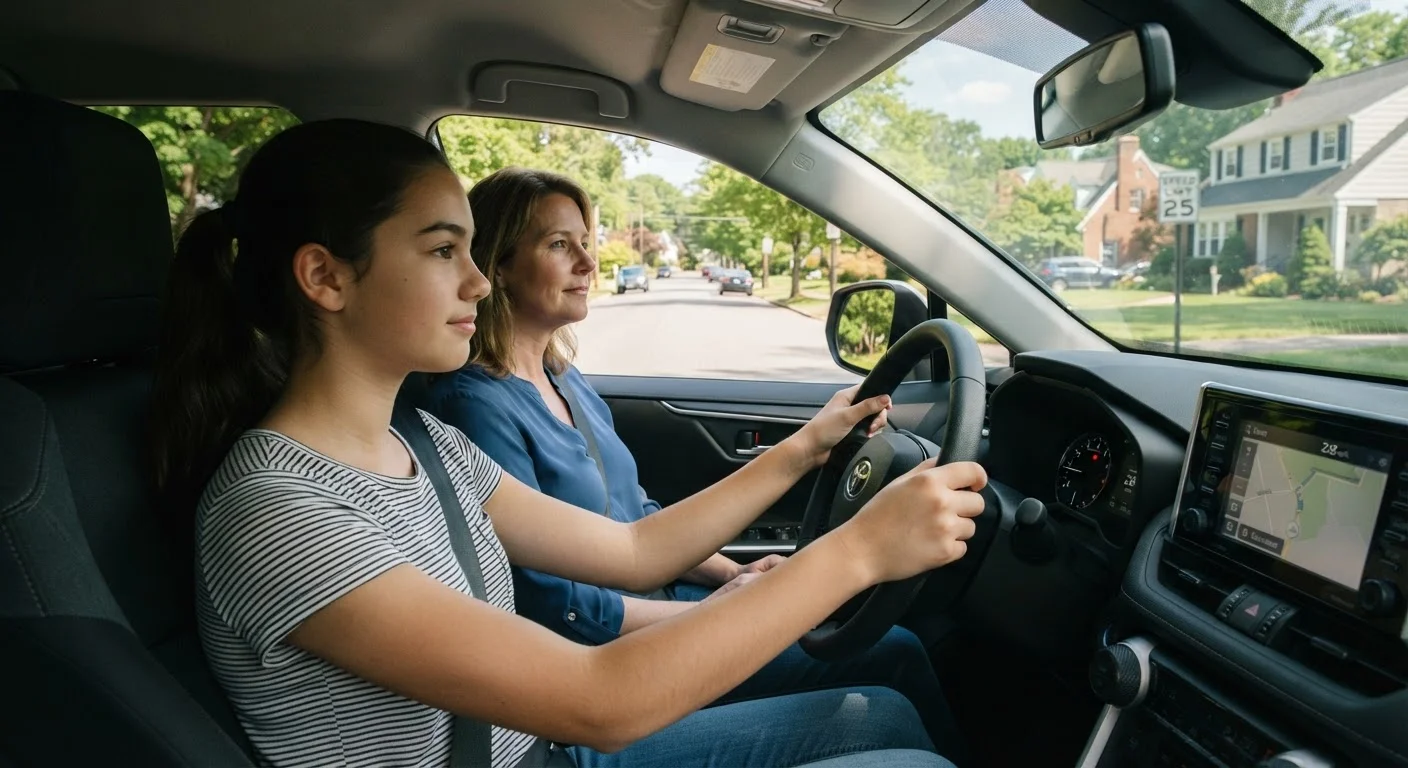
Photo: AdvisorBooth.net editorial
Key Takeaways
- All 50 U.S. states and Washington D.C. have some form of graduated driver licensing in place.
- Research consistently links GDL programs to meaningful reductions in teen crash fatalities.
- Night driving restrictions and passenger limits are among the most effective GDL provisions.
- Stronger GDL laws - with more restrictions - are associated with better safety outcomes.
- Parents play a critical role in supervised practice during the learner phase.
- Teen drivers face elevated crash risk due to inexperience, not just age-related risk-taking.
Why Teen Drivers Face Higher Crash Risk
Motor vehicle crashes remain one of the leading causes of death among teenagers in the United States. Understanding why requires looking beyond stereotypes about reckless youth. Research from the National Highway Traffic Safety Administration (NHTSA) and highway safety organizations consistently points to inexperience as the primary driver of elevated crash rates - not simply age or attitude.
New drivers of any age lack the automatic hazard-recognition skills that experienced drivers develop over thousands of hours behind the wheel. For teenagers, this inexperience overlaps with other factors: developing judgment, sensitivity to peer influence, and a preference for nighttime and weekend driving - conditions that carry higher crash risk for all drivers. The combination creates a measurably dangerous window in early driving years.
This is precisely the problem that graduated licensing was designed to address - not by restricting driving indefinitely, but by structuring how new drivers build their skills. See also our article on defensive driving mental habits for the broader principles experienced drivers rely on.
~20-40%
Crash reduction for 16-year-old drivers under comprehensive GDL
Reported across multiple studies reviewed by the Insurance Institute for Highway Safety (IIHS) examining states with strong GDL provisions.
3x
Higher crash rate for 16-year-olds vs. drivers aged 20+
Per NHTSA data, the crash rate per mile driven is dramatically higher for the youngest licensed drivers, reflecting inexperience more than behavior alone.
50 + D.C.
U.S. jurisdictions with some form of GDL law
As documented by the IIHS and Governors Highway Safety Association, GDL laws exist across all U.S. states, though their strength varies widely.
How Graduated Licensing Programs Are Structured
A standard GDL program moves teen drivers through three stages, each with its own requirements and restrictions:
- Learner's Permit Phase: The teen may drive only with a licensed adult supervisor. A minimum number of practice hours - often 40 to 60, with a portion at night - must be logged before advancing. This phase is typically entered at age 15 or 16.
- Intermediate (Provisional) License Phase: The teen can drive independently but faces restrictions - commonly a nighttime curfew (often 10 p.m. to 5 a.m.) and limits on the number of teen passengers allowed in the vehicle. Violations or at-fault crashes can extend this phase.
- Full License: Restrictions are lifted when the driver meets age and time requirements and maintains a clean record.
The logic behind this structure is straightforward: exposure to complex driving conditions is introduced gradually, as competence builds. High-risk scenarios - late-night driving, crowded cars of peers - are delayed until the driver has a foundation of experience to draw on.
For context on one of the most challenging driving environments for new drivers, our guide on night driving challenges explains why low-visibility conditions require particular skill.
What the Research Shows About Effectiveness
The evidence base for GDL programs is substantial. The Insurance Institute for Highway Safety (IIHS) and academic researchers have studied GDL outcomes across U.S. states and internationally for more than two decades.
Key findings from this body of research include:
- States with stronger GDL laws - those with lower nighttime curfews, stricter passenger limits, and longer supervised practice requirements - consistently show larger reductions in teen crash rates than states with weaker laws.
- The intermediate license phase, not just the learner's permit, appears critical. Restrictions during unsupervised driving address the period when teens are most vulnerable.
- Passenger restrictions are particularly effective. Studies have shown that a teen driver's crash risk increases with each additional peer passenger in the car - a phenomenon tied to distraction and social dynamics.
“Graduated licensing gives teenagers the opportunity to practice driving under lower-risk conditions before they face the most challenging situations on their own. The evidence that it saves lives is clear and consistent.”
— Anne McCartt, Senior Vice President for Research, Insurance Institute for Highway Safety (paraphrased from published IIHS commentary)
It's worth noting that GDL programs don't eliminate teen crash risk entirely - they reduce and delay it. The goal is to move teens through the highest-risk early months of driving with more structure and fewer catastrophic exposures.
Distraction is a related and serious concern for new drivers. Our coverage of distracted driving research explores how attention fragmentation contributes to crashes across all age groups.
The Role of Parents and Supervised Practice
State minimums for supervised driving hours are a floor, not a ceiling. Research suggests that teens who accumulate more varied practice - including highway driving, adverse weather conditions, and unfamiliar routes - arrive at the intermediate phase better prepared. Our overview of highway versus city driving skills outlines why each environment demands distinct competencies that should both be part of practice.
Parents also function as de facto enforcers of GDL restrictions. When families actively apply nighttime curfews and passenger limits - even when the state doesn't require documentation - teens benefit from those protections in practice, not just on paper.
Productive supervised sessions tend to involve deliberate exposure to progressively challenging conditions, clear communication about hazard recognition, and calm, instructive feedback rather than reactive criticism. The quality of practice matters alongside the quantity.
Maximize Your Teen's Practice Hours
Frequently Asked Questions
The content on this site is for informational purposes only and is not a substitute for professional advice. Always consult a qualified professional for guidance specific to your situation.