
Merging, Yielding, and Right-of-Way: The Rules Drivers Misread Most

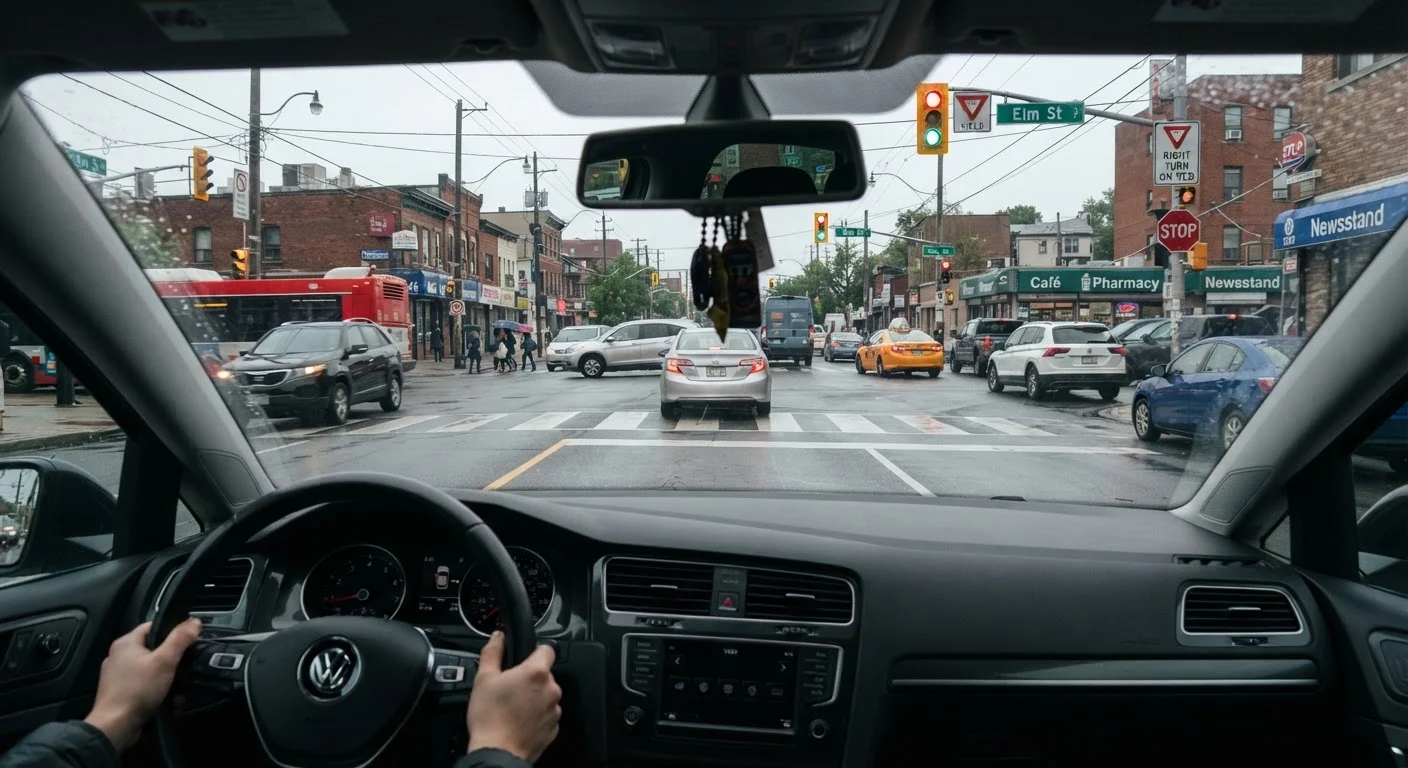
Photo: AdvisorBooth.net editorial
Key Takeaways
- The driver entering a highway on-ramp must yield to traffic already in the travel lane.
- At an all-way stop, the vehicle that arrived first goes first - not the one to the right.
- Roundabouts require yielding to circulating traffic before entering, not after.
- Flashing red and flashing yellow signals are not interchangeable - each has a distinct rule.
- Yielding does not mean stopping; it means giving the right-of-way to whoever has legal priority.
Why Right-of-Way Rules Cause So Much Confusion
Right-of-way is one of the most consistently misunderstood areas of traffic law. Unlike speed limits, which are posted and visible, right-of-way rules are largely invisible - learned during driver's education and rarely reviewed afterward. Drivers fill gaps in their knowledge with assumptions, and those assumptions don't always match the law.
The consequences are real. According to the Federal Highway Administration, intersection-related crashes account for a significant share of all traffic fatalities in the United States. Many of these collisions stem not from reckless driving, but from genuine uncertainty about who should go first. Understanding these rules - and where they're commonly misread - is a practical safety skill for every driver.
See also: sharing the road with motorcycles, cyclists, and pedestrians, where right-of-way responsibilities carry even higher stakes.
Assuming the merging driver has the right-of-way on a highway on-ramp.
Misapplying the 'yield to the right' rule at all-way stops.
Entering a roundabout without yielding to circulating traffic.
Treating a yield sign as a suggestion to slow down rather than a conditional stop requirement.
Failing to yield to pedestrians in crosswalks, especially unmarked ones.
Assuming the left-turn driver has right-of-way because they entered the intersection first.
Specific Scenarios Where Drivers Get It Wrong
Beyond the common mistakes above, a few specific traffic scenarios generate outsized confusion.
Flashing Signals
A flashing red light means treat the intersection as an all-way stop - come to a complete stop, then proceed when safe. A flashing yellow means slow down and proceed with caution, but you do not have to stop. Many drivers treat both signals identically, which creates unnecessary delays or, worse, causes them to proceed too quickly through a flashing red.
T-Intersections
At an uncontrolled T-intersection (no signs or signals), drivers on the terminating road - the one that ends - must yield to vehicles on the through road. This rule is often ignored because drivers assume the situation works like a standard two-way stop, where only cross-traffic stops.
Emergency Vehicles
When an emergency vehicle approaches with lights and sirens active, drivers are legally required to pull over to the right and stop, regardless of which direction the emergency vehicle is traveling. Continuing through an intersection or staying in the travel lane is both illegal and dangerous.
~40%
Of all U.S. crashes occur at intersections
The Federal Highway Administration has reported that roughly 40 percent of all crashes in the U.S. involve intersections, with failure to yield cited as a leading contributing factor.
3rd
Failure to yield - top crash cause nationally
NHTSA data consistently ranks failure to yield right-of-way among the top three driver-related factors in fatal crashes across the United States.
Navigating these rules confidently becomes especially important on highways. If you're a newer driver, a new driver's introduction to highway driving covers on-ramp merging and lane management in detail. And because right-of-way disputes frequently escalate, it's worth understanding what escalates road rage conflicts and what de-escalates them.
The content on this site is for informational purposes only and is not a substitute for professional advice. Always consult a qualified professional for guidance specific to your situation.