
What Actually Happens Inside Your Engine Between Oil Changes

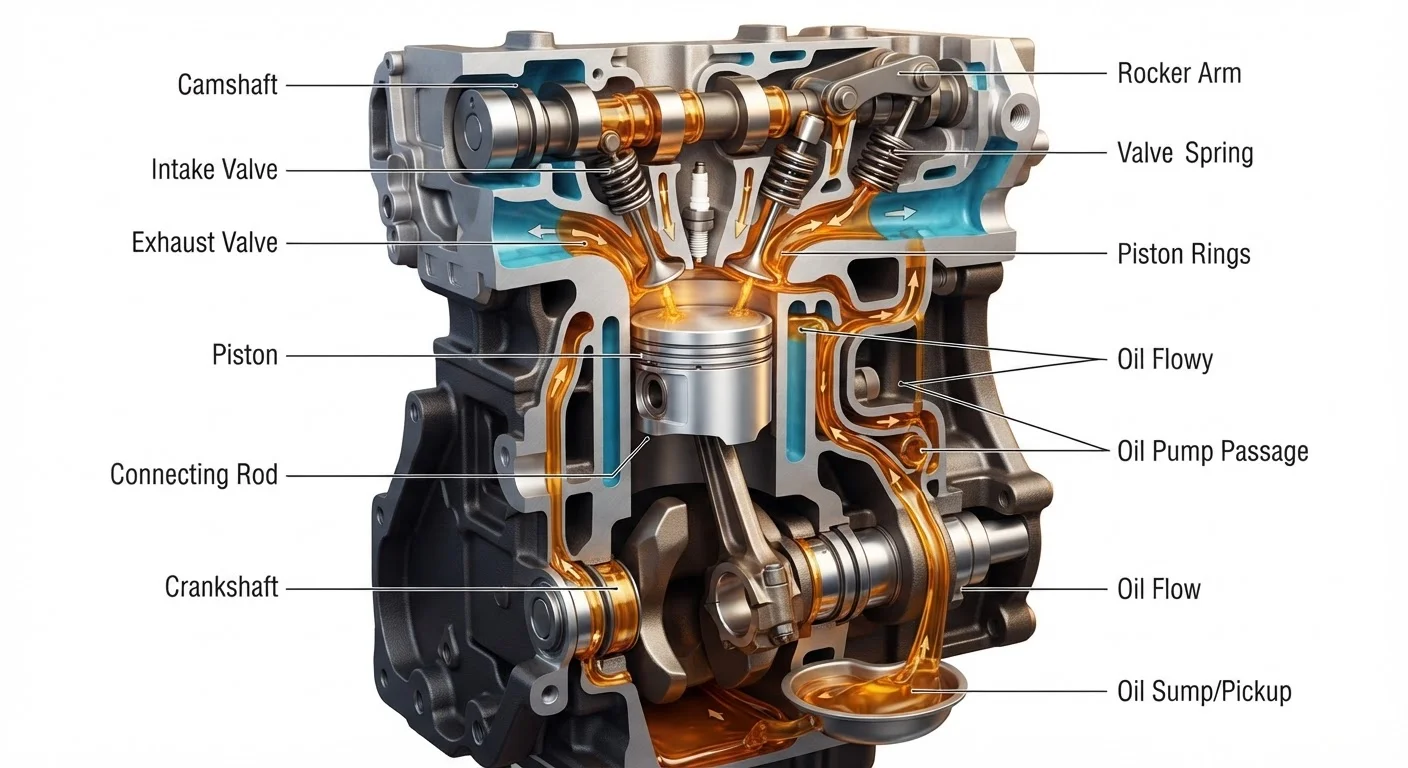
Photo: AdvisorBooth.net editorial
Key Takeaways
- Fresh motor oil contains protective additives that break down gradually during normal engine operation.
- Heat, combustion byproducts, and metal particles all accelerate oil degradation between changes.
- Degraded oil loses its ability to reduce friction, increasing the rate of internal engine wear.
- Driving conditions like short trips and extreme temperatures can speed up oil breakdown significantly.
- Following your vehicle manufacturer's oil change interval is the most reliable way to protect your engine.
What Oil Actually Does the Moment You Start Your Engine
The instant your engine turns over, dozens of metal components begin moving at high speed-pistons, camshafts, crankshafts, valve train parts-all in extremely close contact with each other. Motor oil is the barrier that prevents these surfaces from grinding metal-on-metal. It forms a thin, pressurized film between moving parts, keeping them separated by a fraction of a millimeter during every power stroke.
But lubrication is only part of the job. Modern motor oil also carries heat away from components that coolant can't reach, suspends microscopic metal particles and combustion debris so they can be captured by the oil filter, and neutralizes acids formed during the combustion process. The additives that accomplish these tasks-detergents, dispersants, antioxidants, and friction modifiers-are blended into every quart of oil you put in your vehicle.
Understanding this full picture makes clear why oil condition matters so much. It's not just a lubricant; it's an active chemical system doing continuous work inside a very hostile environment.
How Oil Breaks Down Mile by Mile
From the first mile after an oil change, degradation has already begun. The primary enemy is heat. Engine oil routinely operates at temperatures between 195°F and 220°F under normal conditions-and significantly higher in performance or towing situations. This sustained heat drives a chemical process called oxidation, which gradually breaks apart the long oil molecules that give the fluid its lubricating properties.
At the same time, combustion byproducts seep past piston rings in a process called blow-by. These gases carry unburned fuel, water vapor, and acids directly into the oil supply. Water mixes with sulfur compounds from combustion to form sulfuric acid, which corrodes metal surfaces. The alkaline additives in oil are specifically designed to neutralize this acid load-but they can only do so much before they're exhausted.
~6,000°F
Peak combustion temperature in a cylinder
According to engineering references on internal combustion engines, combustion chamber temperatures can briefly reach this level, placing extreme thermal stress on oil films protecting nearby surfaces.
3-5%
Oil lost to consumption in a healthy engine per interval
The American Automobile Association notes that some oil consumption between changes is normal; consumption above manufacturer limits can signal worn seals or rings accelerating contamination.
Up to 50%
Reduction in oil film strength as additives deplete
Automotive engineering literature indicates that as antiwear additives are consumed, the protective film between metal surfaces can lose a significant portion of its load-bearing capacity.
Metal wear particles also accumulate in the oil over time. Even with good lubrication, microscopic amounts of metal shed from engine surfaces with every cycle. These particles become abrasive contaminants that the oil filter can only partially capture, particularly as the filter itself becomes saturated. The longer oil stays in service, the more contaminated and less effective it becomes at protecting the surfaces it was designed to guard.
Why Driving Conditions Change Everything
Manufacturer oil change intervals are typically calculated based on a mix of driving conditions. What many drivers don't realize is that their everyday driving may qualify as what the industry calls severe service-a category that accelerates oil degradation significantly faster than the standard interval assumes.
Severe service conditions include frequent short trips under five miles, stop-and-go city traffic, towing or hauling heavy loads, driving in extreme heat or cold, and extended idling. Each of these stresses oil in different ways. Short trips, for instance, don't allow the engine to reach full operating temperature, so moisture that enters the crankcase during startup never fully evaporates-accelerating acid formation and sludge buildup.
Check Your Owner's Manual for Your Actual Interval
For a deeper look at how extended intervals affect engine health over time, see Long Intervals Between Services: Convenience vs. Engine Health. And if you're weighing oil types, Synthetic vs. Conventional Motor Oil explains how different formulations hold up under these conditions.
What Happens When You Push Past the Interval
Once oil's additive package is depleted, the fluid can no longer effectively neutralize acids, suspend contaminants, or maintain a stable lubricating film. The result is accelerated metal-to-metal wear on engine components-particularly bearings, camshaft lobes, and cylinder walls. This wear is cumulative and largely invisible until something fails.
Severely neglected oil can eventually thicken into a gel-like deposit called engine sludge, which blocks oil passages and starves components of lubrication entirely. At that point, the damage is often irreversible without major engine work. As detailed in Why Skipping Oil Changes Costs More Than the Service Itself, the financial consequences of this kind of neglect can far outweigh the cost of routine maintenance.
Owners of higher-mileage vehicles face compounding risk. Engines with significant miles often have slightly worn seals and piston rings that increase blow-by, meaning oil degrades faster and contamination accumulates more quickly. Keeping a High-Mileage Vehicle Reliable covers why oil change discipline becomes especially important as vehicles age.
Frequently Asked Questions
The content on this site is for informational purposes only and is not a substitute for professional advice. Always consult a qualified professional for guidance specific to your situation.