
Synthetic vs. Conventional Motor Oil: Which Is Right for Your Engine?

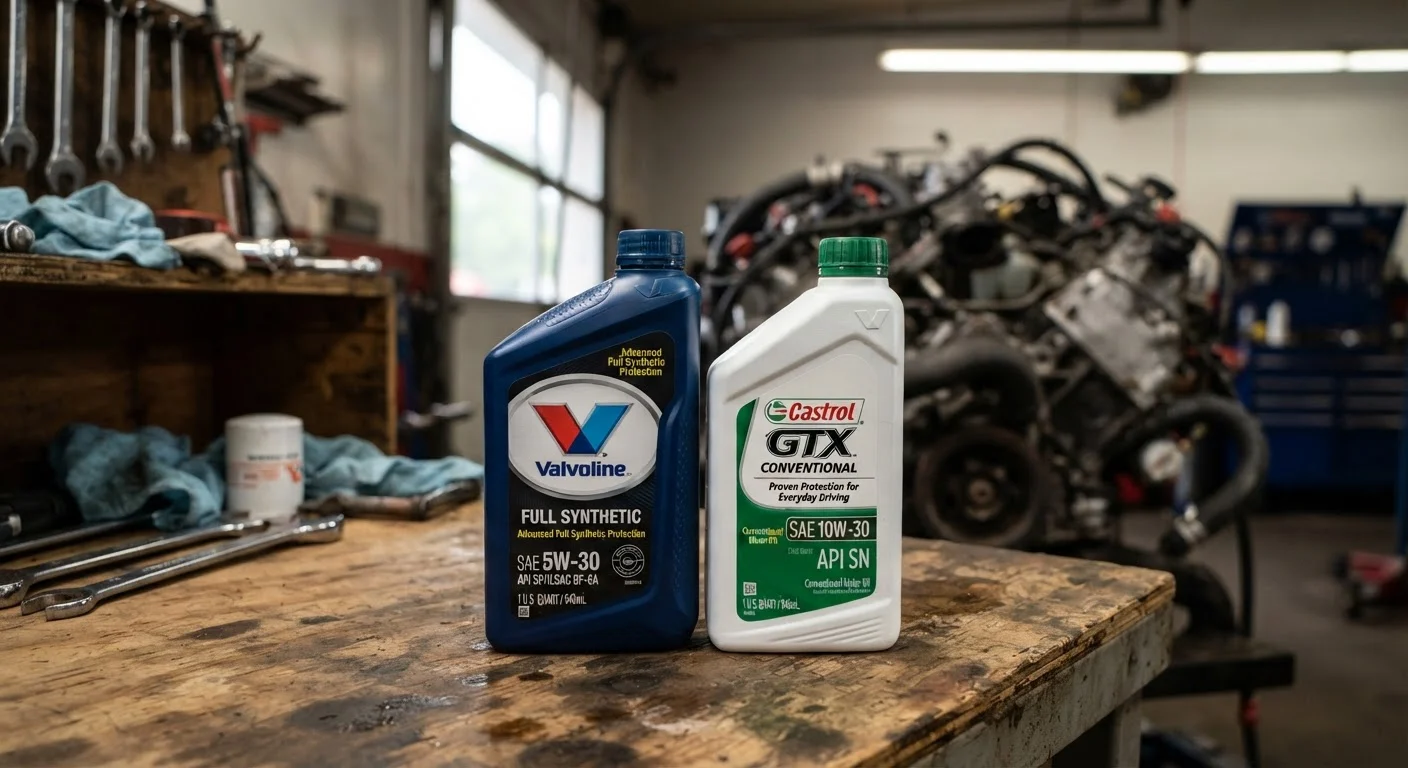
Photo: AdvisorBooth.net editorial
Key Takeaways
- Synthetic oil is chemically engineered for more uniform molecules, offering better performance at temperature extremes.
- Conventional oil is refined from crude petroleum and remains fully adequate for many older or low-mileage vehicles.
- Synthetic oil typically allows longer change intervals - often 7,500 to 15,000 miles - versus 3,000 to 5,000 for conventional.
- Your owner's manual, not marketing claims, should be the primary guide for which oil type your engine requires.
- Switching between oil types is generally safe, but always verify compatibility with your vehicle manufacturer's specifications.
What Sets These Two Oils Apart
At their core, both synthetic and conventional motor oil serve the same purpose: to lubricate engine components, reduce friction, carry away heat, and keep contaminants suspended until the oil is drained. The difference lies in how each is produced and how that affects performance.
Conventional motor oil is refined directly from crude petroleum. During refining, impurities are removed and the oil is blended with additives. However, because crude oil is a natural product, its molecular structure is irregular - a mix of different hydrocarbon chain sizes and shapes.
Synthetic motor oil, by contrast, is chemically engineered. Base oil molecules are broken down and rebuilt into a more uniform structure. This precision gives synthetic oil more predictable behavior across a wider range of temperatures and operating conditions. Full synthetics are built entirely from engineered base stocks, while synthetic blends combine both.
| Criterion | Synthetic Motor Oil | Conventional Motor Oil |
|---|---|---|
| Base composition | Chemically engineered molecules | Refined from crude petroleum |
| Typical change interval | 7,500-15,000+ miles | 3,000-5,000 miles |
| Cold-weather startup protection | Flows faster at low temps | Slower to reach components |
| High-temperature stability | Resists thinning and oxidation | Can break down faster under heat |
| Cost per quart | Higher | Lower |
| Suited for turbocharged engines | Yes - often required | Generally not recommended |
| Older, non-specified engines | Compatible, but may not be needed | Often appropriate |
Performance, Protection, and Drain Intervals
The molecular uniformity of synthetic oil translates into measurable real-world advantages. At cold startup - the moment when engine wear is most likely to occur - synthetic oil flows faster to critical components than conventional oil does. At high operating temperatures, it resists thinning and oxidation more effectively.
These properties also extend how long the oil stays effective. Conventional oil is typically recommended for change intervals of 3,000 to 5,000 miles under normal driving conditions. Full synthetic oil, depending on the formulation and the vehicle, is often rated for 7,500 to 15,000 miles or more. That said, always defer to your owner's manual - manufacturer specifications account for your specific engine's tolerances and needs. To understand what's happening inside your engine as oil ages, see what actually happens inside your engine between oil changes.
~40%
Engine wear occurring at cold startup
Industry lubrication engineers estimate a significant portion of engine wear happens in the first moments after a cold start, before oil fully circulates.
3x
Longer drain interval vs. conventional
Full synthetic formulations can often last up to three times longer between changes than conventional oil under normal driving conditions, per general industry guidance.
Extending oil change intervals sounds appealing, but there are genuine trade-offs, particularly for vehicles in high-stress use. Learn more in our look at long intervals between services.
Making the Right Choice for Your Vehicle
The single most reliable guide to which oil your engine needs is your vehicle's owner's manual. If it specifies full synthetic, use full synthetic - this is non-negotiable for many modern engines, particularly turbocharged ones. Using a lower-spec oil can void warranties and, over time, contribute to engine wear.
If your manual allows conventional oil and your driving patterns are moderate - highway miles, mild climate, regular change intervals - conventional oil can serve your engine well at a lower upfront cost. However, drivers who push past recommended intervals, operate in weather extremes, or tow frequently will generally benefit from synthetic's added durability.
It's worth noting that skipping or delaying oil changes entirely is far more damaging than debating oil types. As detailed in why skipping oil changes costs more than the service itself, the long-term engine damage from neglected maintenance typically far outweighs the cost of any oil type.
Switching Oil Types: What to Know
If you're unsure which oil is right for your specific vehicle, a trusted, qualified mechanic can review your owner's manual requirements and driving conditions to help you decide. Never rely solely on marketing claims on the bottle.
The content on this site is for informational purposes only and is not a substitute for professional advice. Always consult a qualified professional for guidance specific to your situation.