
Private Seller vs. Dealership: Which Buying Path Fits Your Situation

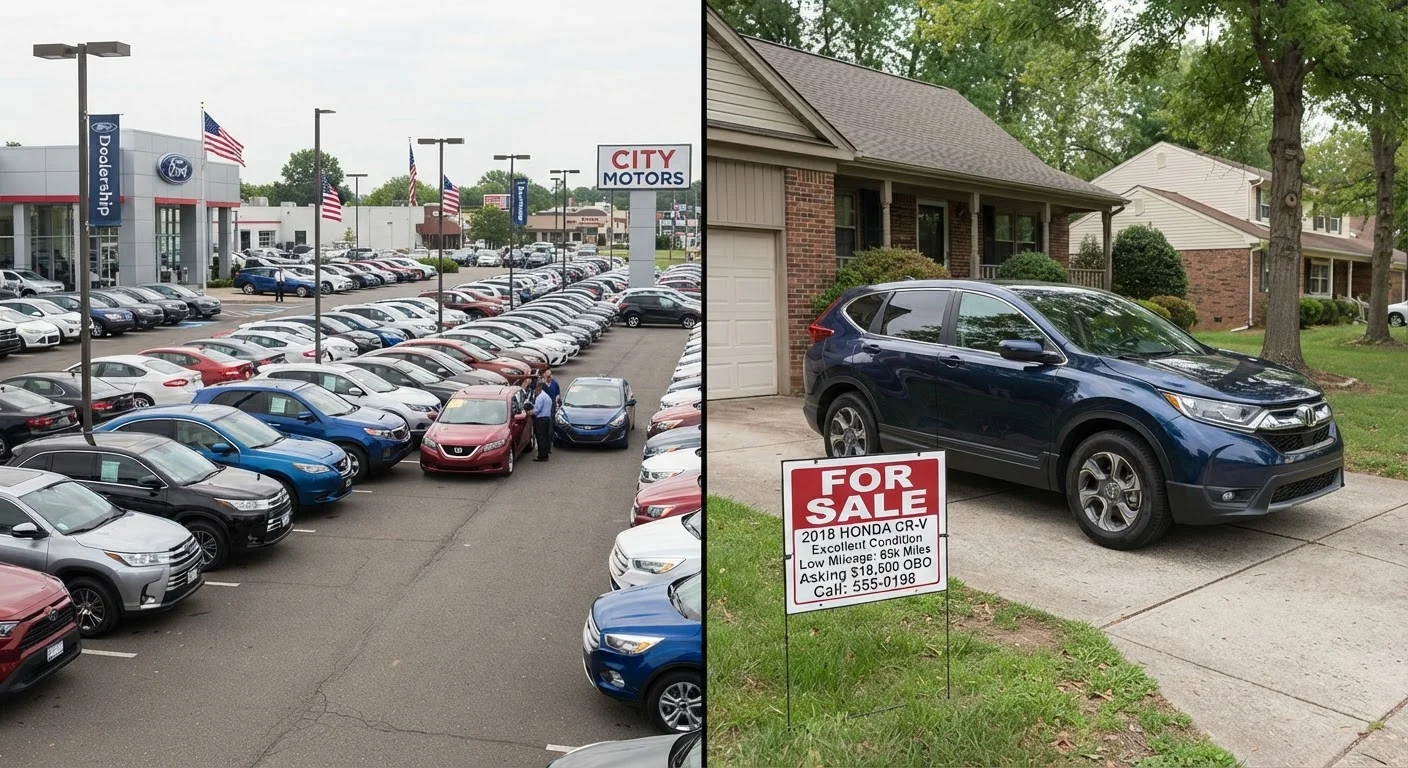
Photo: AdvisorBooth.net editorial
Key Takeaways
- Private sellers typically list vehicles at lower prices, but buyers assume more risk and have limited recourse.
- Dealerships offer consumer protections, financing options, and documented vehicle history - often at a higher cost.
- Paperwork, warranties, and title transfer processes differ significantly between the two routes.
- Neither path is universally better; the right choice depends on your budget, risk tolerance, and vehicle needs.
- A pre-purchase inspection by an independent mechanic is advisable regardless of which route you take.
The Core Difference Between These Two Paths
When you buy a vehicle from a private seller, you're transacting directly with an individual - typically someone selling a car they've owned. There's no intermediary, no corporate process, and often no safety net. When you buy from a licensed dealership, you're dealing with a regulated business that must comply with state consumer protection laws, maintain proper licensing, and handle the transaction through a formal process.
That distinction shapes nearly every aspect of the experience - from how prices are set, to what happens if something goes wrong after you drive away. Neither path is inherently fraudulent or superior; they simply operate under different rules, and buyers who understand those rules are in a much stronger position to protect themselves.
For broader context on navigating car purchases, it's also worth reviewing common car-buying misconceptions that trip up even experienced shoppers.
Price, Negotiation, and What You're Really Paying For
Private listings often carry lower asking prices than comparable dealership inventory, partly because private sellers don't have the overhead of a business operation - no staff, no facility costs, no reconditioning processes to recover. However, lower sticker prices don't always mean lower total cost. A vehicle sold cheaply but with undisclosed mechanical problems can become far more expensive once repair bills arrive.
Dealership pricing tends to reflect preparation costs: vehicles may have undergone inspections, detailing, and sometimes repairs before being put on the lot. Dealers also build in profit margin, which is negotiable in most cases. Understanding that margin is part of the process - not a hidden injustice - can help buyers approach negotiations more calmly and effectively.
| Private Seller | Dealership | |
|---|---|---|
| Typical Price | Often lower asking price | Higher, reflects overhead and prep |
| Title & Paperwork | Buyer and seller handle independently | Dealer manages process |
| Warranty / Protections | Typically none (as-is) | May offer limited warranty or CPO |
| Financing Options | Requires independent loan or cash | On-site financing available |
| Legal Recourse | Limited; harder to pursue | State regulations provide some avenue |
| Vehicle History Access | Buyer must request/verify independently | Often provided; some required by law |
| Negotiation | Flexible, informal | Structured, but still negotiable |
One common misunderstanding is treating the monthly payment as the primary number to negotiate at a dealership. Several widely believed myths about car pricing lead buyers to focus on the wrong figures entirely.
Paperwork, Title, and Legal Protections
Title transfer is one of the most important - and most overlooked - aspects of any vehicle purchase. At a dealership, this process is typically handled by the finance office: the dealer prepares and submits the title transfer paperwork, pays off any existing lienholder on a trade-in, and generally ensures you receive a clean title. Errors happen, but the dealer bears responsibility for correcting them.
In a private sale, the buyer and seller handle this themselves. That means verifying the seller actually holds a clean, lien-free title before any money changes hands. If a vehicle still has an outstanding loan, the lienholder - not the seller - technically owns it. Paying a private seller before confirming the lien is resolved is one of the most common and costly mistakes in private-party transactions.
Always Verify the Title Before Paying
State laws governing private sales vary considerably. Some states require a bill of sale; others mandate specific odometer disclosure forms. Checking your state's DMV requirements before completing a private purchase is essential.
Dealerships are also subject to federal regulations - including the FTC's Used Car Rule, which requires dealers to display a Buyers Guide disclosing whether a vehicle is sold with a warranty or "as-is." Private sellers are not bound by this rule.
Recourse, Warranties, and What Happens After the Sale
"As-is" is a phrase that carries real legal weight. In most private sales, once you've accepted the vehicle and handed over payment, the seller has no further obligation - even if a significant problem surfaces the next day. There are limited exceptions if a seller actively concealed a known defect, but proving that is difficult and often not worth the legal cost.
Dealerships may sell vehicles as-is too, particularly older used inventory, but they're more likely to offer some form of limited warranty or certified pre-owned coverage. These programs vary widely in what they actually cover, so reading the fine print carefully before signing matters. If a dispute arises, you also have more formal avenues: state consumer protection agencies and the dealer's own compliance obligations give you a starting point that doesn't exist with a private seller.
Before committing to any vehicle - regardless of source - it's worth working through key questions about ownership history, recalls, and true total cost that listings rarely surface on their own.
Financing Your Purchase: How the Path Affects Your Options
If you plan to finance the vehicle rather than pay cash, your buying path directly affects your options. Dealerships arrange financing on-site - often through multiple lenders - which can be convenient. That convenience, however, sometimes comes at a cost: dealer-arranged financing may carry a higher rate than what you could secure independently, since the dealer may mark up the lender's rate as part of their revenue.
Private sales are typically cash transactions. Most banks and credit unions do offer private-party auto loans, but the process requires more coordination - the lender will want to verify the vehicle's value and the seller's title before funding. It's worth exploring this option before assuming a private purchase must be all-cash.
Understanding how dealer financing actually works - and how it compares to going directly to your bank - is covered in detail in our comparison of dealer financing and direct lending.
If you do proceed with a private transaction and pay through an online platform or marketplace, be cautious about payment method. Paying outside a marketplace removes protections that can be difficult or impossible to recover after the fact.
The content on this site is for informational purposes only and is not a substitute for professional advice. Always consult a qualified professional for guidance specific to your situation.