
Paying Through a Platform vs. Paying Sellers Directly

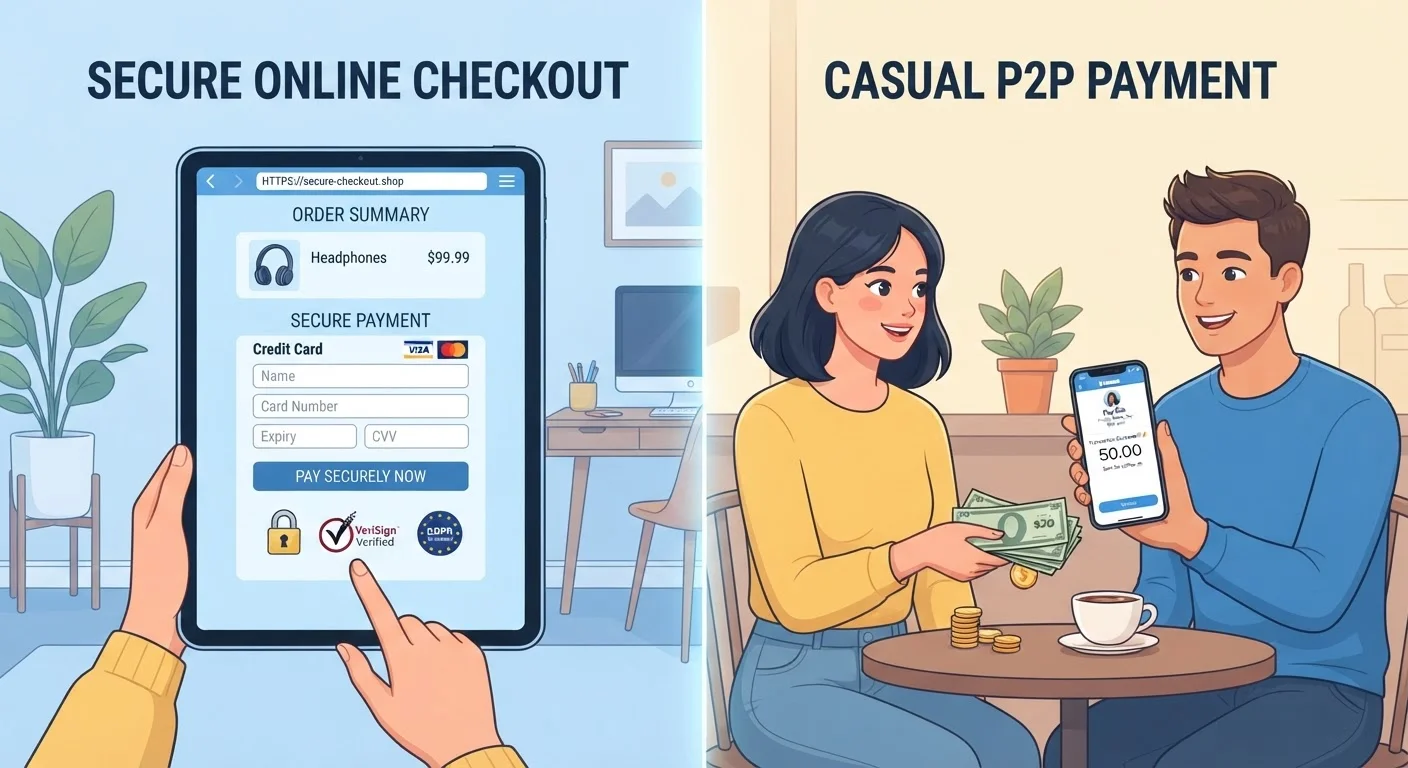
Photo: AdvisorBooth.net editorial
Key Takeaways
- Paying through a platform preserves buyer protections that disappear when you pay a seller directly.
- Sellers who push you off-platform are a recognized red flag for fraud.
- Direct payment methods like Venmo, Zelle, or cash offer little to no recourse if something goes wrong.
- Platform fees are the trade-off for dispute resolution, fraud monitoring, and purchase guarantees.
- Your payment method choice compounds these risks - credit cards offer more leverage than debit or bank transfers.
Why Payment Location Is a Safety Decision
When you find something to buy online - through a marketplace app, a classified listing, or a social media post - you often have a choice about where the actual money changes hands. You can pay through the platform's built-in checkout, or you can pay the seller directly using Venmo, Zelle, PayPal Friends & Family, a wire transfer, or cash. These two paths may look equivalent on the surface, but they carry very different risk profiles.
The platform's checkout system isn't just a payment processor - it's a layer of accountability. When you pay through it, the marketplace can see the transaction, enforce its policies, and step in if something goes wrong. When you pay directly, you've stepped outside that system entirely. For a broader look at how all of this fits into safe online shopping habits, see our complete guide to online shopping safety.
What You Get With Platform Payment
Established online marketplaces typically offer some form of buyer protection tied to transactions completed through their checkout. This commonly includes:
- Dispute resolution: If an item doesn't arrive or is significantly different from what was listed, you can open a claim and the platform mediates.
- Seller accountability: Platforms can suspend or penalize sellers who scam buyers, creating a deterrent that doesn't exist off-platform.
- Fraud monitoring: Unusual transactions may be flagged before money moves.
- Transaction records: You have a clear, timestamped paper trail tied to your account.
These protections aren't unlimited - buyer protection has real gaps worth understanding - but they give you meaningful leverage you simply don't have when paying directly.
| Platform Payment | Direct Payment | |
|---|---|---|
| Buyer dispute resolution | Usually available | Generally none |
| Transaction reversibility | Possible through claims process | Rarely reversible |
| Seller accountability | Platform can act on sellers | No third-party oversight |
| Fraud monitoring | Built into platform systems | None beyond your bank |
| Transaction records | Stored in your account | Depends on method used |
| Risk if seller disappears | Claim can be filed | Money likely lost |
| Typical use case | Strangers, higher-value items | Known contacts, in-person sales |
What You Lose With Direct Payment
Direct payment methods - bank transfers, peer-to-peer apps, wire transfers, money orders, or cash - are designed for sending money to people you already trust. They generally treat the transaction as final.
Zelle, for example, is designed for paying people you know. Most transfers are instant and irreversible. Venmo's "Friends & Family" option carries no purchase protection. Wire transfers are notoriously difficult to reverse once sent. Even PayPal's buyer protections only apply to transactions made through Goods & Services - not personal payments.
Never Pay With Gift Cards or Wire Transfers
Cash has zero recourse by definition. If a seller disappears or the item is counterfeit, there's no institution to call. The same logic applies to cryptocurrency payments, which are also essentially irreversible.
Your choice of payment method compounds this. As explored in our comparison of debit vs. credit cards for online purchases, even using a credit card doesn't fully protect you if you've already bypassed platform safeguards.
The Off-Platform Request: A Known Fraud Signal
One of the most consistent warning signs in online marketplace fraud is a seller asking you to pay outside the platform - often framed as a way to save on fees, move faster, or avoid taxes. This is a recognized tactic used by scammers precisely because it strips you of protection.
Legitimate sellers on established platforms generally have no strong reason to ask you to leave the platform's payment system. When a seller does push for direct payment, treat it as a reason to pause and ask why. For more on evaluating peer-to-peer transactions specifically, our guide to marketplace app safety covers common tactics and how to respond.
If you do proceed with a direct transaction after careful vetting - say, a local in-person sale where you can inspect the item - cash or a reversible payment method may be reasonable. But that decision should be deliberate, not the result of pressure from the seller.
Making the Right Call for Your Situation
The right payment path depends on your risk tolerance and what you know about the other party. As a practical framework:
- Default to platform checkout for any transaction with a stranger, any high-value item, or any purchase you can't afford to lose money on.
- Verify protection terms before paying - not all platform checkouts offer the same coverage, and some categories (event tickets, vehicles, real estate) may be excluded.
- Direct payment is lower-risk when you know the person, the item is low-value, and you're meeting in person to inspect before paying.
- Never pay via wire transfer or gift cards regardless of the reason given - these are almost exclusively associated with fraud in a marketplace context.
This article is for general informational purposes only and does not constitute financial, legal, or consumer protection advice. If you believe you've been defrauded, contact your payment provider and your state's consumer protection office.
The content on this site is for informational purposes only and is not a substitute for professional advice. Always consult a qualified professional for guidance specific to your situation.