
The Lifetime Cost of Cheap: Why Low Prices Sometimes Cost More

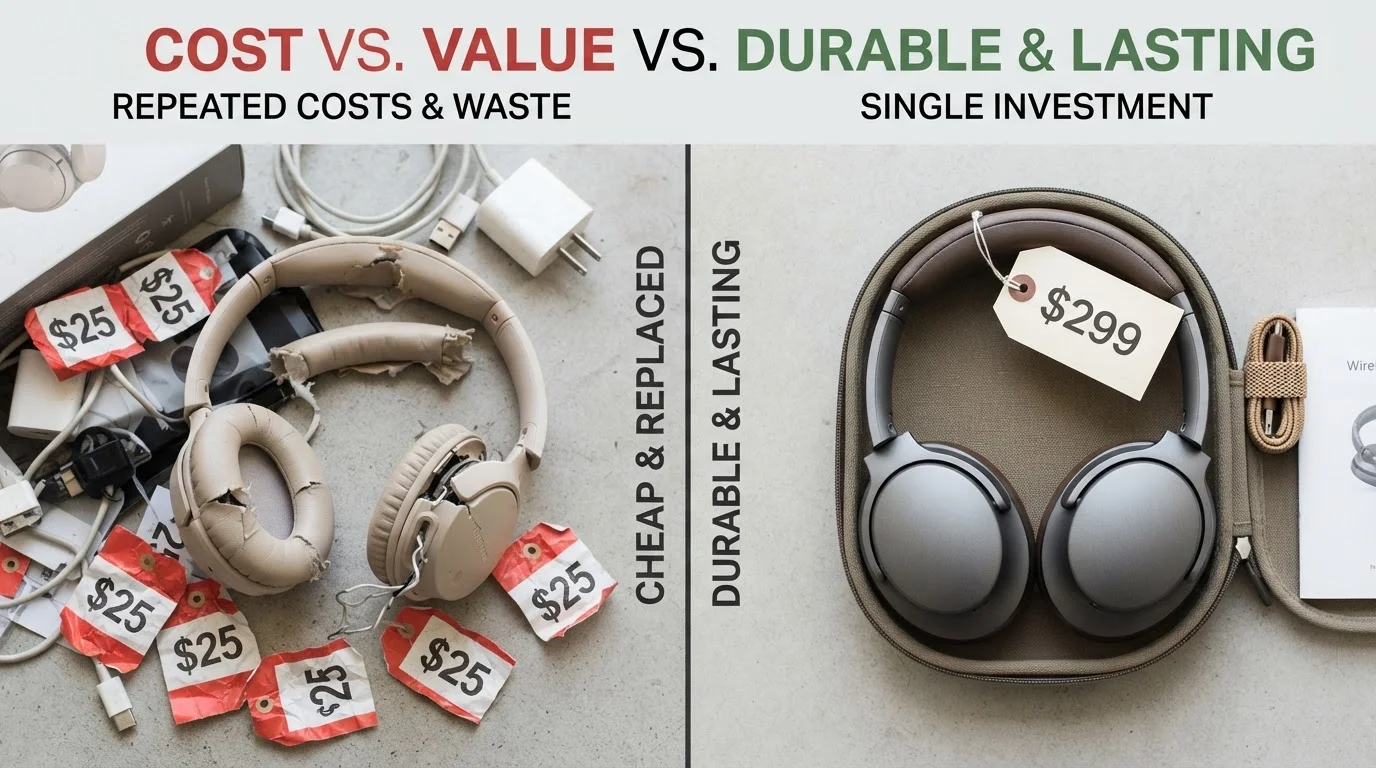
Photo: AdvisorBooth.net editorial
Key Takeaways
- The purchase price rarely reflects what a product will ultimately cost you.
- Cheap products that fail quickly often require repeated replacement, multiplying your actual spend.
- Maintenance costs, repair frequency, and lifespan are essential inputs to any value comparison.
- Some categories reward durability spending far more than others - context matters.
- A simple cost-per-use calculation can expose when a higher price is actually the economical choice.
Why Sticker Price Is an Incomplete Signal
When two products sit side by side on a shelf - one at $25, one at $75 - most people instinctively reach for the cheaper option. That's rational when all else is equal. The problem is that all else is rarely equal.
A product's price tag captures one moment in a much longer financial relationship. It tells you what you'll spend to take the item home. It says nothing about how long it will last, what it will cost to maintain, or how often you'll need to replace it. Those downstream costs are where cheap products often erase their initial savings - and then some.
This is the core idea behind total cost of ownership (TCO): the real cost of a product is the sum of everything you spend on it over its useful life, not just the amount on the receipt. Understanding this distinction is one of the most practical shifts a consumer can make. For a broader look at how overlooked expenses accumulate, see hidden costs that quietly wreck a budget.
3x
Replacement cycles for low-durability products
Consumer research consistently shows that products in the lowest price tier of a category are replaced significantly more often than mid-to-upper tier alternatives over a three-year period.
40%
Of shoppers report regretting a cheap purchase
Surveys on consumer regret frequently find that price-driven decisions - particularly for everyday-use items - are among the most commonly cited sources of buyer's remorse.
$0.50 vs $1.00
Cost per use: durable vs. cheap equivalent
A straightforward cost-per-use comparison often reveals that a product priced two to three times higher can deliver a lower actual cost when lifespan differences are factored in.
The Replacement Trap: How Cheap Becomes Expensive
The clearest way cheap products cost more is through premature replacement. A $20 item that lasts eight months and needs to be replaced three times costs $60 - the same as a $60 item that lasts three years. But the cheaper path also cost you time, inconvenience, and the environmental impact of extra waste.
Replacement isn't the only trap. Some products carry ongoing costs that compound over time: filters that need replacing, parts that wear out, or maintenance that becomes unavoidable. A low-cost appliance may require servicing that a slightly more expensive model - built with better components - simply doesn't.
Then there's the failure cost. When a cheap tool breaks mid-job, you may face repair costs, rework, or the need to rent a replacement. When cheap shoes give out during a trip, you buy new ones at full price under pressure. The initial savings rarely survive these scenarios intact.
How to Run a Simple Value Comparison
You don't need a spreadsheet to think through TCO. A few targeted questions go a long way:
- What is the expected lifespan? Manufacturer specs, warranty length, and independent reviews can give you a reasonable range.
- What will maintenance cost? Consumables, parts, and service calls all count.
- What is the cost per use? Divide total expected spend by total expected uses. A $90 item used 180 times costs $0.50 per use; a $30 item used 30 times costs $1.00 per use.
- What happens if it fails? Factor in the downstream costs of breakdowns - replacement, rework, inconvenience.
Warranties and return policies also belong in this calculation. A product backed by a strong warranty shifts some risk back to the manufacturer, which has real monetary value. After-sale protections are a genuine value factor that sticker prices ignore entirely.
Before any significant purchase, running through a structured checklist can help. A value assessment checklist can surface the questions most people skip in the moment.
Use Cost Per Use Before You Commit
When Cheap Is Actually the Right Call
None of this means expensive is always smarter. TCO analysis sometimes confirms that the cheaper option genuinely wins - especially when a product is used infrequently, serves a temporary purpose, or sits in a category where quality differences are minimal.
Seasonal items, trend-driven purchases, and products where failure has low consequence are reasonable candidates for a lower-cost approach. Buying a $12 umbrella you'll use occasionally is different from buying a $12 rain jacket you plan to wear weekly for years.
The goal isn't to default to spending more. It's to spend where durability pays off and recognize when it doesn't. A balanced look at when budget picks deliver can help you calibrate this for specific situations. For practical strategies on getting genuine value without overspending, the saving strategies hub offers additional perspective.
This article is for general informational and educational purposes only. Individual financial circumstances vary; consider consulting a qualified financial professional for advice tailored to your situation.
Frequently Asked Questions
The content on this site is for informational purposes only and is not a substitute for professional advice. Always consult a qualified professional for guidance specific to your situation.