
The Hidden Costs That Quietly Wreck a Budget

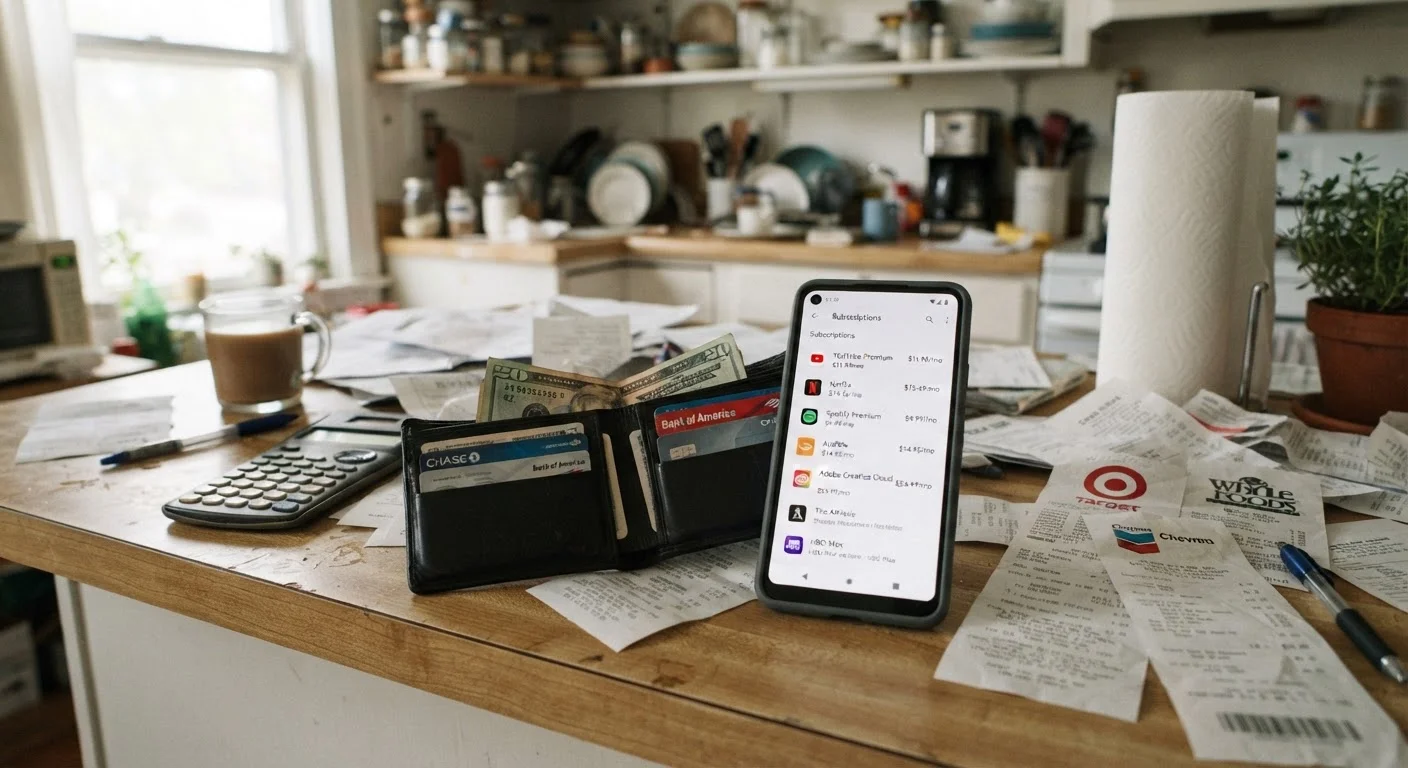
Photo: AdvisorBooth.net editorial
Key Takeaways
- Forgotten subscriptions, bank fees, and convenience spending collectively drain more than most people realize.
- Irregular expenses like annual renewals and car maintenance are predictable but often left out of monthly budgets.
- A spending audit - reviewing all recurring charges - is the fastest way to locate and stop budget leaks.
- Building a buffer for irregular costs prevents them from becoming financial emergencies.
- Small daily habits, like frequent takeout or ATM fees, compound into significant annual costs.
Why Budgets Miss the Obvious
Most budgets account for the big, obvious line items: rent or mortgage, utilities, groceries, car payment. But month after month, many people find their numbers still don't add up - and the gap is almost never the large bills. It's the small, recurring, or irregular costs hiding in the margins.
These expenses aren't random. They follow predictable patterns: auto-renewing subscriptions, convenience habits, fees buried in fine print, and annual bills that feel like surprises only because they weren't planned for. Understanding the categories where spending quietly leaks is the first step toward plugging those holes.
This is distinct from the broader challenge of why budgets fall apart in month two, which often stems from structural design flaws - but untracked hidden costs accelerate that failure significantly.
Forgotten or Overlapping Subscriptions
Streaming services, fitness apps, news paywalls, cloud storage, password managers - each one costs only a few dollars a month. Together, they can easily total $100 or more. The problem isn't any single subscription; it's the accumulation of services signed up for during a free trial, kept out of inertia, or simply forgotten. Many auto-renew annually, making them easy to miss in monthly tracking. Auditing all active subscriptions once a quarter and canceling anything not used regularly is a straightforward way to recover meaningful dollars. If you find it difficult to track subscriptions without a rigid budget, lower-friction saving strategies can help simplify the process.
A cluster of forgotten subscriptions can quietly cost over $100 a month without feeling like a decision.
Bank and Card Fees
Monthly maintenance fees, out-of-network ATM charges, overdraft fees, foreign transaction fees, and paper statement fees are among the most avoidable costs in a household budget - yet they persist because they arrive as small line items easily dismissed. A single overdraft fee can run $25-$35. Using out-of-network ATMs a few times a month adds up similarly. These fees are typically negotiable or avoidable by switching account types, maintaining a minimum balance, or opting into alerts. Reviewing account terms annually and asking your bank whether fee waivers are available costs nothing. Investment fees work the same way - small percentages quietly compounding against your returns over time.
Bank fees are among the most avoidable costs in any budget - and among the most consistently overlooked.
Convenience and Impulse Spending
Grabbing lunch out instead of packing it, ordering delivery instead of cooking, paying for parking rather than walking an extra block - individually, none of these choices feel significant. Collectively, they can represent hundreds of dollars a month in unplanned spending. Convenience spending is particularly tricky because it's situational and emotional: it happens when people are tired, rushed, or stressed. Identifying your own high-frequency convenience triggers - the days or circumstances when these habits cluster - gives you the information needed to plan around them rather than react to them.
Convenience spending clusters around stress and fatigue, making it predictable once you know your own patterns.
Irregular but Predictable Annual Expenses
Car registration, professional license renewals, annual insurance premiums, holiday gifts, back-to-school supplies, and software annual plans all arrive on a schedule - yet many people treat them as surprises. If these costs aren't divided by 12 and built into a monthly savings line, they land as disruptions that force credit card use or raid other savings. The total annual cost of these recurring events is usually calculable in advance. Adding them up, dividing by 12, and setting that amount aside monthly transforms a series of budget shocks into a predictable, managed cost. This is the core logic behind sinking funds.
Annual expenses feel like surprises only because they weren't divided into twelve monthly savings contributions.
The Hidden Cost of Low-Quality Purchases
Choosing the lowest-priced option sometimes costs more over time. Cheap shoes that wear out in six months, appliances with short lifespans, or frequently replaced tools can end up exceeding the cost of a durable alternative purchased once. This isn't an argument for spending more by default - it's an argument for factoring expected lifespan into any significant purchase decision. The relevant calculation is cost per use or cost per year, not sticker price. Understanding the lifetime cost of cheap can reframe how you evaluate value before the register.
Cost per use, not sticker price, is the more accurate measure of what something actually costs you.
Interest as a Line-Item Expense
When carrying a credit card balance month to month, interest charges become a recurring cost that never produces anything tangible. At common rates, even a modest revolving balance can generate significant annual interest charges - money spent simply for the privilege of delayed payment. Many budgets track categories like groceries or gas but never explicitly line-item the interest paid on debt. Making interest visible - listing it as its own budget category - forces an honest reckoning with what carrying a balance actually costs and can motivate faster paydown. This cost is especially worth tracking alongside broader saving strategies.
Interest on revolving debt is a recurring expense that produces nothing - making it visible in a budget changes behavior.
Reclaiming Control of Your Full Financial Picture
None of these costs are inevitable - they're just unexamined. The fix isn't a stricter budget; it's a more complete one. Start by pulling three months of bank and credit card statements and categorizing every charge, including the ones you recognize but never consciously chose to keep. A structured spending audit can make this process systematic rather than overwhelming.
For irregular but predictable expenses - annual fees, car maintenance, holiday spending - consider building sinking funds to set aside a small amount each month so those costs never arrive as a shock. If homeownership is part of your picture, the same principle applies to property taxes, insurance, and maintenance, as explored in our look at hidden costs of homeownership.
Start With a Three-Month Statement Review
This article is for general informational and educational purposes only and does not constitute personalized financial advice. For guidance specific to your situation, consult a qualified financial professional.
The content on this site is for informational purposes only and is not a substitute for professional advice. Always consult a qualified professional for guidance specific to your situation.