
What the Housing Market Gets Wrong About Renovations and Resale Value

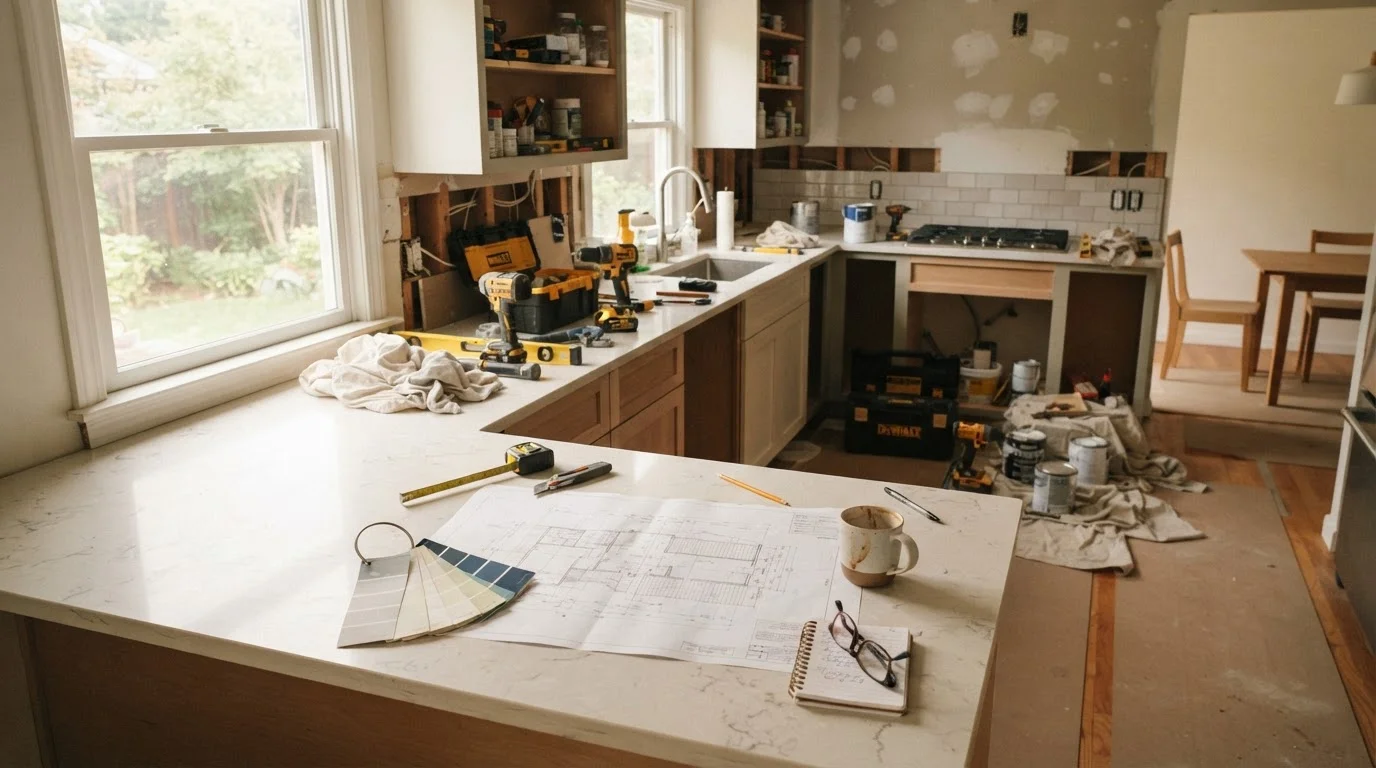
Photo: AdvisorBooth.net editorial
Key Takeaways
- Most renovations recover only a fraction of their cost at resale, not full dollar-for-dollar value.
- Market conditions and neighborhood price ceilings often matter more than the renovation itself.
- Cosmetic updates like fresh paint and landscaping frequently outperform expensive structural overhauls in ROI.
- Appraisers weigh comparable sales, not renovation receipts, when assessing market value.
- Over-improving a home beyond neighborhood norms rarely produces proportional resale returns.
Why Renovation ROI Is Widely Misunderstood
Homeowners spend significant money upgrading their properties with the expectation that those improvements will pay off at sale. The problem is that widely repeated assumptions about renovation value - fueled by home improvement television and anecdotal seller stories - frequently diverge from what market data actually shows.
The foundational concept to understand is cost recovery, not value creation. A renovation may make your home more livable, more competitive in a buyer's search, or faster to sell, but none of those outcomes guarantees that you'll recoup what you spent. For a grounded baseline on how homes are actually priced, see our introduction to home valuation.
The myth-versus-reality gap is especially pronounced because renovation costs have risen faster than home values in many markets. Understanding what the data shows - rather than what renovation culture promotes - is a meaningful advantage for any homeowner planning a sale.
Myth
A kitchen remodel will return most or all of its cost when you sell.
Fact
Major kitchen remodels typically recover well under 80 cents on the dollar at resale, according to industry cost-vs-value analyses.
The Remodeling magazine Cost vs. Value Report - an annual industry benchmark - consistently shows that major kitchen remodels recoup roughly 50-70% of project cost at resale on a national average. A midrange remodel tends to perform better than an upscale one, largely because high-end finishes push costs well beyond what comparable buyers in most markets will pay for. The gap widens when renovation costs are elevated by supply or labor conditions.
Smaller, targeted kitchen updates - such as cabinet repaints, hardware replacement, or countertop upgrades - tend to offer better cost recovery than full gut renovations, partly because they're less likely to overshoot the neighborhood price ceiling.
Myth
Adding a bathroom always adds significant resale value.
Fact
The value of an added bathroom depends heavily on how many the home already has and what's typical for comparable homes in the area.
A third bathroom in a three-bedroom home where comparable sales involve two bathrooms may add measurable buyer appeal. But a fourth bathroom in the same home likely produces diminishing returns - buyers aren't paying proportionally more for it, and appraisers will note it offers limited competitive differentiation.
Targeted bathroom improvements that improve functionality without major structural cost can be a more defensible investment than adding square footage entirely.
Myth
Luxury upgrades signal quality to buyers and justify a premium price.
Fact
Buyers and appraisers apply market-relative valuations - luxury finishes in a moderate-value neighborhood rarely command proportional premiums.
Over-improvement is a well-documented risk in real estate. A home renovated to a standard that significantly exceeds neighborhood norms creates a valuation problem: appraisers must find comparable sales to justify a higher price, and if none exist locally, the appraisal will reflect what the market has actually supported - not what the renovation cost.
This doesn't mean quality doesn't matter. Buyers notice craftsmanship and condition. But there's a practical ceiling set by what comparable buyers in any given market have been willing to pay, and luxury finishes rarely break through that ceiling in modestly valued neighborhoods.
Myth
Outdoor and landscaping improvements are cosmetic and don't affect value.
Fact
Curb appeal improvements, including landscaping, consistently rank among the higher-return renovation categories in cost recovery analyses.
Industry cost-vs-value data has repeatedly shown that curb appeal projects - including landscaping, exterior paint, garage door replacement, and stone veneer additions - often recover a higher percentage of cost at resale than many interior upgrades. The reason is partly psychological: first impressions shape buyer perception before they've seen the interior, and strong curb appeal expands the buyer pool that will even tour the home.
It's also a category where costs can be kept relatively modest. Strategic planting, fresh mulch, and maintained lawn don't require five-figure investment to produce meaningful visual impact. Exterior upgrades are among the few renovation types where mid-effort, mid-cost projects can meaningfully influence buyer offer behavior.
Myth
Open-concept renovations universally increase a home's market appeal.
Fact
Open-concept layouts are popular in many markets, but their value contribution depends on execution, structural constraints, and evolving buyer preferences.
Wall removal for open-concept living is not a guaranteed value-add. When walls are load-bearing, the project requires structural engineering, permits, and professional execution - costs that can substantially exceed initial estimates. Poorly executed open-concept renovations can also create noise, privacy, and utility concerns that some buyers actively weigh against them.
Our detailed piece on open-concept renovation structural realities outlines why professional assessment before any wall removal is essential, both for safety and cost control. Beyond logistics, buyer preferences for open versus defined spaces vary by demographic and region - assuming universal appeal is a risk.
What Actually Drives Value at the Appraisal and Sale
Appraisers don't consult your renovation receipts. They consult comparable sales - recently sold homes of similar size, condition, and location. A $60,000 kitchen remodel adds value only to the extent that buyers in your specific market have demonstrated, through actual sales, that they'll pay more for it.
This is why neighborhood price ceilings matter so much. If every comparable home in your area sells between $310,000 and $340,000, a high-end renovation is unlikely to push your sale price to $400,000 regardless of quality. Appraisers are trained to avoid over-valuing outliers. For a broader look at the external forces shaping what buyers will pay, our article on neighborhood factors that shape home value offers useful context.
~70%
Average cost recovery for a minor kitchen remodel
According to Remodeling magazine's Cost vs. Value Report, minor kitchen remodels historically recover more of their cost than major ones on a national average basis.
Top 5
Curb appeal projects in resale ROI rankings
Exterior improvements such as garage door replacement and landscaping consistently appear among the highest cost-recovery projects in annual industry benchmarking data.
It's also worth noting what buyers reliably penalize. Deferred maintenance, outdated mechanical systems, and visible cosmetic deterioration - issues explored in our piece on overlooked property value drags - can suppress offers more reliably than renovations inflate them. Addressing those problems first is often a smarter financial decision than adding new features.
This article is for general informational and educational purposes only. It does not constitute financial, investment, or legal advice. Consult a qualified real estate professional, appraiser, or financial adviser before making decisions about your specific property or situation.
The content on this site is for informational purposes only and is not a substitute for professional advice. Always consult a qualified professional for guidance specific to your situation.