
Whole Foods vs. Processed Foods: Understanding the Real Difference

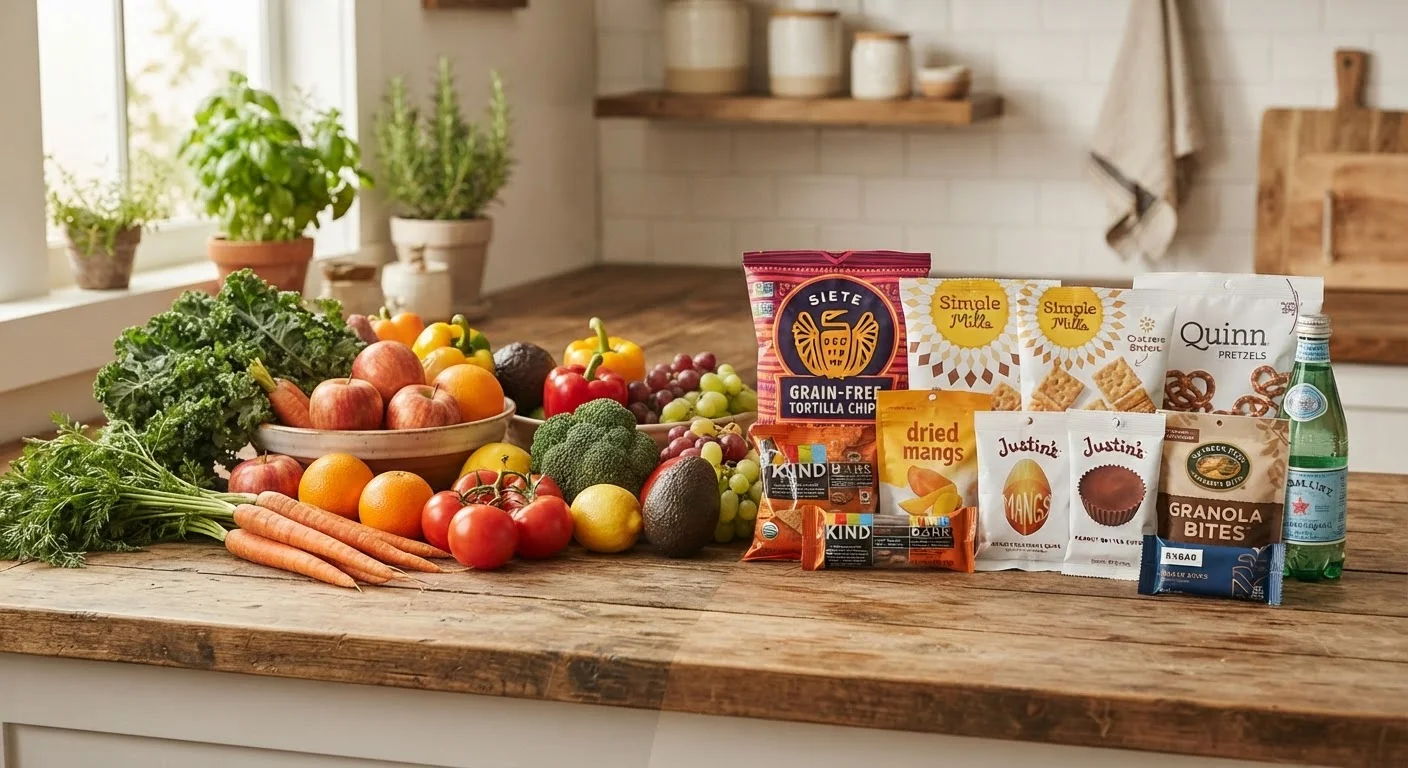
Photo: AdvisorBooth.net editorial
Key Takeaways
- "Processed" spans a wide spectrum - canned tomatoes and packaged cookies are both processed, but very differently.
- Whole foods are generally closer to their natural state and tend to retain more fiber, vitamins, and minerals.
- Ultra-processed foods often contain added sugars, sodium, and artificial additives not found in whole foods.
- Many minimally processed foods - like pasteurized milk or frozen vegetables - are nutritionally comparable to fresh options.
- No single food defines a healthy diet; overall eating patterns matter more than individual choices.
What Do These Terms Actually Mean?
The word "processed" gets used as a catch-all label in nutrition conversations, but it covers an enormous range of foods. Technically, any food that has been altered from its natural state before you eat it has been processed - that includes washed salad greens, pasteurized milk, and canned chickpeas, alongside frozen dinners and packaged snack cakes.
Researchers and public health organizations often use a classification system called NOVA, which groups foods into four categories based on the degree of industrial processing. At one end sits unprocessed or minimally processed foods - think fresh produce, plain yogurt, and dried lentils. At the other end sits ultra-processed foods: products made predominantly from industrial substances like refined starches, hydrogenated oils, flavor enhancers, and added sugars, with little resemblance to any single whole ingredient.
Whole foods, by contrast, refers to foods that are close to their natural, unrefined form. An apple, a handful of walnuts, a piece of salmon, or a cup of cooked brown rice all qualify. The term doesn't have a formal regulatory definition in the U.S., which is partly why it can feel slippery.
| Criterion | Whole Foods | Processed Foods |
|---|---|---|
| Definition | Close to natural, unrefined state | Altered in some way before consumption |
| Processing spectrum | Minimal to none | Ranges from minimal to ultra-processed |
| Fiber retention | Generally high | Often reduced in refined/ultra-processed |
| Added sugars & sodium | Naturally absent | Frequently added in ultra-processed foods |
| Shelf life | Typically shorter | Often extended through preservation |
| Convenience | Requires more preparation | Often ready-to-eat or quick to prepare |
| Cost | Varies; fresh produce can be pricey | Often lower cost per serving |
| Nutrient density | Generally higher | Highly variable across the spectrum |
Where the Nutrition Gap Actually Shows Up
The nutritional difference between whole and processed foods isn't uniform - it depends heavily on how much processing occurred and what was added or removed in the process.
When grains are refined, for example, the bran and germ layers are stripped away, taking most of the fiber, B vitamins, and minerals with them. When foods are ultra-processed, manufacturers often add substantial amounts of sodium, added sugars, and saturated fat to enhance palatability and shelf life. These additions are a significant concern: research consistently links high intake of ultra-processed foods with higher consumption of nutrients associated with chronic disease risk, according to nutrition epidemiology literature.
On the other hand, some processing genuinely preserves nutrition. Freezing vegetables shortly after harvest locks in vitamins that might degrade in fresh produce sitting in transit for days. Canning tomatoes concentrates lycopene, an antioxidant. Fermentation - used in yogurt, miso, and kimchi - can enhance the bioavailability of certain nutrients.
For a closer look at what food labels can tell you about processing levels and ingredient lists, see our guide to reading a nutrition facts label.
57%
Share of calories from ultra-processed foods
A study published in the BMJ (2016) estimated that ultra-processed foods account for roughly 57% of total caloric intake in the average American diet.
~90%
Americans falling short on dietary fiber
The Dietary Guidelines for Americans identifies dietary fiber as a nutrient of public health concern, with surveys suggesting most adults consume well below recommended amounts.
4 groups
NOVA food processing classification levels
The NOVA system, developed by researchers at the University of São Paulo, categorizes all foods into four groups based on the extent and purpose of industrial processing applied.
The Gray Zone: When the Line Blurs
It's easy to sort obvious examples - an orange is whole, a bag of neon-orange cheese puffs is ultra-processed. But many everyday foods fall somewhere in the middle, and that's where people often get confused.
Plain oatmeal is minimally processed and nutritionally rich. Instant flavored oatmeal packets share the same base grain but typically add sugars and artificial flavorings. Both carry the word "oatmeal." Similarly, a plain rotisserie chicken is closer to a whole food, while chicken nuggets made with mechanically separated meat, fillers, and coatings belong in a different category entirely.
Understanding added sugars is another area where the distinction matters significantly. The difference between natural and added sugars is an important concept - sugars naturally present in fruit or dairy behave differently in the body and in nutrition guidelines than added sugars in ultra-processed foods.
The practical takeaway is this: the processing spectrum is more useful than a binary whole-vs.-processed divide. Looking at ingredient lists - how many items, what kinds - often tells you more than a health claim on the front of a package.
This article is for general informational purposes only and is not a substitute for personalized advice from a qualified healthcare or registered dietitian professional.
The content on this site is for informational purposes only and is not a substitute for professional advice. Always consult a qualified professional for guidance specific to your situation.