
A Plain-Language Guide to Understanding Your Debt-to-Income Ratio

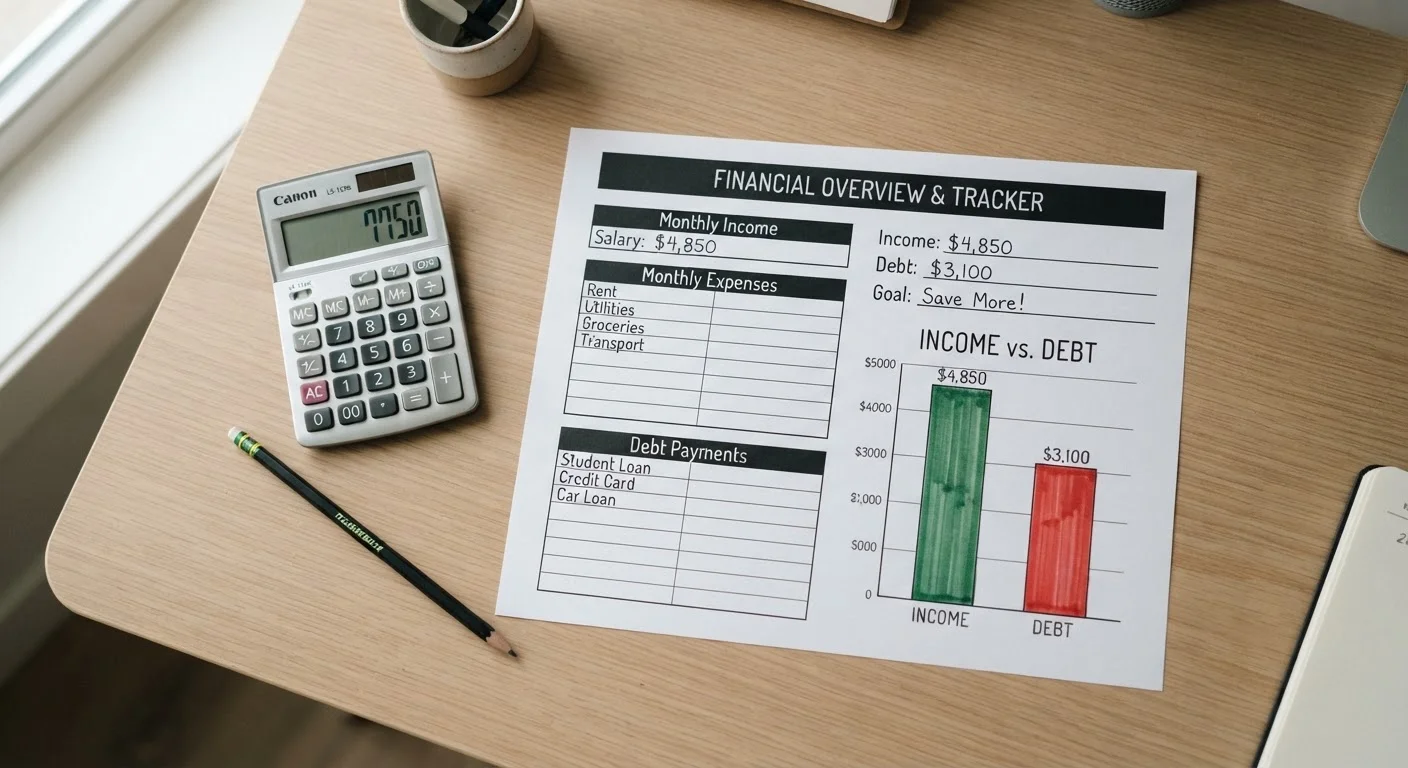
Photo: AdvisorBooth.net editorial
Key Takeaways
- DTI compares your total monthly debt payments to your gross monthly income as a percentage.
- Lenders commonly prefer a DTI below 36%, with housing costs under 28% of gross income.
- A high DTI signals that debt may be crowding out savings and financial flexibility.
- You can lower your DTI by reducing debt payments, increasing income, or both.
- DTI is one of several factors lenders weigh - credit score and assets also matter.
What Is a Debt-to-Income Ratio?
Your debt-to-income ratio (DTI) is a simple percentage that compares how much you owe each month to how much you earn each month. It tells lenders - and you - how large a share of your income is already spoken for by existing debt obligations.
DTI is used widely by mortgage lenders, auto lenders, and credit card issuers to gauge whether a borrower can realistically take on additional payments. The lower the ratio, the more financial room you theoretically have. For a broader grounding in the terms lenders use, see key borrowing terms every borrower should know.
Debt-to-Income Ratio (DTI)
A percentage showing how much of your gross monthly income goes toward debt payments. Lenders use it to assess your ability to take on new debt.
Gross Income
Your total earnings before taxes and any deductions are taken out. This is the income figure used in DTI calculations, not your take-home pay.
Front-End DTI
The portion of your gross income that goes specifically toward housing costs - mortgage principal, interest, taxes, and insurance. Lenders often target this below 28%.
Back-End DTI
Your total monthly debt payments (housing plus all other obligations) divided by gross income. This is the more comprehensive DTI figure most lenders focus on.
Debt Obligation
A required recurring payment on money you owe, such as a monthly loan installment or minimum credit card payment. It does not include everyday spending.
How to Calculate Your DTI
The formula is straightforward:
DTI = (Total Monthly Debt Payments ÷ Gross Monthly Income) × 100
For example, if your gross monthly income is $5,000 and your combined monthly debt payments total $1,750, your DTI is 35%.
What counts as a debt payment? Include:
- Mortgage or rent payments
- Minimum credit card payments
- Auto loan payments
- Student loan payments
- Personal loan payments
Do not include everyday living expenses like groceries, utilities, or phone bills - those are spending, not debt. And remember: use your gross income (before taxes), not your take-home pay. That's the figure lenders use.
Double-Check Your Income Figure
What the Numbers Actually Mean
Lenders typically evaluate DTI using two measures side by side:
| DTI Range | General Lender Interpretation |
|---|---|
| Below 28% (housing only) | Front-end target; housing costs are manageable |
| Below 36% (all debt) | Considered healthy; good loan eligibility |
| 37%-43% | Acceptable to some lenders, often with conditions |
| Above 43% | High risk; many lenders will decline or limit options |
These thresholds are guidelines, not absolute rules. Lenders also weigh your credit score, employment history, and available assets. For more on how credit factors into home financing, see how your credit score affects mortgage qualification.
DTI and the Debt-vs.-Savings Balance
DTI captures more than just loan eligibility - it reflects a real tension in personal finance. A high DTI means a large portion of your paycheck is committed before you've had a chance to save, invest, or handle unexpected costs.
If your DTI sits above 36%, your debt load may be limiting your ability to build an emergency fund or contribute to retirement. That's worth paying attention to, independent of any loan application. As part of a complete financial plan, your DTI belongs alongside your savings rate as a measure of overall health. The end-to-end financial roadmap explores how these pieces fit together.
The debt-vs.-savings question doesn't have one universal answer, but your DTI provides useful data: a ratio well above 36% is often a signal to prioritize debt reduction. For a deeper look at that decision, see the debt-first vs. savings-first dilemma.
How to Improve Your DTI
There are two levers: reduce your monthly debt obligations or increase your gross income. In practice, most people work both at once.
Reduce Debt Payments
- Pay down balances to eliminate or shrink monthly minimums, starting with accounts whose payoff would most reduce required monthly payments.
- Refinance where it lowers your monthly payment - though be cautious that extending a loan term can increase total interest paid.
- Avoid new debt while you're actively working to lower your ratio.
Increase Gross Income
- A raise, promotion, or additional income stream directly improves your DTI, even without changing your debt at all.
If your DTI is high and rising, that's one of the early signals worth acting on. Signs your debt load has become financially unsustainable walks through warning patterns to watch for.
Refinancing Isn't Always a DTI Fix
This article is for general informational and educational purposes only and does not constitute personalized financial or legal advice. Consult a licensed financial professional for guidance tailored to your specific situation.
Frequently Asked Questions
The content on this site is for informational purposes only and is not a substitute for professional advice. Always consult a qualified professional for guidance specific to your situation.