
Fees, Expense Ratios, and the Quiet Cost of Investing

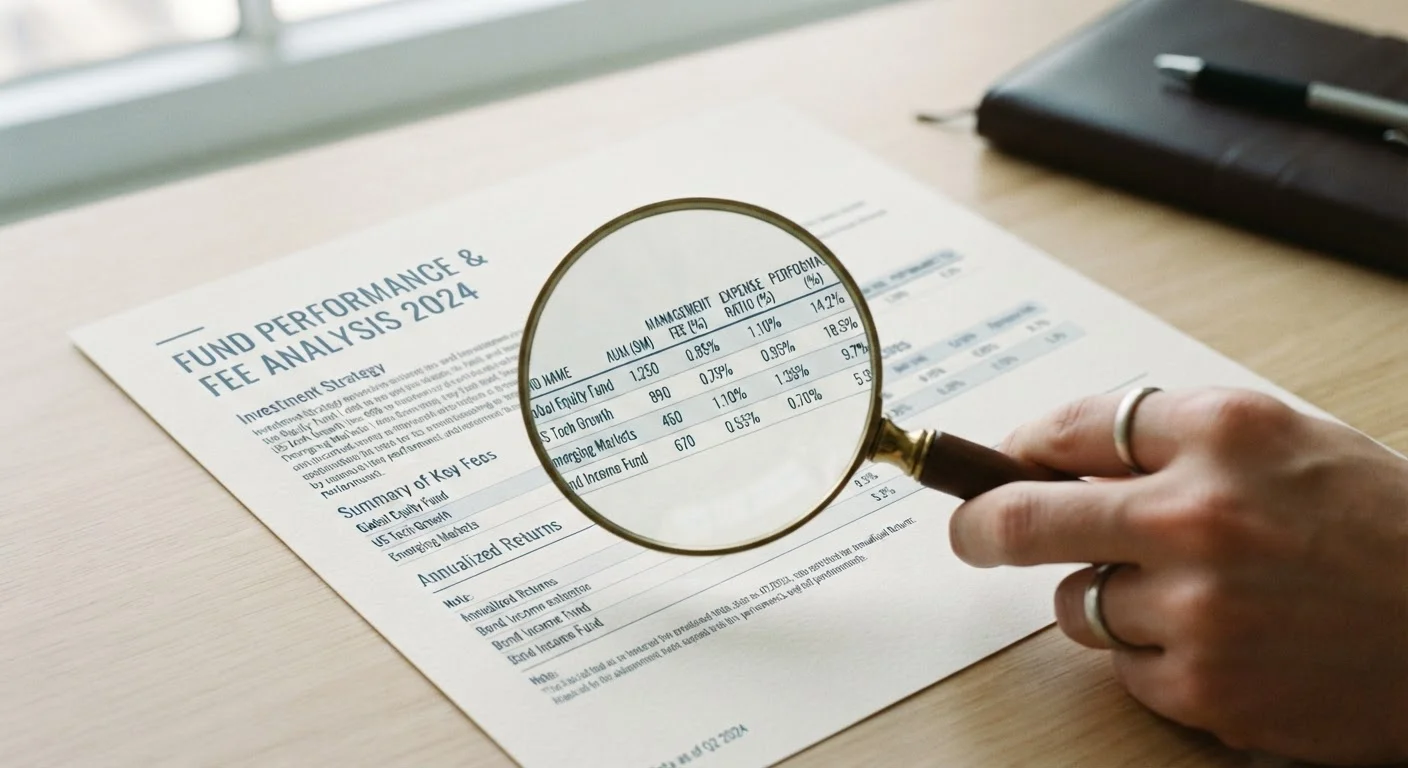
Photo: AdvisorBooth.net editorial
Key Takeaways
- Investment fees are deducted automatically and are easy to overlook, but they compound against you over time.
- Expense ratios on passively managed index funds are typically far lower than those on actively managed funds.
- Advisory fees, transaction costs, and fund fees can stack - understanding all three matters.
- Even a 1% fee difference can cost tens of thousands of dollars over a multi-decade investment horizon.
- Checking a fund's expense ratio before investing is one of the simplest due-diligence steps available to any investor.
Why Fees Deserve More Attention Than They Usually Get
Most investors focus on returns - and understandably so. But what a fund earns and what an investor keeps are two different numbers. The gap between them is largely fees. Because investment costs are deducted quietly, behind the scenes, they rarely feel like a loss. That invisibility is precisely what makes them worth understanding.
The same compounding effect that builds wealth over time works equally well in reverse when applied to fees. A small percentage shaved off every year doesn't just cost you that year's deduction - it costs you everything that money would have earned going forward. Compound interest is powerful when it works for you; fee drag operates on the same principle, working quietly against you.
0.03%
Lowest expense ratios on broad index funds
Some passively managed index funds have reached expense ratios as low as 0.03%, according to fund prospectus data from major index fund providers.
~0.66%
Average expense ratio for actively managed U.S. equity funds
According to Morningstar's annual fund fee study, the asset-weighted average expense ratio for actively managed U.S. equity funds has trended around this level in recent years.
$30,000+
Potential fee impact over 30 years on a $50K portfolio
Illustrative calculations show a 1% annual fee difference on a $50,000 portfolio growing at 7% annually can erode more than $30,000 in ending value over 30 years.
The Three Main Fee Categories Investors Encounter
1. Fund Expense Ratios
The expense ratio is the most fundamental cost embedded in any mutual fund or ETF. It covers portfolio management, administrative expenses, and in some cases marketing costs (called 12b-1 fees). Passive index funds, which simply track a market index rather than relying on active stock-picking, tend to carry significantly lower expense ratios than actively managed funds - sometimes by a factor of ten or more.
This distinction matters because higher fees on actively managed funds don't automatically translate to higher returns. Research has consistently found that the majority of actively managed funds underperform their benchmark index over long periods, net of fees. For a deeper look at this tradeoff, see index funds vs. actively managed funds.
2. Advisory Fees
If you work with a financial advisor or use a robo-advisor platform, you may pay an additional asset-based fee - commonly expressed as an annual percentage of your portfolio. This fee is separate from any fund-level expenses. Understanding what services you receive in exchange is a reasonable part of evaluating whether the cost is appropriate for your situation.
3. Transaction and Account Fees
Some brokerage accounts charge commissions per trade, though this has become less common. Account maintenance fees, transfer fees, and early redemption penalties are also worth reviewing when evaluating where to hold investments.
One Number Worth Looking Up Today
How Fee Drag Compounds Over Time
Consider two hypothetical portfolios, each starting with $50,000 and growing at a 7% gross annual return over 30 years. One carries a 0.10% expense ratio; the other carries 1.10% - a difference of exactly one percentage point.
After 30 years, that one percentage point difference in annual cost results in a meaningfully smaller ending balance for the higher-fee portfolio. The difference isn't just the fees themselves - it's the growth those fee dollars would have generated had they stayed invested. This is what financial educators call the compounding cost of fees.
This same logic applies to other recurring financial costs. Hidden costs that quietly wreck a budget operate on a similar principle - small, recurring charges that go unexamined add up to significant sums over time.
What to Actually Do With This Information
Understanding fees isn't about chasing the absolute lowest cost regardless of context - it's about knowing what you're paying and why. A few practical habits help:
- Look up the expense ratio of any fund before investing. It's disclosed in the fund's prospectus and on most fund summary pages.
- Compare within the same category. A 0.80% expense ratio on a niche bond fund and a 0.80% ratio on a broad domestic equity fund aren't equally meaningful - what matters is how each compares to similar options.
- Account for all layers of cost. Fund expense ratios, advisory fees, and account-level charges can stack. The total matters more than any single line item.
- Ask questions before committing. Questions to ask before putting money into any investment is a useful starting framework for any investment decision.
This article is for general educational purposes only and does not constitute personalized financial, investment, or tax advice. Consult a qualified financial professional for guidance specific to your situation.
Frequently Asked Questions
The content on this site is for informational purposes only and is not a substitute for professional advice. Always consult a qualified professional for guidance specific to your situation.