
What a Vehicle History Report Actually Tells You

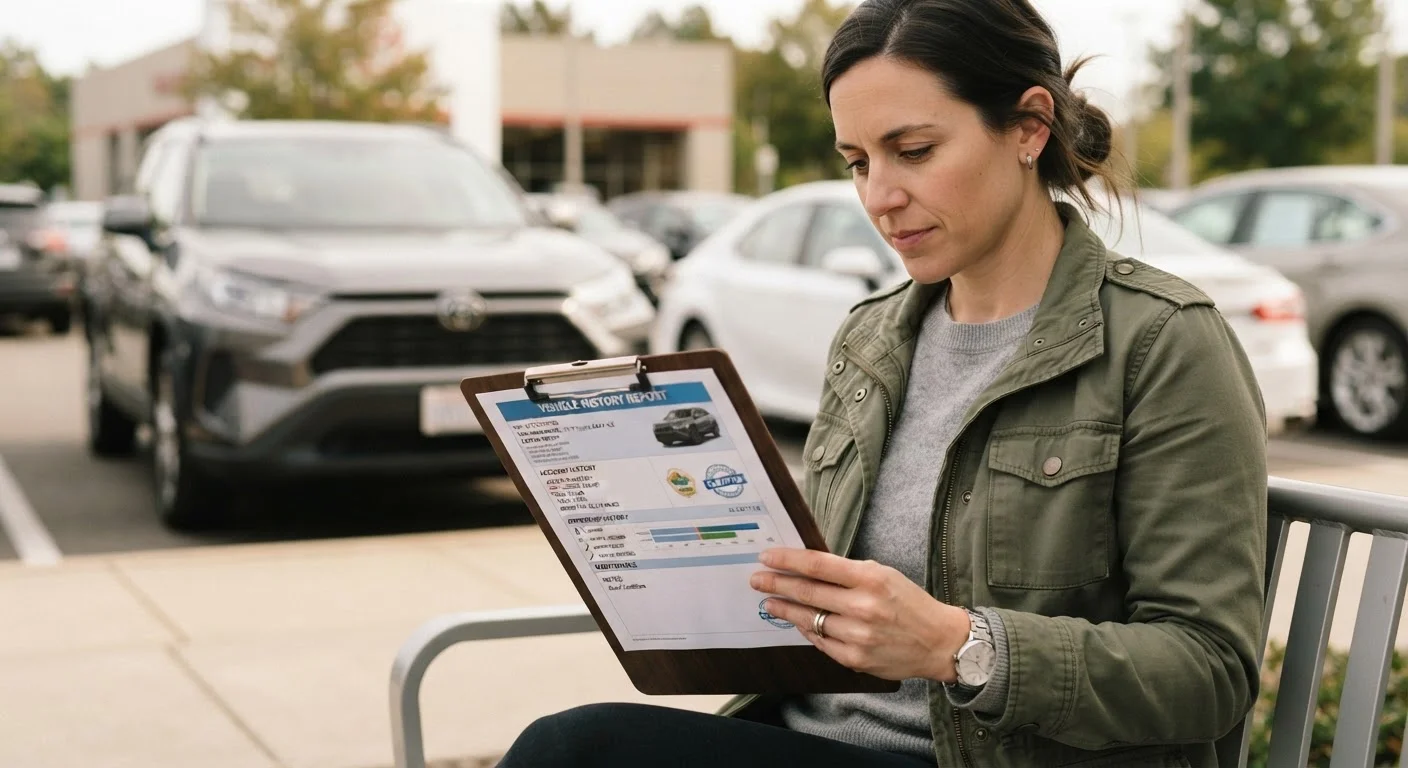
Photo: AdvisorBooth.net editorial
Key Takeaways
- A vehicle history report pulls from multiple databases, including DMV records, insurance claims, and auction data.
- Title brands like 'salvage' or 'flood' are among the most important red flags a report can reveal.
- Odometer rollback fraud is a real risk; history reports can help detect suspicious mileage gaps.
- Reports have documented gaps - unreported accidents and private repairs will not show up.
- A history report should always be paired with an independent mechanical inspection before purchase.
What the Report Is - and Where the Data Comes From
A vehicle history report aggregates records from dozens of sources: state DMV databases, the National Motor Vehicle Title Information System (NMVTIS), insurance companies, auto auctions, salvage yards, and participating repair shops. When you enter a VIN, the provider queries these sources and returns a timeline of documented events for that specific vehicle.
The quality of a report depends entirely on which databases a provider has access to and how thoroughly those sources submit data. NMVTIS is federally mandated, which means title brands and total-loss declarations are generally well-captured. Service records, by contrast, only appear when a shop or dealer actively submits them - so a car serviced exclusively at an independent mechanic may show very few maintenance entries despite a well-documented physical service history.
Understanding this source structure helps you interpret what you're reading. A long list of reported services doesn't prove meticulous care - it may just mean the car was serviced at chain shops that feed data automatically. Conversely, a sparse service history doesn't indicate neglect.
The Details That Matter Most
Title brands are arguably the most consequential section. A clean title means no major events have been flagged. A salvage title means an insurer declared the car a total loss. A rebuilt or reconstructed title means a salvage vehicle was repaired and re-inspected. Flood, hail, and lemon law buyback titles each describe specific events. Any brand other than clean warrants careful additional scrutiny - particularly around structural integrity and insurability.
Odometer readings recorded at registration renewals, inspections, and auctions create a mileage timeline. If a car shows 120,000 miles at an auction record and then reappears with 80,000 miles on the current listing, that gap is a serious red flag suggesting odometer rollback - a form of fraud that inflates perceived value.
Accident and damage reports indicate whether an incident was reported to insurance. These entries often include a severity assessment (minor, moderate, severe) and may note which areas of the vehicle were affected. Keep in mind that severity ratings reflect the insurer's assessment of cost, not necessarily structural damage.
Ownership history shows how many registered owners the vehicle has had and, in some cases, the state where it was registered. Multiple owners in a short period or frequent out-of-state transfers can warrant additional questions. See our questions worth asking before you commit to any vehicle for guidance on probing ownership history further.
1 in 5
Used vehicles with an undisclosed problem
Industry estimates have suggested roughly one in five used vehicles on the market carries an undisclosed issue such as a prior total loss or branded title, underscoring why report verification matters.
~450M
VINs in the NMVTIS database
The National Motor Vehicle Title Information System, operated under federal mandate, contains records on hundreds of millions of vehicles, making it one of the most comprehensive title-tracking resources available.
Top fraud type
Odometer fraud among vehicle crimes
The National Highway Traffic Safety Administration (NHTSA) has identified odometer fraud as one of the most common forms of automotive consumer fraud, affecting hundreds of thousands of vehicles sold annually.
What a Vehicle History Report Cannot Tell You
The most important limitation to understand: a report only reflects what was reported. Unreported events are, by definition, invisible. A car involved in a significant collision repaired through a private arrangement - no insurance claim, no police report - will show a clean accident history. The same applies to flood damage in areas without strong reporting compliance.
A history report also cannot assess current mechanical condition. It won't tell you whether the timing chain is worn, whether the transmission is slipping, or whether rust has compromised the frame. These are things only a physical inspection can reveal. Before finalizing any used car purchase, have the vehicle inspected by an independent, qualified mechanic - not one recommended by the seller. Our guide on what to inspect before you buy a used car covers the key areas a technician should evaluate.
Always Verify the VIN Physically
Think of the history report the same way you might approach a report in another major purchase category. Just as reading a home inspection report requires understanding what the language actually means, a vehicle history report requires knowing what's behind the data - and what falls outside it.
How to Use a Report Effectively
Pull the report before you invest time in a serious inspection or negotiation. If major red flags appear - a salvage title, evidence of odometer discrepancy, a total-loss designation - you can make an informed decision about whether to proceed at all. If the report looks reasonably clean, treat that as a green light to dig deeper, not a reason to skip further due diligence.
Cross-reference the VIN on the report against the physical VIN plates on the car itself (dashboard and door jamb). Verify the listed ownership states and the mileage timeline against what the seller tells you. Discrepancies between the report and the seller's account deserve direct follow-up questions.
A vehicle history report is one layer of a sound used-car evaluation process. It is most powerful when combined with a seller conversation, a qualified mechanical inspection, and your own informed judgment about the asking price relative to the vehicle's documented history.
Frequently Asked Questions
The content on this site is for informational purposes only and is not a substitute for professional advice. Always consult a qualified professional for guidance specific to your situation.