
Charging Speeds Unpacked: Fast Charging, Wireless Charging, and PassThrough

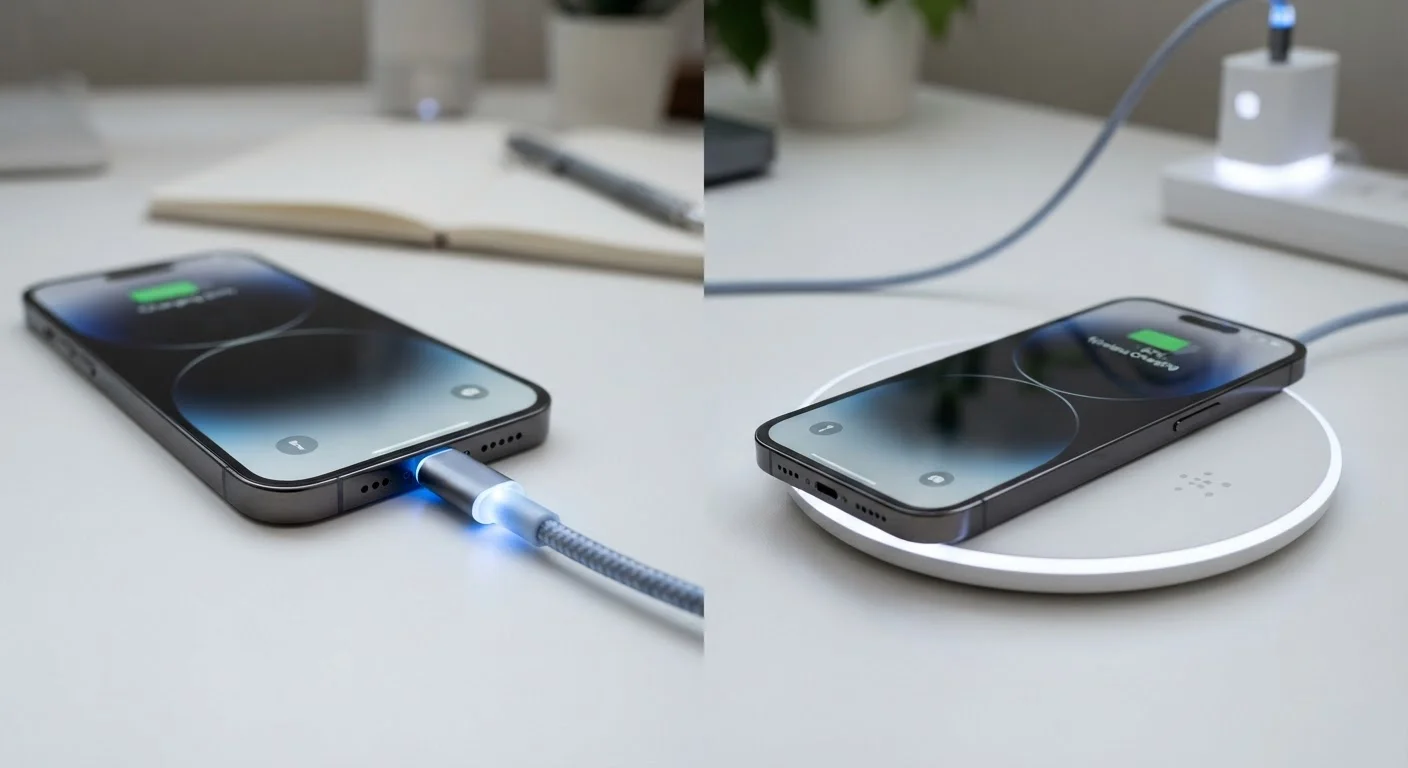
Photo: AdvisorBooth.net editorial
Key Takeaways
- Fast charging is not a single standard - multiple competing protocols exist and aren't always compatible.
- Wireless charging is more convenient but generally slower and less efficient than wired fast charging.
- Pass-through charging lets a device charge another device while itself plugged in - useful but with trade-offs.
- Charging speed depends on matching the charger, cable, and device protocol - any mismatch limits speed.
- Heat is the main downside shared by all fast charging methods and can affect long-term battery health.
Why Charging Speeds Are More Complicated Than They Look
Plug in a phone and it charges - simple enough. But the speed at which that happens depends on a layered negotiation between the charger, the cable, and the device itself. Getting any one of those wrong can silently cut your charging speed in half or more.
Three categories of charging technology are most common in everyday use: wired fast charging, wireless charging, and pass-through charging. Each works on different principles, delivers different speeds, and suits different situations. Understanding how they differ helps you use your gear smarter - and avoid buying a charger that underdelivers.
Just as data connections involve technical layers most people never see - like the technologies covered in our guide to wireless standards inside devices - charging has its own hidden complexity worth unpacking.
Wired Fast Charging: Speed With Strings Attached
Standard USB charging typically delivers around 5 watts (5V at 1A). Fast charging raises that ceiling significantly - many modern phones support 25W, 45W, or even higher. Some manufacturer-specific protocols have pushed past 100W.
The key is the protocol. USB Power Delivery (USB-PD) is the most widely adopted open standard and is used across laptops, tablets, and phones from many manufacturers. But proprietary protocols - like Qualcomm Quick Charge, or the high-wattage systems some phone makers develop - only operate at full speed when both the charger and device speak the same language. A Quick Charge charger plugged into a device that doesn't support it will still charge - just not fast.
Cable quality matters equally. A USB-C cable that isn't rated for higher power delivery will cap your speed regardless of how capable the charger or device is.
Match Your Charger, Cable, and Device
Fast charging generates more heat than standard charging, and sustained heat degrades lithium-ion batteries over time. Most devices include thermal management to slow charging when temperatures rise - this is a feature, not a fault.
Wireless Charging: Real Convenience, Real Trade-Offs
Wireless charging uses electromagnetic induction - a coil in the charger creates a magnetic field that a coil inside the device converts back to electricity. The dominant standard is Qi (pronounced "chee"), managed by the Wireless Power Consortium and supported by most major smartphone makers.
Qi charging in its standard form typically delivers 5-15W. Newer Qi2 and proprietary extensions from some manufacturers can push higher, but wireless charging still lags behind the peak speeds of wired fast charging on the same device.
The efficiency gap is real: wireless charging loses a meaningful portion of energy as heat during the transfer process, making it less power-efficient than a cable. Placement also matters - a slight misalignment between the coils in the pad and device can reduce speed noticeably.
| Wired Fast Charging | Wireless Charging | Pass-Through Charging | |
|---|---|---|---|
| Typical speed range | 18W-100W+ | 5-15W (up to ~50W proprietary) | Varies widely; often 5-18W output |
| Requires matching protocol | Yes - charger, cable, device must align | Partial - Qi is broadly compatible | Depends on hub/device firmware |
| Energy efficiency | High | Moderate - loses energy as heat | Moderate - depends on intermediary |
| Convenience | Requires cable connection | Drop-and-charge, no cable needed | Useful in multi-device setups |
| Port wear on device | Gradual wear on charging port | None - no physical connection | Depends on cable frequency |
| Heat generation | Moderate to high at peak wattage | Moderate - inherent in induction | Low to moderate |
That said, for overnight charging or a desk pad you set your phone on without thinking, wireless charging is genuinely useful. It also reduces wear on the physical charging port over time.
Pass-Through Charging: A Specific Tool for Specific Situations
Pass-through charging describes a scenario where power flows through an intermediary device - a laptop, USB hub, battery pack, or dock - to charge a connected phone or accessory, while the intermediary device is itself plugged in.
This sounds seamless, but it comes with limits. Many battery packs, for example, can't simultaneously charge themselves and output maximum power to another device - they share or prioritize one direction. Hubs vary widely: some pass through enough wattage to charge a phone quickly, while others deliver only enough to slow a laptop's discharge rather than actually charge it.
Understanding pass-through is especially relevant when using a laptop as a hub. A phone plugged into a laptop via USB-C may charge very slowly because the laptop is allocating minimal power to that port - this isn't a malfunction, just a power budget constraint.
For anyone managing multiple devices through a single power source, checking the specific wattage output of every device in the chain is essential before assuming things will charge at useful speeds.
How the Three Methods Compare
Each charging method has a clear role once you understand the underlying mechanics. The comparison below reflects general category characteristics - specific devices and hardware vary.
5W
Standard USB charging baseline
Original USB-A charging operated at approximately 5 watts - a benchmark that modern fast charging standards have multiplied many times over.
~47%
Energy lost in wireless charging
Studies of wireless charging efficiency have found that Qi charging can lose roughly 40-50% more energy as heat compared to a direct wired connection at equivalent wattage.
240W
USB-PD 3.1 maximum wattage
The USB Power Delivery 3.1 specification raised the maximum supported wattage to 240W, enabling fast charging for high-performance laptops over a single USB-C cable.
The right choice depends on what you need: raw speed, no-fuss convenience, or flexibility when managing multiple devices from one power source.
The content on this site is for informational purposes only and is not a substitute for professional advice. Always consult a qualified professional for guidance specific to your situation.