
FHA, VA, USDA, and Conventional Loans: How They Compare

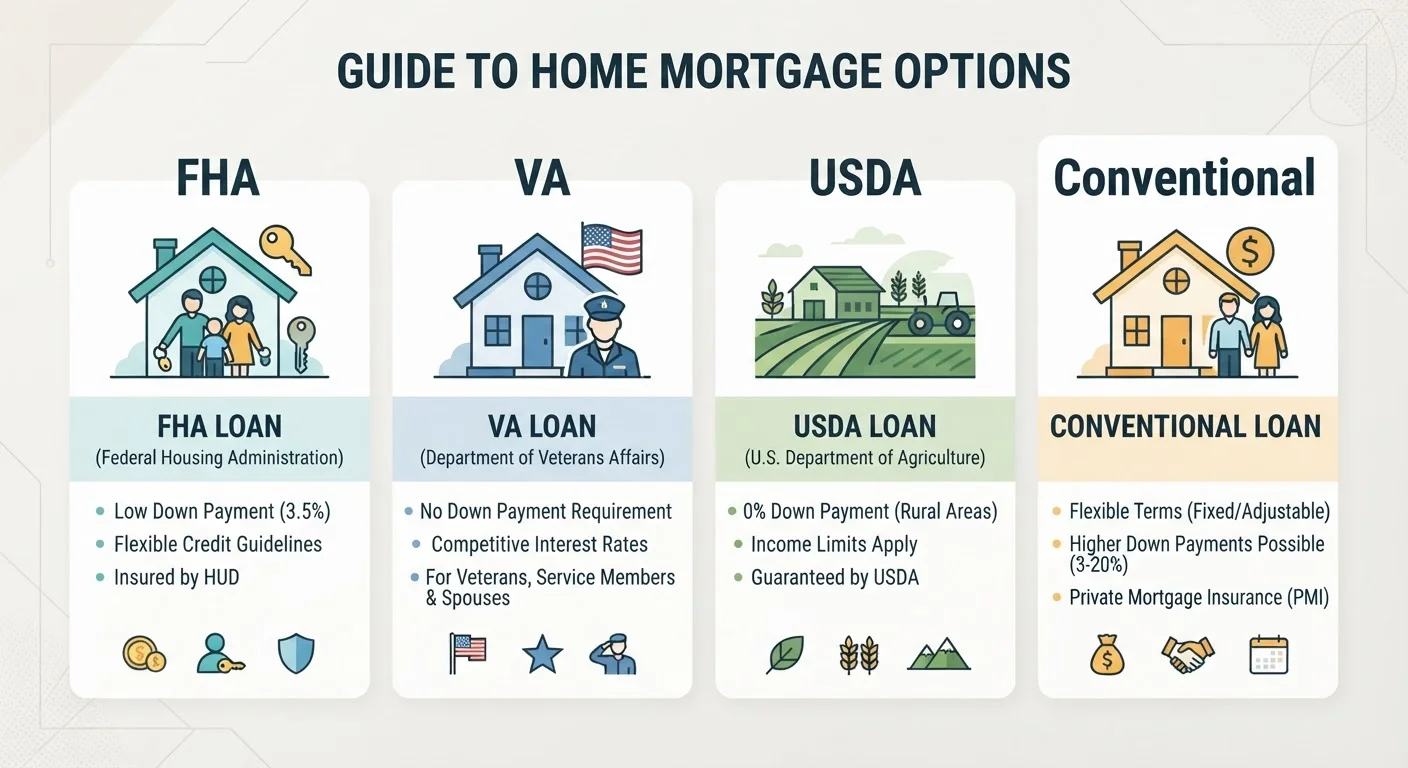
Photo: AdvisorBooth.net editorial
Key Takeaways
- FHA loans accept lower credit scores and down payments but require mortgage insurance regardless of equity.
- VA loans are exclusively for eligible veterans, active-duty service members, and surviving spouses - and require no down payment.
- USDA loans target rural and some suburban buyers with qualifying incomes, also offering zero-down financing.
- Conventional loans offer the most flexibility for buyers with strong credit but typically require higher down payments.
- Each loan type has distinct eligibility rules, costs, and property requirements that shape which is the right fit.
The Four Main Mortgage Programs at a Glance
When financing a home purchase in the United States, most buyers choose from four core loan programs: FHA, VA, USDA, and conventional. The first three are government-backed - meaning a federal agency insures the lender against default - while conventional loans are not backed by any government entity and instead follow guidelines set by Fannie Mae and Freddie Mac.
Understanding the structural differences between these programs is the foundation of a smart mortgage decision. Before comparing interest rates or lenders, it helps to know which programs you actually qualify for - and what trade-offs each brings. If you're unfamiliar with terms like amortization, escrow, or mortgage insurance, our plain-language mortgage glossary is a useful starting point.
| FHA | VA | USDA | Conventional | |
|---|---|---|---|---|
| Government Backing | FHA (HUD) | Dept. of Veterans Affairs | Dept. of Agriculture | None (Fannie/Freddie) |
| Minimum Down Payment | 3.5% (580+ score) | 0% | 0% | 3%-20% |
| Minimum Credit Score | 500-580 (varies) | No set minimum (lender discretion) | Typically 640 | Generally 620+ |
| Mortgage Insurance / Fees | Upfront + annual MIP | One-time funding fee | Upfront + annual guarantee fee | PMI if < 20% down |
| Eligibility Restrictions | None (income/credit based) | Military service required | Location + income limits | None (credit/income based) |
| Property Requirements | Must meet HUD standards | Must meet VA MPRs | Must be in eligible area | Fewer restrictions |
FHA Loans: The Low-Barrier Entry Point
Insured by the Federal Housing Administration, FHA loans are designed to make homeownership accessible to buyers with limited savings or imperfect credit. As of current FHA guidelines, borrowers with a credit score of 580 or higher can qualify with a down payment as low as 3.5%. Those with scores between 500 and 579 may still qualify but must put at least 10% down.
The significant trade-off is mortgage insurance. FHA loans require both an upfront mortgage insurance premium (UFMIP) - typically 1.75% of the loan amount - and an ongoing annual premium paid monthly. Unlike private mortgage insurance on conventional loans, FHA mortgage insurance generally cannot be cancelled once you reach 20% equity if your original down payment was below 10%. This makes FHA loans costlier over the long run for buyers who build equity quickly. See how your credit score affects mortgage terms for more on the credit-cost relationship.
VA and USDA Loans: Zero-Down Options With Eligibility Requirements
VA Loans: Guaranteed by the U.S. Department of Veterans Affairs, VA loans are available to eligible veterans, active-duty service members, National Guard and Reserve members meeting service requirements, and certain surviving spouses. The benefits are substantial: no down payment required, no private mortgage insurance, and competitive interest rates. VA loans do charge a funding fee (a percentage of the loan amount) that varies based on down payment and whether it's a first use of the benefit - but this fee can be financed into the loan and is waived for borrowers with qualifying service-connected disabilities.
USDA Loans: Backed by the U.S. Department of Agriculture, these loans support buyers in designated rural and some suburban areas. Eligibility is based on both property location and household income - generally, income must fall at or below 115% of the area median. Like VA loans, USDA loans offer 100% financing (no down payment). They do carry a guarantee fee and annual fee, but these are typically lower than FHA mortgage insurance costs. The USDA's eligibility map is publicly available and worth checking early in your search.
Check USDA Eligibility Before You Dismiss It
Conventional Loans: The Standard for Strong-Credit Buyers
Conventional loans are not backed by a government agency, so lenders take on more risk - which translates into stricter qualification standards. Most conventional loans require a minimum credit score of 620, though better rates typically begin around 740 or higher. Down payments can be as low as 3% for first-time buyers through programs like Fannie Mae's HomeReady or Freddie Mac's Home Possible, but a 20% down payment eliminates the requirement for private mortgage insurance (PMI) entirely.
When PMI is required, it can be cancelled once the borrower reaches 20% equity - a meaningful advantage over FHA insurance in many cases. Conventional loans also have fewer property condition restrictions than government-backed loans, which can matter when purchasing older homes or properties needing work.
Once you've identified the right loan type, your next major decision involves rate structure. Fixed-rate vs. adjustable-rate mortgages carry distinct implications for your long-term payment and risk exposure.
This article provides general educational information about mortgage loan programs and is not personalized financial or legal advice. Loan eligibility, terms, and costs vary by lender and individual circumstances. Consult a licensed mortgage professional for guidance specific to your situation.
The content on this site is for informational purposes only and is not a substitute for professional advice. Always consult a qualified professional for guidance specific to your situation.