
Interior Paint Finishes: A Plain-Language Reference

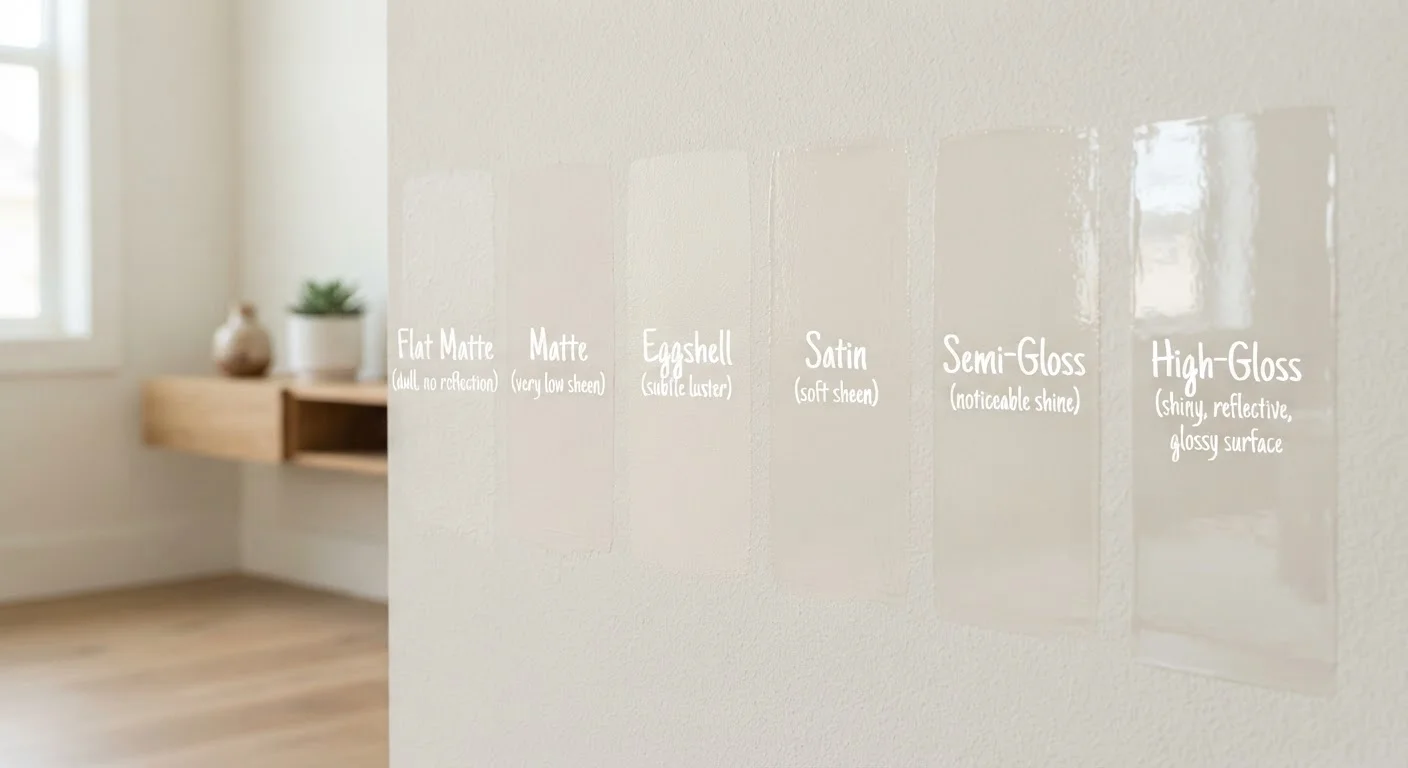
Photo: AdvisorBooth.net editorial
What Paint Finish Actually Means
When a paint label says "eggshell" or "semi-gloss," it's describing sheen level - how much light the dried surface reflects. Higher sheen generally means a harder, more washable surface; lower sheen tends to hide surface imperfections better but shows dirt more readily.
Sheen is measured by the angle at which light bounces off a cured paint film, expressed as a gloss unit (GU) value. For most homeowners, you don't need to track the numbers - understanding where each finish fits on the spectrum is enough to make a smart choice.
Sheen
The degree of light reflectivity in a dried paint surface, ranging from flat (no reflection) to high-gloss (mirror-like). Higher sheen typically means a more durable, washable surface.
Gloss Unit (GU)
A standardized measurement of how much light a surface reflects at a specific angle. Paint manufacturers use GU values to classify finishes, though consumers rarely need to reference them directly.
VOC
Volatile Organic Compounds - chemicals that evaporate as paint dries. High-VOC paints produce stronger fumes; low-VOC or zero-VOC formulas are available for improved indoor air quality.
Primer
A preparatory coating applied before paint to improve adhesion, block stains, and provide a uniform base. Using the right primer can significantly affect how the topcoat looks and lasts.
Cure Time
The period after application during which paint chemically hardens to its final durability. Distinct from dry time - a surface may be touch-dry in hours but not fully cured for several weeks.
Keep in mind that the same finish name can vary slightly between manufacturers, so reading the specification sheet carefully before you buy is always a good habit.
The Five Main Finishes, Explained
Here's how each common interior paint finish performs in real-world home conditions:
- Flat / Matte: The lowest sheen. Excellent at hiding drywall imperfections, nail pops, and uneven textures. Difficult to clean - scrubbing can remove paint. Best for low-traffic areas: adult bedrooms, formal dining rooms, ceilings.
- Eggshell: A slight, soft sheen - like the surface of an actual eggshell. Easier to wipe down than flat. Hides minor flaws well. A versatile, popular choice for living rooms and hallways.
- Satin: Noticeably smoother and slightly reflective. Stands up to light scrubbing and moderate moisture. Works well in kitchens, bathrooms, children's rooms, and high-traffic hallways.
- Semi-Gloss: A clearly shiny surface that's quite durable and moisture-resistant. Easy to clean. Commonly used on trim, doors, window frames, and cabinetry. Can highlight imperfections on flat walls.
- Gloss / High-Gloss: The most reflective and hardest finish. Highly washable; sometimes used on furniture or accent doors. Unforgiving of surface imperfections - requires thorough prep work.
| Lowest sheen finish | Flat / Matte |
| Most versatile everyday finish | Eggshell |
| Best finish for kitchens & baths | Satin or Semi-Gloss |
| Standard finish for trim & doors | Semi-Gloss |
| Typical full cure time | 2-4 weeks (Varies by formula, humidity, and ventilation) |
| Surface prep rule | Clean, patch, sand before painting |
Choosing the Right Finish by Room
No single finish is right for every room. Here's a practical room-by-room framework:
| Room / Surface | Recommended Finish | Why |
|---|---|---|
| Bedroom (adult) | Flat or Eggshell | Low traffic; hides ceiling and wall texture |
| Living Room | Eggshell or Satin | Durable enough for regular use; still forgiving |
| Kitchen | Satin or Semi-Gloss | Resists grease and moisture; easy to wipe |
| Bathroom | Satin or Semi-Gloss | Handles humidity without peeling as quickly |
| Hallways & Stairs | Satin | High contact; needs to survive bumps and scuffs |
| Trim & Doors | Semi-Gloss or Gloss | Crisp appearance; takes repeated cleaning |
| Ceiling | Flat | Minimizes glare; hides application marks |
If you're unsure, eggshell is a safe middle ground for most walls - it's forgiving in application, reasonably durable, and broadly available in thousands of colors.
Prep and Application Tips That Actually Matter
The best finish in the world won't perform well on a poorly prepared surface. A few fundamentals make a genuine difference:
- Clean the surface first. Grease, dust, or soap residue prevents paint from bonding properly. Wipe walls with a damp cloth and let them dry fully.
- Patch and sand imperfections before using higher-sheen paints. Gloss finishes amplify bumps and dents rather than hiding them.
- Use a primer when switching finish types. Going from flat to semi-gloss, or painting over a dark color, benefits from a dedicated primer coat.
- Apply in thin, even coats. Two thin coats typically outperform one thick coat for both adhesion and durability.
- Allow full cure time before washing. Paint may feel dry to the touch in hours, but full hardness can take two to four weeks. Scrubbing too soon - even with a "washable" finish - can damage the surface.
When comparing products at the store, look past marketing language and focus on the sheen level and VOC content listed on the label - practical guidance on how to decode product specs can help you cut through the noise.
The content on this site is for informational purposes only and is not a substitute for professional advice. Always consult a qualified professional for guidance specific to your situation.