
Exercise at Home vs. at a Gym: Weighing the Real Trade-Offs

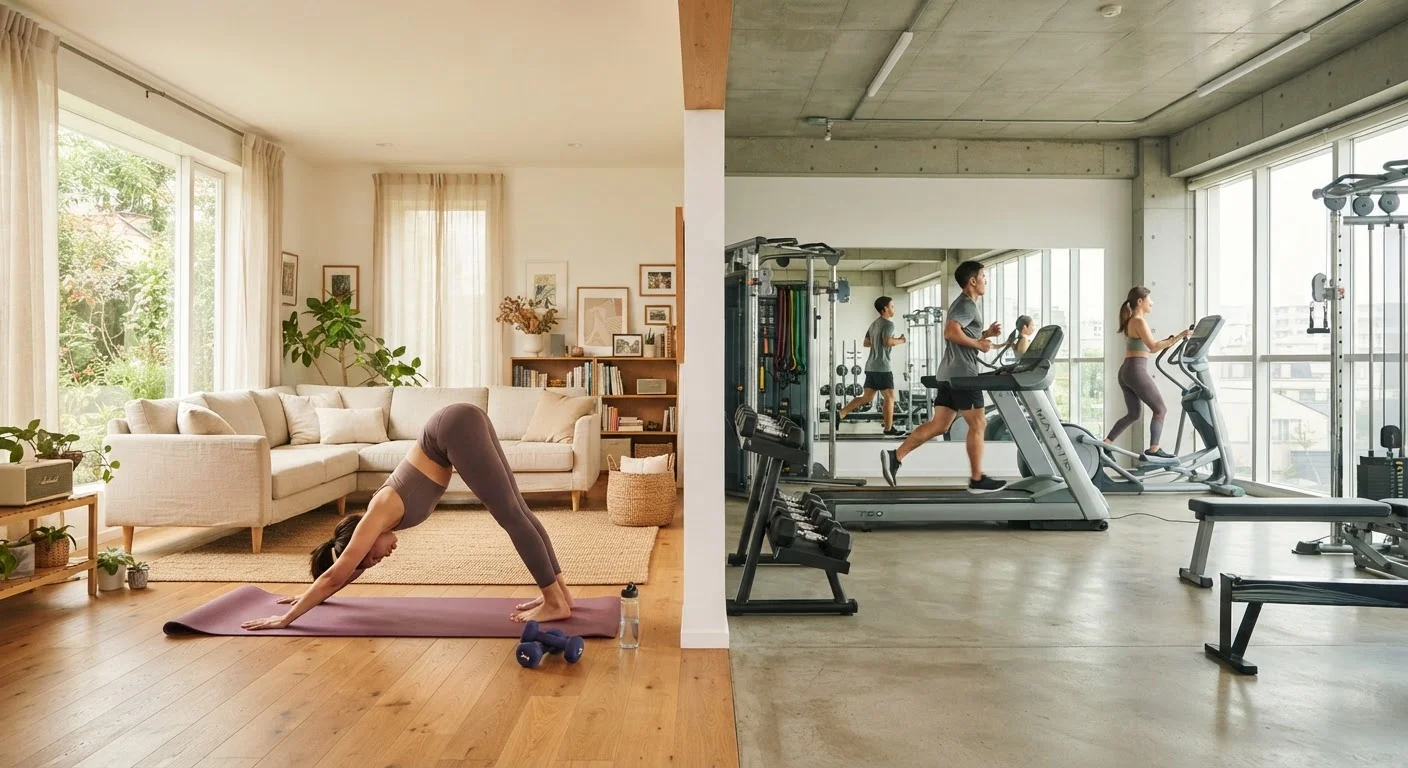
Photo: AdvisorBooth.net editorial
Key Takeaways
- Neither home nor gym workouts are universally superior - each suits different people and goals.
- Consistency matters more than location; the best environment is one you'll actually use regularly.
- Cost, convenience, equipment access, and social motivation are the key factors worth comparing.
- Many people find a hybrid approach - mixing both settings - works well over time.
- Always consult a healthcare professional before starting a new exercise routine, especially with existing health conditions.
No commute - exercise fits into smaller time windows
Eliminating travel time removes one of the most common barriers to consistency. A 20-minute workout at home is often more achievable than a 60-minute block that includes driving and changing at a gym.
Lower long-term cost than ongoing gym membership
A modest collection of home equipment - resistance bands, dumbbells, or a mat - represents a one-time expense that pays for itself relatively quickly compared to monthly membership fees.
Private environment reduces self-consciousness
For people who feel uncomfortable exercising in public or who are just starting out, the privacy of home can remove a real psychological barrier to getting moving.
Schedule flexibility without facility hours
Home workouts can happen at 6 a.m. or 10 p.m. without worrying about gym hours, class schedules, or equipment availability during peak times.
Membership fees add up, especially with low attendance
Monthly gym costs can range from modest to substantial depending on the facility. When attendance is inconsistent, the per-session cost rises quickly, which can become a source of guilt rather than motivation.
Commute time creates friction on busy days
Even a 10-15 minute drive can be enough of a barrier that workouts get skipped when schedules tighten, particularly during stressful periods when exercise is most needed.
Crowded equipment during peak hours frustrates routines
Waiting for machines or free weights during evening rush hours can disrupt workout flow and add unpredictability to how long a session takes.
Social pressure can feel intimidating for beginners
Some people, particularly those new to structured exercise, report feeling self-conscious in gym environments, which can undermine the confidence needed to establish a regular habit.
Why the Setting You Choose Actually Matters
Where you work out shapes more than just convenience - it influences your motivation, the types of movement available to you, and how easy it is to build a lasting habit. Research on exercise adherence consistently points to environment as one of the overlooked factors in whether people stick with physical activity over time.
This isn't about finding the "perfect" setup. It's about being honest about what barriers exist in your life and which environment removes the most of them. As our guide on building a movement routine that fits real life explains, generic fitness advice often ignores the very real friction points that derail people's intentions.
The Case for Exercising at Home
Home workouts have grown significantly in popularity, and it's easy to see why. Removing the commute alone can make the difference between exercising and not exercising on a busy day.
No commute - exercise fits into smaller time windows
Eliminating travel time removes one of the most common barriers to consistency. A 20-minute workout at home is often more achievable than a 60-minute block that includes driving and changing at a gym.
Lower long-term cost than ongoing gym membership
A modest collection of home equipment - resistance bands, dumbbells, or a mat - represents a one-time expense that pays for itself relatively quickly compared to monthly membership fees.
Private environment reduces self-consciousness
For people who feel uncomfortable exercising in public or who are just starting out, the privacy of home can remove a real psychological barrier to getting moving.
Schedule flexibility without facility hours
Home workouts can happen at 6 a.m. or 10 p.m. without worrying about gym hours, class schedules, or equipment availability during peak times.
That said, home exercise does come with real limitations. Without dedicated equipment or structured programming, it can be harder to progressively challenge your body over time - particularly for strength-focused goals. Distractions from family members, pets, or the pull of household tasks are genuinely common obstacles. And for people who need social accountability or the mental cue of "going somewhere" to shift into workout mode, home environments can feel too comfortable to activate real effort.
If you're exploring lower-intensity options, low-impact activities worth knowing about translate especially well to home settings and require minimal equipment.
The Case for Working Out at a Gym
Gyms provide infrastructure that's genuinely difficult to replicate at home without significant expense. Access to a broad range of resistance equipment, cardio machines, and group classes opens up more variety in your movement practice.
Membership fees add up, especially with low attendance
Monthly gym costs can range from modest to substantial depending on the facility. When attendance is inconsistent, the per-session cost rises quickly, which can become a source of guilt rather than motivation.
Commute time creates friction on busy days
Even a 10-15 minute drive can be enough of a barrier that workouts get skipped when schedules tighten, particularly during stressful periods when exercise is most needed.
Crowded equipment during peak hours frustrates routines
Waiting for machines or free weights during evening rush hours can disrupt workout flow and add unpredictability to how long a session takes.
Social pressure can feel intimidating for beginners
Some people, particularly those new to structured exercise, report feeling self-conscious in gym environments, which can undermine the confidence needed to establish a regular habit.
On the flip side, gym access costs money - membership fees vary widely but represent a recurring expense that can feel wasteful during stretches when attendance drops. Commute time is a real barrier, especially for people with demanding schedules. And for those who feel self-conscious exercising in front of others, the gym environment can be more stressful than motivating, at least initially.
~80%
Adults not meeting federal activity guidelines
The CDC has consistently reported that roughly 80% of American adults do not meet both aerobic and muscle-strengthening activity guidelines, regardless of whether they have gym access.
67%
Gym memberships rarely or never used
Industry estimates suggest a substantial majority of gym members use their membership infrequently, highlighting that access alone does not reliably translate into consistent activity.
Understanding what cardio and strength training each do for your body can help you decide which equipment access matters most for your particular goals.
Finding What Genuinely Works for You
It's worth questioning the assumption that you have to pick one or the other permanently. Many people find that a flexible approach - using home workouts for shorter sessions on busy days and visiting a gym for longer or more equipment-dependent sessions - provides the best of both worlds.
Honest self-reflection is more useful here than following someone else's routine. Ask yourself: When have I actually followed through consistently in the past? What made it easier? What got in the way? These patterns tend to be more predictive of future behavior than motivation alone.
Hybrid Approaches Are Increasingly Common
If you've been held back by the belief that you need a gym to make real progress, fitness myths that keep people from getting started addresses that directly - including what the evidence says about home-based movement.
This article is for general informational purposes only and does not constitute medical or fitness advice. Consult a qualified healthcare professional before beginning any new exercise program, particularly if you have existing health conditions or concerns.
The content on this site is for informational purposes only and is not a substitute for professional advice. Always consult a qualified professional for guidance specific to your situation.