
Why Minimum Payments Keep You in Debt Far Longer Than You Think

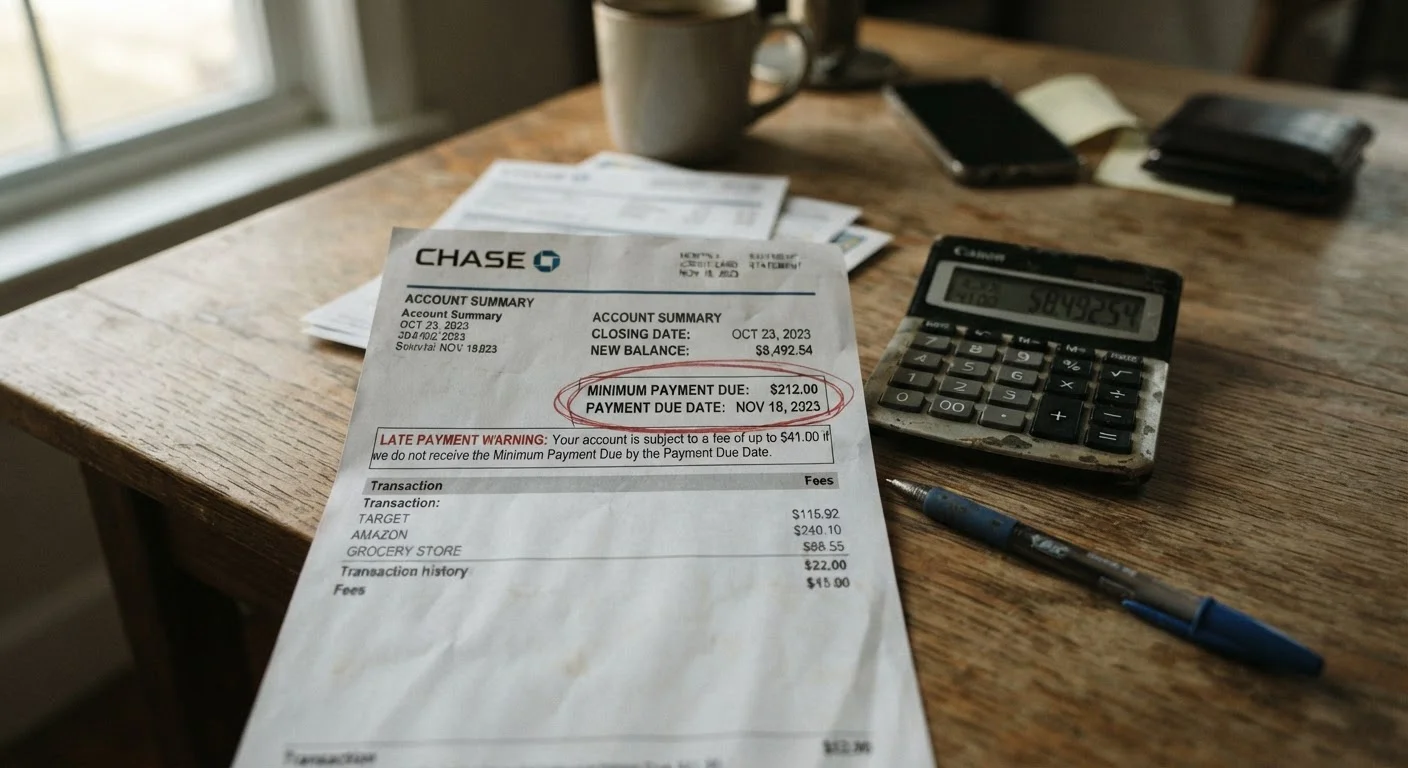
Photo: AdvisorBooth.net editorial
Key Takeaways
- Minimum payments are designed to keep balances - and interest charges - alive as long as possible.
- On a $5,000 balance at 20% APR, paying only the minimum can take over 15 years to clear.
- Interest compounds daily on most credit cards, making every delayed payment more expensive.
- Even modest increases above the minimum payment can dramatically cut your repayment timeline.
- Understanding total cost - not just monthly obligation - is essential to escaping the debt cycle.
How Minimum Payments Are Calculated - and Why It's Not in Your Favor
Credit card issuers typically calculate the minimum payment as either a flat dollar amount (often $25-$35) or a small percentage of the outstanding balance - whichever is greater. As your balance falls, so does your minimum payment. That shrinking obligation sounds like progress, but it actually slows your repayment down considerably.
When the required payment drops, less money goes toward principal. More of each dollar you send is consumed by interest. The result is a repayment curve that flattens rather than accelerates - keeping debt alive far longer than most borrowers realize.
This structure isn't accidental. Common myths about debt lead many people to believe that as long as they're paying something, they're making meaningful progress. In reality, the minimum payment system is designed to maintain a profitable balance for the lender, not to speed up your path to zero.
15+ years
Time to repay $5,000 at 20% APR paying only minimums
Consumer Financial Protection Bureau illustrative examples show minimum-only repayment can extend timelines dramatically, often well beyond a decade on moderate balances.
~$3,800+
Estimated interest paid on that same $5,000 balance
Calculations using standard amortization formulas illustrate that total interest can approach or exceed the original principal when only minimums are paid at high APRs.
20%+
Average credit card APR in recent years
Federal Reserve data on consumer credit has shown average credit card interest rates consistently exceeding 20% in recent reporting periods.
The Mistakes That Keep Borrowers Trapped
Understanding why minimum payments are so damaging requires looking at the specific behaviors that reinforce the cycle. Most are rooted in understandable assumptions - but they carry a steep cost.
Treating the minimum payment as a financially neutral choice.
Ignoring how daily compounding interest accelerates the balance.
Continuing to use the card while trying to pay it down.
Believing that any extra payment has to be large to matter.
Prioritizing savings contributions over high-interest debt repayment.
There's also a broader pattern worth recognizing: structural and behavioral factors often work together to keep people from breaking free, even when they genuinely want to. Minimum payment traps are one piece of that larger picture.
Minimum Payments Are Not a Payoff Plan
Practical Steps to Break the Cycle
The most direct path out is to pay more than the minimum - every month, consistently. Even a fixed extra amount above whatever the issuer requires can substantially compress your payoff timeline. The math is straightforward: more principal paid means less balance on which interest accrues the following day.
Two widely discussed payoff strategies can give you a framework. The avalanche method directs extra payments to the highest-interest balance first, minimizing total interest paid. The snowball method targets the smallest balance first, building momentum through quick wins. Neither is universally superior - the right choice depends on your balances, rates, and what keeps you motivated.
It's also worth examining how debt habits extend beyond credit cards. The tendency to focus on monthly payment size rather than total cost shows up in other financial decisions too - including auto purchases. Our look at why negotiating on monthly payment can work against you illustrates the same trap in a different context.
If you're simultaneously managing debt and trying to build financial stability, see our guide to the debt-first vs. savings-first dilemma for a framework to think through your priorities.
This Is Education, Not Financial Advice
This article is for general informational and educational purposes only and does not constitute personalized financial advice. Consult a qualified financial professional regarding your specific circumstances.
The content on this site is for informational purposes only and is not a substitute for professional advice. Always consult a qualified professional for guidance specific to your situation.