
The Investing Vocabulary Every Beginner Should Know

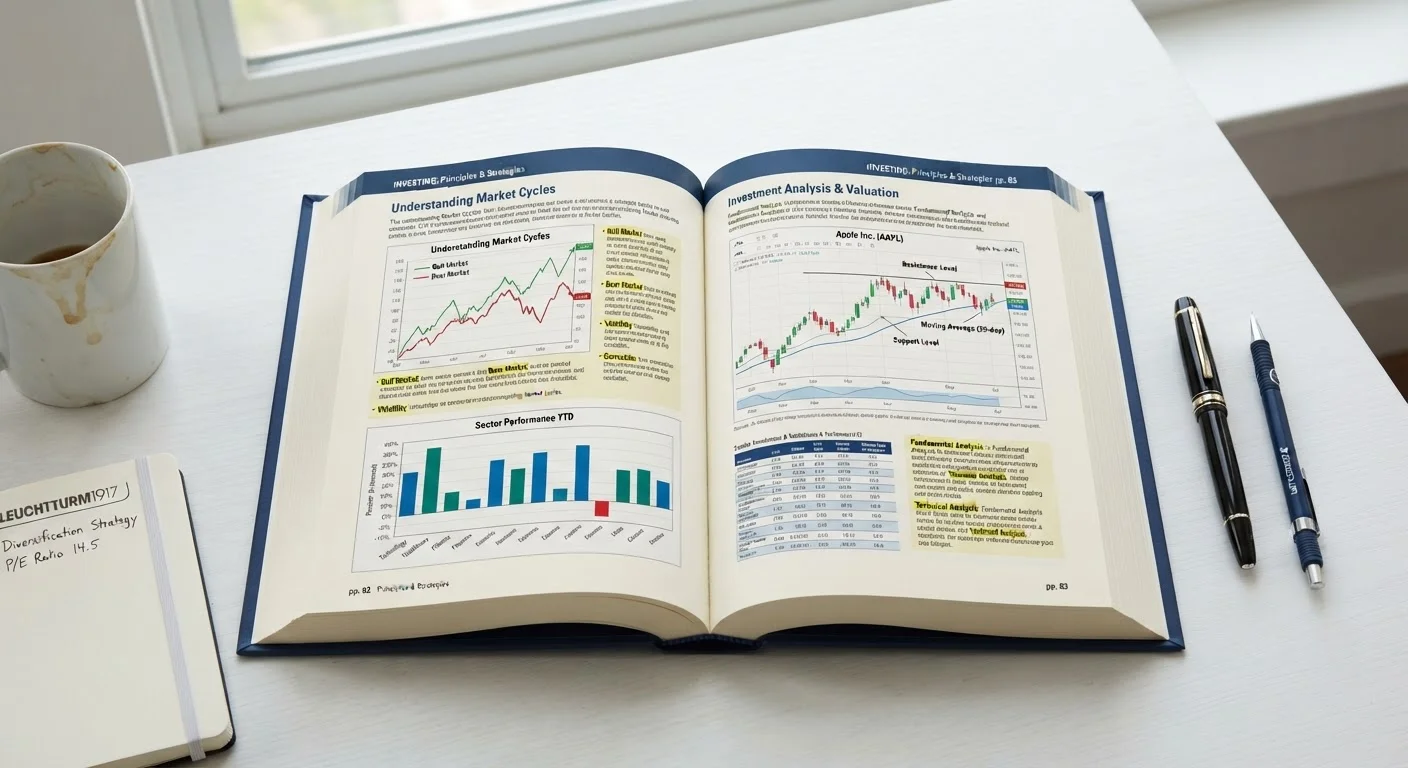
Photo: AdvisorBooth.net editorial
Why Vocabulary Is the First Step in Investing
Opening a brokerage account or reading a fund prospectus for the first time can feel like landing in a foreign country. Terms like rebalancing, expense ratio, and liquidity appear without explanation, and the stakes feel too high to guess. The good news: investing vocabulary is finite and learnable, and knowing even a handful of core terms dramatically improves how you interpret financial news, account statements, and advice.
This glossary covers the terms you're most likely to encounter early in your investing journey. It's organized to build naturally-market conditions first, then portfolio mechanics, then the math that ties it all together. For a deeper look at how different investments compare, see our plain-language breakdown of asset classes.
This Is General Education, Not Personal Advice
Market Conditions: Bull, Bear, and Volatility
Two terms dominate financial headlines: bull market and bear market. A bull market describes a period when prices are broadly rising-typically 20% or more above a recent low. A bear market is the reverse: prices have fallen 20% or more from a recent high. These aren't daily fluctuations; they describe sustained trends that can last months or years.
Volatility describes how dramatically prices swing during any given period. A highly volatile market moves sharply in both directions and creates more uncertainty for investors. Understanding volatility matters because it's directly linked to risk-see our companion piece on risk and return for a fuller explanation of that relationship.
| Terms covered in this glossary | 12 core investing terms |
| Bull market threshold | 20%+ price rise from recent low (Standard financial industry definition) |
| Bear market threshold | 20%+ price decline from recent high (Standard financial industry definition) |
| Compounding frequency | Can be daily, monthly, or annually (Varies by account or investment type) |
| Typical index fund expense ratio | 0.03%-0.20% (Morningstar fund data, general industry range) |
Liquidity is another market-level concept worth knowing. When an investment is liquid, it can be sold quickly and easily at a stable price. Cash and publicly traded stocks are generally liquid. Assets like real estate or certain private investments are not, meaning you may not be able to exit quickly without accepting a lower price.
Portfolio Mechanics: Allocation, Diversification, and Rebalancing
Asset allocation is how your portfolio is divided among major categories-commonly stocks, bonds, and cash. Your allocation is one of the most consequential decisions you'll make because different assets carry different levels of risk and return potential. Your time horizon-how long until you need the money-is a key input: investors with decades ahead can typically afford to hold more stocks than someone approaching retirement.
Diversification works alongside allocation. Rather than concentrating money in a single company or sector, diversifying spreads it across many investments. The logic: if one holding falls sharply, others may hold steady or rise, cushioning the overall impact. Index funds are a common vehicle for achieving broad diversification efficiently, since a single fund can hold hundreds of individual securities simultaneously.
Over time, strong performance in one part of a portfolio can throw your target allocation off balance-a process corrected through rebalancing. If stocks surge and bonds lag, stocks may now represent a larger slice than intended, meaning you're carrying more risk than you planned for. Periodic rebalancing brings the portfolio back in line with your original strategy.
Curious about budgeting terms that complement your investing knowledge? Our budgeting glossary covers related concepts like sinking funds and discretionary income.
The Math Behind Growth: Compounding, Dividends, and Costs
Compound interest-or more broadly, compounding returns-is often called the most powerful force in personal finance. When your investment earns returns and those returns are reinvested, future growth is calculated on a larger base. The longer money stays invested, the more dramatic this effect becomes. A common illustration: consistent, modest returns over decades can grow meaningfully larger than sporadic higher returns started later.
Dividends add another dimension. Some companies share a portion of their profits with shareholders on a regular basis. Reinvesting dividends-rather than taking them as cash-accelerates compounding, since each dividend payment increases your share count and therefore your future dividend base.
Costs matter too. The expense ratio of a fund is the annual fee deducted from your assets to cover operating costs. Even small differences in expense ratios compound over time: a fund charging 1.00% annually costs significantly more over 30 years than one charging 0.10%, even if their gross returns are identical. Always factor costs into your evaluation of any investment vehicle.
This article is for general informational and educational purposes only and does not constitute personalized investment, tax, or legal advice. Consult a licensed financial professional before making decisions about your own financial situation.
The content on this site is for informational purposes only and is not a substitute for professional advice. Always consult a qualified professional for guidance specific to your situation.