
Short-Term vs. Long-Term Investing: How Time Horizon Shapes Every Decision

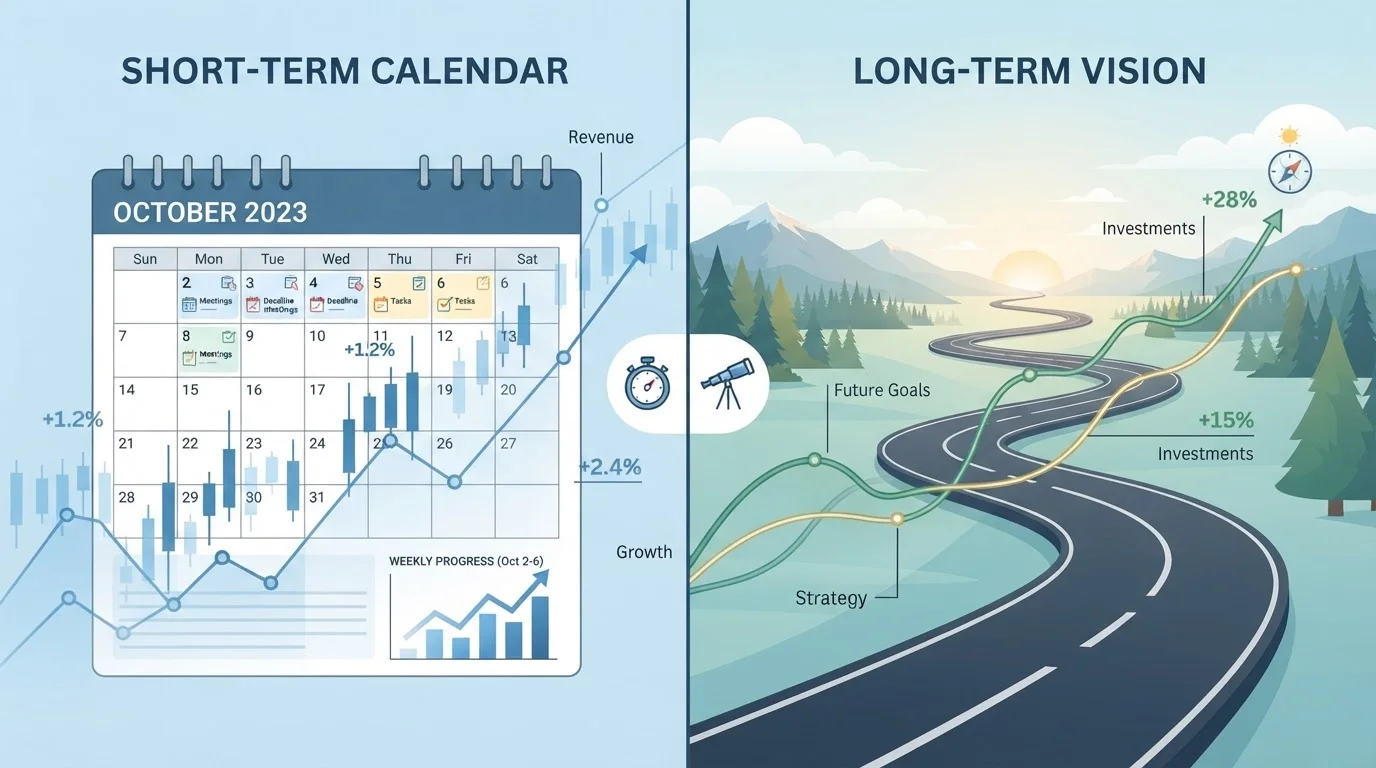
Photo: AdvisorBooth.net editorial
Key Takeaways
- Time horizon - how long until you need your money - determines appropriate risk levels and account types.
- Short-term investing prioritizes capital preservation over growth; long-term investing can absorb market volatility.
- Tax-advantaged accounts like 401(k)s and IRAs are generally built for long-term goals, not short-term needs.
- Compound growth rewards patience - the longer money stays invested, the more potential it has to grow.
- Mixing strategies is common; most people have both short-term and long-term financial goals simultaneously.
What 'Time Horizon' Actually Means
Your time horizon is simply the length of time you expect to hold an investment before you need to use the money. It sounds straightforward, but it shapes nearly every decision that follows - what you invest in, how much risk you can reasonably take, and which accounts make sense to use.
A common framework divides time horizons into three broad categories:
- Short-term: Under three years
- Medium-term: Three to ten years
- Long-term: Ten years or more
These aren't rigid rules, but they provide a useful mental map. Someone saving to replace a car next year is working with a very different set of constraints than someone building a retirement nest egg they won't touch for 30 years. Understanding that difference is foundational - it's also covered in more detail in our guide on risk and return.
Short-Term Investing: Stability Over Growth
When your goal is near - a down payment, a vacation fund, a wedding budget - your primary objective shifts from growing wealth to preserving it. You can't afford to watch a market downturn cut your balance by 20% right before you need to write a check.
That means short-term money typically belongs in lower-volatility vehicles: high-yield savings accounts, money market accounts, short-term certificates of deposit (CDs), or U.S. Treasury bills. These won't deliver dramatic growth, but they protect principal and remain accessible. See how savings vehicles compare in our high-yield vs. traditional savings account breakdown.
Don't Put Short-Term Money in Volatile Assets
One common mistake is putting short-term money into the stock market because it might grow faster. In a good year, it could. But markets can and do decline significantly over one- to two-year periods, leaving you with less than you started with at exactly the wrong moment.
Long-Term Investing: Letting Time Do the Work
When you have a decade or more before you need your money, short-term market swings matter far less. History shows that broadly diversified portfolios have generally recovered from downturns given enough time - though past performance does not guarantee future results.
This is where compound interest becomes a powerful force. Earnings reinvested over many years generate their own earnings, creating a snowball effect that rewards patience. A longer runway also allows investors to take on more growth-oriented assets like stocks or stock-based funds, since there's time to ride out volatility.
Long-term goals are also where tax-advantaged accounts shine. A 401(k) or IRA - explained plainly in our tax-advantaged accounts guide - can significantly reduce the tax drag on growth over decades. The structure of these accounts is specifically designed for money that won't be touched for years.
Automate Long-Term Contributions Early
Key Differences Side by Side
The table below summarizes how short-term and long-term approaches differ across the criteria that matter most to everyday investors.
| Short-Term Investing | Long-Term Investing | |
|---|---|---|
| Typical time frame | Under 3 years | 10+ years |
| Primary goal | Preserve capital | Grow wealth |
| Risk tolerance needed | Low | Moderate to high |
| Common vehicles | HYSA, CDs, T-bills | Stocks, index funds, IRAs |
| Tax-advantaged accounts? | Generally not suitable | Core strategy (401k, IRA) |
| Market volatility impact | Damaging - can't wait it out | Manageable - time to recover |
| Compound growth benefit | Minimal | Substantial over decades |
One important nuance: medium-term goals (three to ten years) often call for a blended approach - some growth exposure, but with a meaningful allocation to more stable assets as the goal date approaches. This is sometimes called a glide path strategy, and it's widely used in target-date retirement funds.
Most People Need Both
It's a false choice to think you must pick one approach. A 35-year-old saving for retirement is a long-term investor. The same person saving for a home renovation next year is a short-term saver. These goals coexist - and they require separate pools of money managed differently.
Before committing money to any investment, it helps to work through the foundational questions in our pre-investment checklist. And if you're sorting through whether to invest or pay down debt first, our debt-first vs. savings-first guide walks through that trade-off clearly.
The most important step is simply matching each goal to a time horizon - and letting that drive the strategy, rather than chasing returns or reacting to market noise.
This article is for general informational and educational purposes only and does not constitute personalized financial, investment, or tax advice. Consult a qualified financial professional before making decisions based on your individual circumstances.
The content on this site is for informational purposes only and is not a substitute for professional advice. Always consult a qualified professional for guidance specific to your situation.