
Diversification: Spreading Risk Without Spreading Yourself Thin

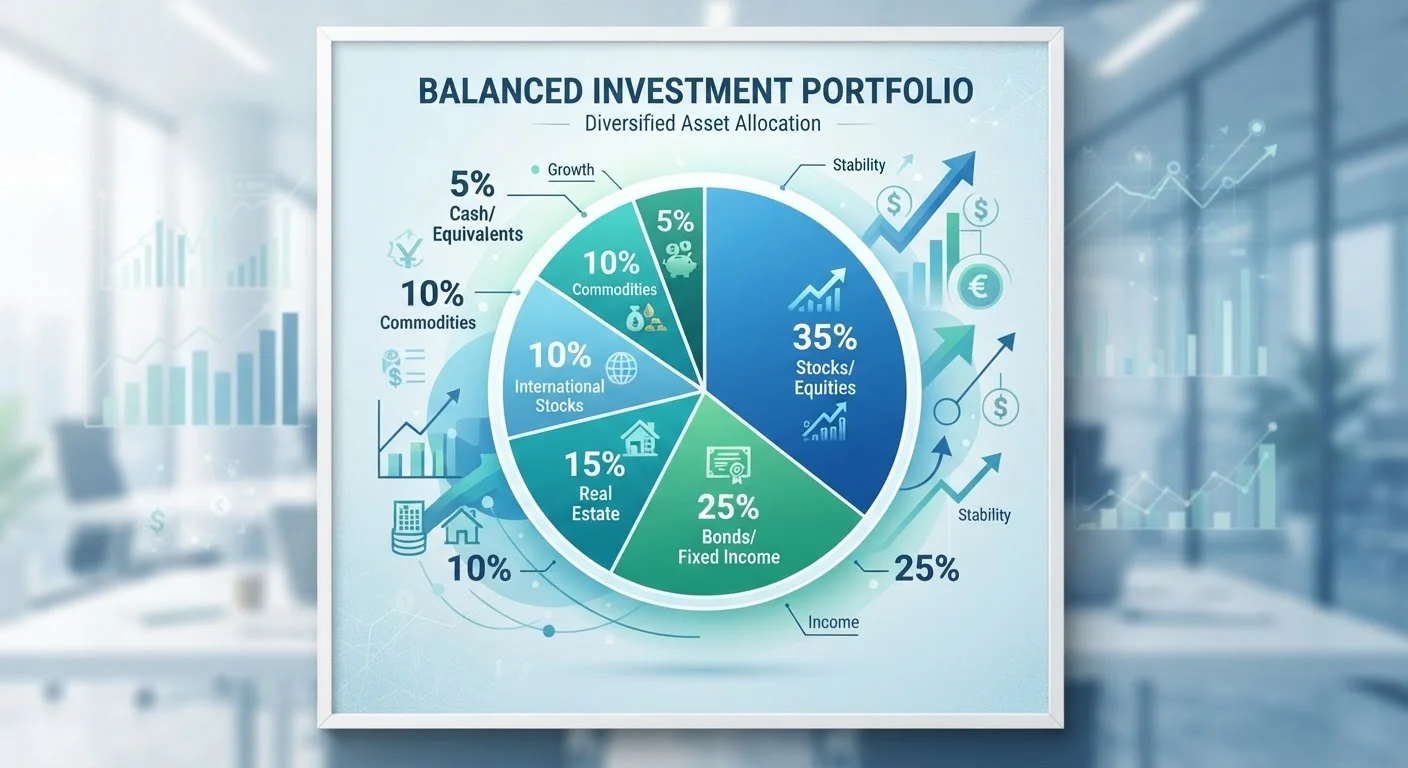
Photo: AdvisorBooth.net editorial
Key Takeaways
- Diversification reduces the damage a single bad investment can do to your overall portfolio.
- Spreading across asset classes - stocks, bonds, real estate - provides stronger protection than diversifying within one class alone.
- Diversification does not eliminate all investment risk, especially broad market downturns.
- Low-cost index funds and ETFs make diversification accessible without requiring large sums of money.
- A diversified portfolio still needs periodic review to ensure it matches your goals and risk tolerance.
Why Diversification Matters
Investing inherently involves risk. Companies fail, industries fall out of favor, and economies cycle through booms and busts. Diversification is the practical tool investors use to manage that reality without abandoning the market entirely.
When your money is concentrated in one stock or one sector, you're fully exposed to whatever happens there. A single corporate scandal, a regulatory change, or a shift in consumer habits can devastate a focused portfolio. Spread across dozens of companies, multiple industries, and different asset types, and the same event becomes a smaller blip rather than a crisis.
It's worth understanding that diversification targets a specific kind of risk - the kind tied to individual companies or industries. As explained in our article on risk and return, some risk is unavoidable in any market. Diversification can't protect you from a recession that pulls all markets down - but it can protect you from having your entire savings wiped out because one company collapsed.
~20-30
Stocks needed to reduce company-specific risk significantly
Academic research in portfolio theory, including foundational work by Harry Markowitz, has long suggested this range as a practical threshold for equity diversification.
500+
Companies held in a typical S&P 500 index fund
A single broad-market index fund tracking the S&P 500 provides exposure to over 500 large U.S. companies across all major economic sectors.
~0.03%
Annual expense ratio on some broad index ETFs
Low-cost index ETFs have made diversified investing accessible at minimal ongoing cost, according to fund industry data on passive investment products.
The Key Dimensions of Diversification
True diversification works on multiple levels, not just one. Here's how investors typically think about it:
- Across asset classes: Holding a mix of stocks, bonds, real estate investment trusts (REITs), and cash-equivalents means different parts of your portfolio respond differently to economic conditions. When stocks fall sharply, bonds often hold steadier.
- Across sectors: Within stocks, spreading across technology, healthcare, energy, consumer goods, and financials means a downturn in one industry doesn't sink your entire equity position.
- Across geographies: U.S. markets and international markets don't always move in sync. Including international holdings adds another layer of protection against domestic-only downturns.
- Across time: A strategy like dollar-cost averaging - investing fixed amounts at regular intervals - spreads your purchase prices over time, reducing the risk of investing everything at a market peak.
Start Simple, Then Add Complexity
Practical Ways Everyday Investors Diversify
You don't need to be wealthy or spend hours researching individual stocks to build a diversified portfolio. Several straightforward vehicles make it accessible:
- Broad-market index funds hold hundreds or thousands of companies in a single fund, automatically spreading risk across the market.
- Target-date funds - common in workplace 401(k) plans - automatically adjust their asset allocation between stocks and bonds as your retirement date approaches.
- Exchange-traded funds (ETFs) trade like stocks but represent a basket of underlying securities, offering built-in diversification at low cost.
One common misconception is that you need a large sum to diversify properly. As our piece on common investing myths explains, many index funds and ETFs have low or no minimum investment requirements, making them widely accessible.
Staying Diversified Over Time
Building a diversified portfolio isn't a one-time task. Over time, some investments grow faster than others, and your original allocation gradually shifts. A portfolio that started 60% stocks and 40% bonds might drift to 75% stocks after a long bull market - meaning you're now taking on more risk than you intended.
Rebalancing - periodically selling some of what has grown and buying more of what has lagged - restores your original allocation. Many financial professionals suggest reviewing your portfolio at least once a year, or whenever your allocation drifts significantly from your targets.
Your time horizon also shapes how you should stay diversified. Investors with decades until retirement can generally afford more stock exposure, while those nearing a goal may want to shift toward more stable assets. Our article on short-term vs. long-term investing explores this relationship in depth.
This article is for general informational and educational purposes only and does not constitute personalized financial or investment advice. Consult a licensed financial adviser for guidance tailored to your individual circumstances.
Frequently Asked Questions
The content on this site is for informational purposes only and is not a substitute for professional advice. Always consult a qualified professional for guidance specific to your situation.